
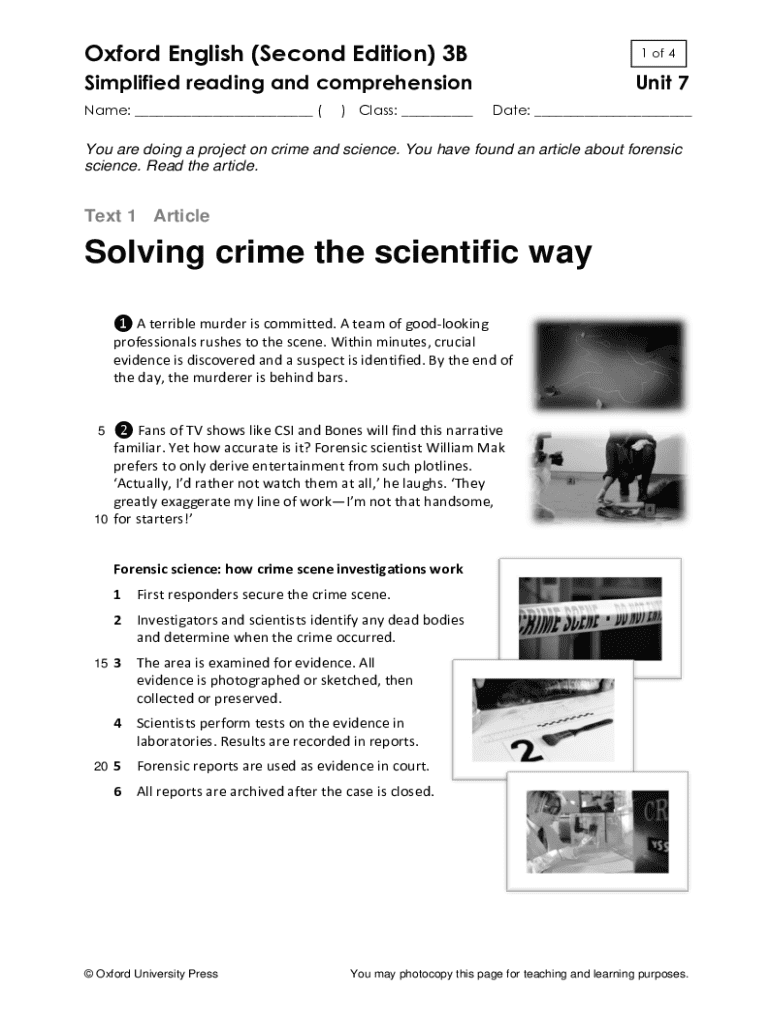







Definition and Meaning of Oxford English (second Edition) 3b
“Oxford English (second Edition) 3b” is a term that primarily relates to an educational or linguistic resource, most likely the third book or unit from a specific series or curriculum developed by Oxford University Press. This resource is designed for English language learners or educators seeking comprehensive material for lecturing or studying. The use of "second Edition" suggests that it is an updated version, incorporating revisions or additional content to reflect new linguistic insights or educational practices. This particular edition would generally be part of a larger set or series, each serving a distinct function in advancing the reader’s understanding of English language and literature.
How to Use the Oxford English (second Edition) 3b
To effectively use the Oxford English (second Edition) 3b, it is essential to follow a structured approach that maximizes the utility of the content. Users should begin by reviewing the table of contents to understand the scope and organization of the material. This will aid in identifying specific topics or sections relevant to their study or teaching goals. Users could utilize the resource for various purposes, such as:
- Supplementing classroom instruction with detailed examples and exercises.
- Supporting self-study initiatives for learners independently improving their proficiency.
- Providing reference material for advanced analysis or scholarly projects.
Regular interaction with the exercises provided in this edition can enhance the learner's comprehension and retention of the material.
Steps to Complete Exercises in the Oxford English (second Edition) 3b
-
Identify Focus Areas: Determine which sections or chapters align with your current educational objectives or areas needing improvement.
-
Preliminary Reading: Before diving into exercises, read the introductory text and explanations that precede practical components to grasp the context and theoretical background.
-
Attempt Exercises: Engage with exercises by applying the concepts learned in the preceding text. Be sure to note down any difficulties encountered.
-
Review Solutions and Explanations: Compare your answers with the provided solutions, if available. This step is crucial to understanding any errors and learning the correct methodologies.
-
Seek Additional Clarification: Leverage additional resources or seek clarification from educators if certain concepts remain unclear after attempting the exercises.
Key Elements of Oxford English (second Edition) 3b
The Oxford English (second Edition) 3b includes several critical components conducive to learning:
- Comprehensive Textual Content: Covers a wide array of topics necessary for a deep understanding of the English language.
- Illustrative Examples: Provides examples that apply theoretical concepts in practical contexts, aiding comprehension.
- Exercises and Practice Activities: Diverse exercises designed to reinforce learning and practice language skills actively.
- Review Summaries: Each section includes summaries to recap the main points and solidify the learner’s understanding.
- Visual Aids: May include charts, graphs, or images to illustrate complex concepts in a more digestible format.
Who Typically Uses the Oxford English (second Edition) 3b
This resource is widely utilized by:
- Students: Those engaged in formal education systems seeking additional support to enhance their English language proficiency.
- Educators: Teachers integrating this into their curriculum to provide varied learning experiences and more profound insights into the material covered in course syllabi.
- Self-learners: Individuals independently studying English as a second language to improve their command over language skills without the need for structured classroom settings.
- Scholars and Researchers: Specialists in linguistics searching for comprehensive material to cite or reference in academic writing or research projects.


Examples of Using Oxford English (second Edition) 3b
Consider a high school classroom environment where the teacher uses the Oxford English (second Edition) 3b as a core text. Each week, students are assigned a chapter to read, with accompanying exercises to be completed as homework. During class, the teacher leads discussions and highlights key concepts from the chapter, encouraging students to ask questions based on their home practice. Students report improvements in their language skills, as evidenced by higher grades and increased confidence in English comprehension.
Another example could involve a self-learner who sets a personal goal to read and understand a new section weekly. They keep a journal tracking their progress, including vocabulary gained and concepts clarified, and occasionally connect with online study groups for shared learning and motivation.
Software Compatibility and Digital Access
For users accustomed to digital learning environments, accessing Oxford English (second Edition) 3b through compatible software can enhance their experience. The material might be available in formats accessible via e-readers, tablets, or computers, ensuring users can study anywhere. Platforms such as Kindle or educational apps could support the material’s digital version, enabling search functions for keywords, and note-taking features offering interactive learning experiences. Given the evolving landscape of digital education, access to up-to-date electronic resources is crucial for maintaining the resource’s relevance and applicability.
Variants and Alternatives of the Oxford English (second Edition) 3b
Considering the broad spectrum of learning needs and contexts, alternative or variant editions may exist tailored to specific audiences or purposes. These could include:
- Beginner or Advanced Versions: Designed to cater to different competency levels, ensuring appropriate challenge and support for learners at varying stages of proficiency.
- Focused Subject Editions: Target particular aspects of the English language, such as grammar, vocabulary, or literary analysis.
- Regional Editions: Adapted to align with region-specific educational standards or cultural context, ensuring greater relevance and resonance with the learner’s environment.
Exploring these alternatives can guide students and educators in selecting the most suitable version to match their educational goals.




