






Definition & Significance of the Form
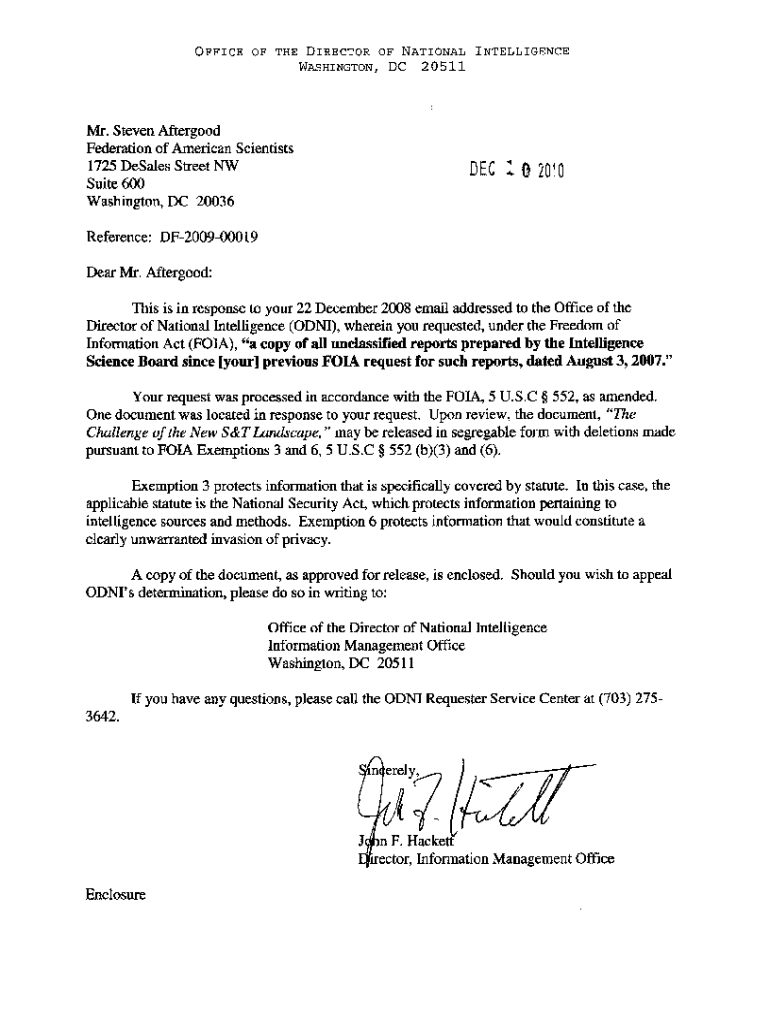
The form "The Intelligence Community and Science and Technology: The" outlines the strategic alignment between the intelligence community and advancements in science and technology. It plays a critical role in ensuring that U.S. intelligence agencies stay ahead of global threats by leveraging cutting-edge technology and scientific research. Understanding this form is essential for stakeholders within defense and intelligence sectors as they navigate evolving security landscapes.
Importance of Technology Adaptation
- Globalization Challenges: As global collaboration increases, technological capabilities and resources are widely dispersed. This form guides U.S. agencies in addressing these challenges by optimizing domestic tech advancements.
- Emerging Technologies: Highlights technologies that are crucial for national security, such as AI, machine learning, and quantum computing. Agencies are encouraged to develop strategies to integrate these technologies effectively.
Steps to Complete the Form
Completing the form involves several key steps to ensure compliance and accuracy:
- Gather Required Information: Collect detailed information regarding the current state of science and technology within the relevant agency. This includes data on research projects, technological capabilities, and strategic goals.
- Review Legal and Security Protocols: Ensure that all disclosed information adheres to legal standards and does not compromise national security.
- Submit for Internal Review: Before external submission, the form should be reviewed by internal legal and technical teams to verify completeness and accuracy.
Key Elements of the Form
The form consists of several critical components, each designed to gather comprehensive data:
- Current Technology Utilization: Details on how current technologies are being used or planned for use.
- Future Technology Roadmaps: Outlines strategic plans for adopting new technologies to maintain an edge in intelligence operations.
- Collaboration and Partnerships: Identifies existing and potential partnerships with academia, industry, and other governmental bodies to foster innovation.
Important Terms and Definitions
- Intelligence Science Board (ISB): A key advisory board providing oversight and strategic guidance on science and technology issues.
- Technological Superiority: The goal of maintaining an advanced technological edge over adversaries.
How to Obtain the Form
The form can typically be obtained from the Office of the Director of National Intelligence (ODNI) or through inter-agency channels. A clearance process is generally required due to the sensitive nature of the information involved.
Application Process
- Request Submission: Submit a formal request through your agency’s designated channels.
- Approval & Clearance: Await confirmation that your security clearance meets the requirements to handle classified information included in the form.
Legal Use and Compliance
Legally, the form is used to align intelligence strategies with scientific advancements while ensuring compliance with laws like the Intelligence Reform and Terrorism Prevention Act. Adhering to regulatory frameworks is mandatory to avoid statutory violations.
Penalties for Non-Compliance
Non-compliance can lead to severe repercussions, including:
- Legal Actions: Agencies may face legal penalties for non-adherence to guidelines.
- Loss of Security Clearance: Individuals involved may lose clearance to access classified materials, impacting careers and operations.
Variants and Related Documents
The form may have several variants or related documents depending on specific agency needs and evolving intelligence priorities:
- Annual Technology Assessment Reports: Provide yearly updates on technological advancements and agency progress.
- Strategy Implementation Plans: Detail steps for integrating new technologies within agency operations.
Digital vs. Paper Versions
While the form is primarily digital to expedite processing and integration, a paper version may be used in contexts where digital submissions are not feasible.
Examples of Use Cases
- Case Study: AI Integration in Threat Analysis: Agencies applying machine learning to enhance threat detection and risk assessment.
- Collaboration Scenario: Partnering with universities for research on quantum computing applications in cybersecurity.
By providing detailed insights into how the intelligence community leverages science and technology, the form is an invaluable tool for maintaining national security and ensuring the U.S. remains at the forefront of technological innovation.