






Definition and Meaning
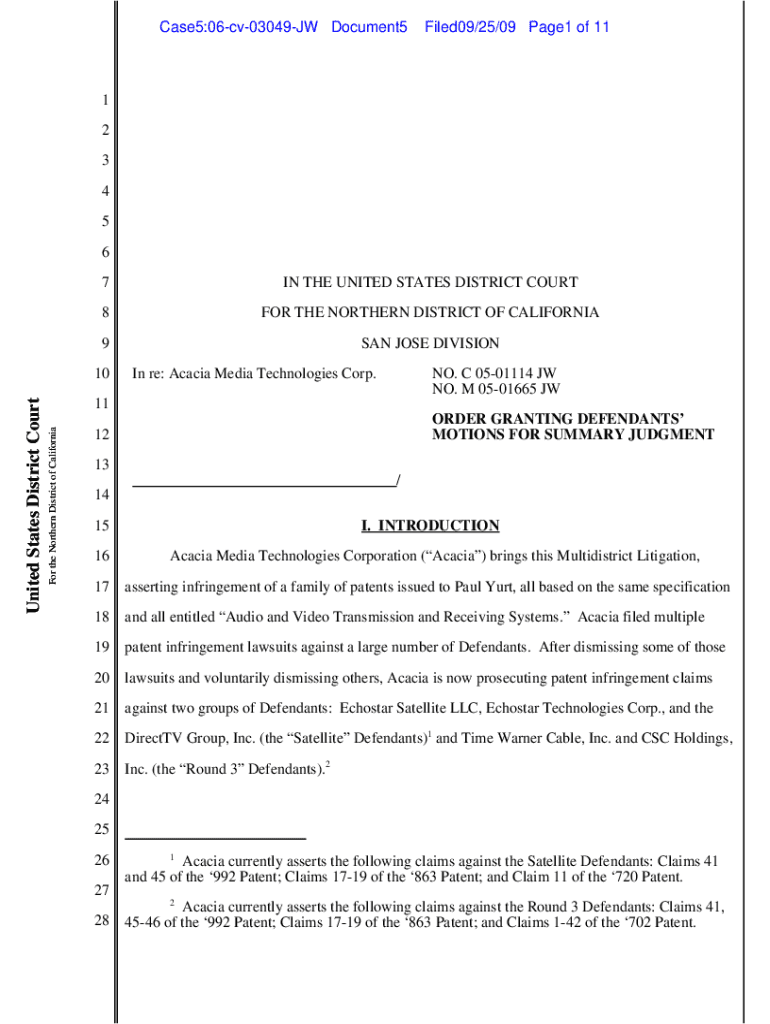
The Acacia Patent Claims and Options for Educational is a term that refers to legal actions and strategies involving patents held by Acacia Research Corporation, specifically in educational technology. Acacia is known for its involvement in intellectual property rights, often engaging in patent litigation to protect and enforce its portfolio. These claims and options may include patents related to digital learning tools, educational software, or communication systems used in an academic setting.
Key Features of Patent Claims
- Scope of Invention: A comprehensive definition of what the patent covers, ensuring clarity in what is protected.
- Legal Protection: Details the legal rights granted to the patent holder, allowing for exclusivity in the use and application of the patented technology in education.
- Enforcement Rights: Acacia can pursue legal action against entities that infringe upon these patents, which may include institutions or companies using similar technologies without authorization.
Importance in Educational Settings
The Acacia Patent Claims offer significant legal leverage in the educational technology landscape, potentially influencing how new tools and systems are developed, shared, and utilized within schools and universities.
How to Use the Acacia Patent Claims
Understanding the roles of these claims involves several applications, especially for legal and business entities involved in educational technology.
Steps to Leverage Patent Claims
- Review the Patent Scope: Determine the specific technologies or methods that the patents cover, ensuring that your educational tools adhere to guidelines without infringement.
- Consult Legal Teams: Engage with legal experts specializing in intellectual property to understand your rights and obligations under the patent.
- Negotiate Licensing Agreements: If you wish to use technologies under Acacia patents, prepare to negotiate licensing agreements that legally permit such usage.
Application Examples
- Educational Institutions: Schools and colleges seeking innovative technologies can analyze these claims to align with patented resources or arrange licenses without legal repercussions.
- Tech Developers: Companies can ensure that their educational tools comply with existing patents or explore licensing options for expanded functionality.
Steps to Complete Patent Litigation Forms
Navigating the legal landscape requires meticulous completion of various forms during patent-related processes.
Essential Steps for Form Completion
- Gather Required Documentation: Collect all supporting documents that explain the educational tool’s design, use, and function in relation to the patent.
- Fill Out Details: Accurately complete all sections of the litigation form, ensuring that all details about the involved parties and patent claims are correct.
- Submit through Appropriate Channels: Submit completed forms to the relevant district court or patent office, adhering to guidelines for digital or physical submission as required.
Who Typically Uses the Acacia Patent Claims
Entities involved in educational technologies and those interested in entering this market segment are primarily engaged in dealings with Acacia patent claims.


Who Benefits from Using These Patents
- Educational Technologists: Developers and researchers in ed-tech who need clarity on the current patent landscape to innovate without infringement.
- Legal Professionals: Attorneys specializing in intellectual property law who assist clients with litigation or licensing related to educational patents.
- Academic Institutions: Universities and schools exploring advanced technologies for educational enhancement, considering licensing agreements for patented tools.
Legal Use of the Acacia Patent Claims
The legal framework surrounding the Acacia Patent Claims ensures protection and fair use within the marketplace.
Compliance and Enforcement
- Patent Lawsuit: Initiated when infringement is suspected, allowing Acacia to protect its intellectual property.
- Agreement Terms: Clear contract terms established during licensing, ensuring use of educational technologies in legally permitted ways.
- Indefiniteness Clause: Ensures claims are clear and enforceable, with courts invalidating any indefinite patent rights as per federal law.
Key Elements of the Acacia Patent Claims
Understanding the core components of these claims is crucial for effective engagement.
Main Elements to Consider
- Specificity: The central element of these claims includes a precise description of the educational technology involved.
- Innovation Description: Outlines unique features and capabilities, ensuring they meet patentability criteria.
- Relevance and Application: Emphasizes the intended use within educational settings, aiming for practical utility.
Examples of Using the Acacia Patent Claims
Real-world scenarios demonstrate the impact of these claims in educational technology and related legal battles.
Case Studies
- Infringement Cases: Instances where educational institutions or developers had to reassess their products due to patent conflicts.
- Successful Licensing: Examples of educational technology advancements made possible through strategic licensing agreements with Acacia.
Required Documents for Legal Proceedings
The documentation process is integral to navigating patent claims and potential litigations effectively.
Critical Documents to Include
- Patent Certificates: Original or certified copies establishing the patent's legitimacy.
- Usage Records: Detailed logs or demonstrations of how the patented technology is applied within an educational context.
- Legal Correspondence: Any prior communications between Acacia and the entity regarding the patent issue, ensuring transparency and documentation fidelity.