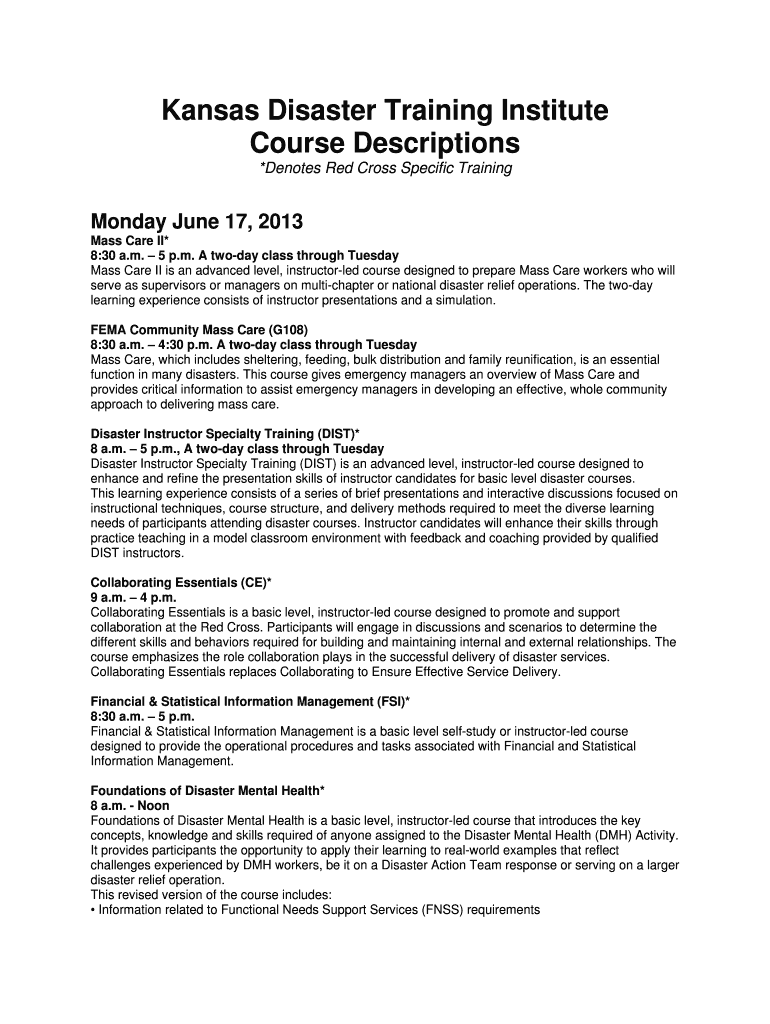







Definition and Meaning of *Denotes Red Cross Specific Training
The term "Denotes Red Cross Specific Training" refers to training programs, courses, and certifications that are specifically designed and offered by the Red Cross. These training sessions are focused on preparing individuals for effective disaster response and providing essential skills in areas such as first aid, CPR, disaster management, and emergency collaboration. This designation is a mark of proprietary content developed by the Red Cross to ensure consistency and quality in disaster preparedness education.
Key Elements of Red Cross Specific Training
Red Cross training programs are characterized by their comprehensive nature, addressing both practical skills and theoretical knowledge. Key elements include:
- Structured Curriculum: Each course follows a structured format that is standardized across different locations to maintain the integrity and quality of training.
- Expert Instructors: Training is provided by certified instructors with extensive experience in disaster management and emergency responses.
- Practical Sessions: Hands-on practice is a critical component, allowing participants to apply learned skills in simulated environments.
- Certification: Upon completion, participants receive Red Cross-specific certifications that are widely recognized and valued in the field of disaster management.
How to Use *Denotes Red Cross Specific Training
The training is designed for a variety of applications. It is integrated into organizational preparedness plans, used for personal skill development, and is a requisite for certain professional roles within disaster management services. Here's how you can apply this training:
- Personal Development: Individuals can use the training to improve their readiness for emergencies, understanding how to execute life-saving techniques like CPR or basic first aid.
- Professional Advancement: For those in the emergency services, obtaining Red Cross-specific training certifications can enhance career prospects and qualify them for specialized roles.
- Organizational Preparedness: Institutions can integrate these programs into their emergency preparedness plans, ensuring staff are trained to respond effectively in crisis situations.
Examples of Using Red Cross Training
- An school faculty incorporates Red Cross first aid training for their teachers, ensuring all staff are equipped to handle student accidents or medical emergencies.
- A company mandates disaster management training for its crisis response team to align with safety regulations and ensure a coordinated response strategy.
Steps to Complete *Denotes Red Cross Specific Training
Completing a Red Cross specific training involves several steps, from selecting the appropriate course to final certification. Here's a breakdown of the process:
- Course Selection: Identify the specific skill or certification needed. Options include first aid, CPR, AED use, or disaster management training.
- Registration: Enroll in the chosen course through the Red Cross website or a local chapter. Check for any prerequisites or necessary qualifications.
- Training Session: Attend scheduled sessions either in-person or online, depending on the course format.
- Practical Evaluation: Participate in practical assessments to demonstrate acquired skills.
- Certification Exam: Complete any required evaluations or tests to officially receive your certification from the Red Cross.
Important Terms Related to *Denotes Red Cross Specific Training
Comprehending specific terminology used within these training programs is crucial for participants. Here are important terms often encountered:
- CPR (Cardiopulmonary Resuscitation): A life-saving procedure that is taught extensively in Red Cross training.
- AED (Automated External Defibrillator): A device used to help those experiencing sudden cardiac arrest; training includes how to operate AEDs safely.
- Disaster Management: Training focuses on preparing individuals and organizations to respond effectively to emergencies.
Eligibility Criteria for Red Cross Training
To participate in these training programs, individuals must meet certain eligibility criteria. These generally include:
- Minimum Age Requirement: Participants are often required to be at least 16 years old for most courses, though some may be available to younger individuals with parental consent.
- Health Prerequisites: Certain physical conditions may be assessed to ensure participants can safely engage in practical training sessions.
- Prior Experience: While many courses are open to beginners, some advanced certifications may require prior completion of basic training modules or relevant experience.


State-Specific Rules for *Denotes Red Cross Specific Training
While the Red Cross aims for uniform training standards, specific state requirements can influence the curriculum or certification process. For instance:
- California: Courses might include modules on dealing with earthquakes, reflecting regional disaster risks.
- Florida: Training often incorporates hurricane preparedness due to its geographical vulnerability.
Form Submission Methods for Red Cross Trainings
To register for Red Cross training, there are several submission methods available:
- Online Registration: The most common method involves enrolling through the Red Cross website, offering easy access and payment options.
- In-Person Registration: Some local chapters allow participants to register directly, which can be helpful for those who require personal assistance or have specific questions.
- Mail Registration: Available for those who prefer a traditional approach, although it may involve longer processing times compared to digital options.
These diverse methods ensure accessibility and convenience for a wide range of participants looking to enhance their disaster preparedness skills.