
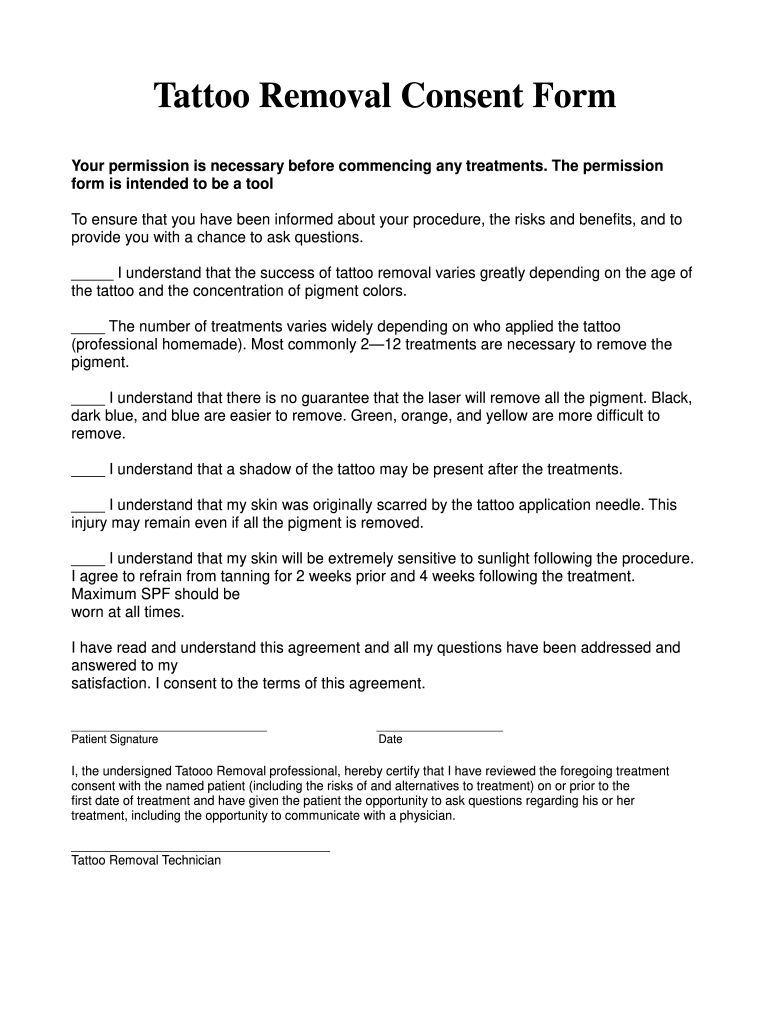







Definition and Meaning of the Tattoo Removal Consent Form
The tattoo removal consent form is a legal document designed to obtain explicit permission from a patient before undergoing tattoo removal procedures. This form is crucial in the tattoo removal process as it helps protect both the client and the practitioner. It clarifies the risks involved, outlines potential complications, and establishes the scope of the treatment provided.
In the context of laser tattoo removal, the consent form typically includes a detailed description of the procedure, including the technology used (e.g., Q-switched lasers) and the expected results, which can vary significantly due to factors such as tattoo age, ink type, and skin type. By signing the form, clients acknowledge their understanding of the procedure, its limitations, and the possibility of incomplete pigment removal or skin sensitivity following treatment.
The form may also introduce important terms used in the tattoo industry and state the practitioner’s qualifications, ensuring that the client is informed about who will perform the procedure. In essence, the tattoo removal consent form serves as both a legal and educational tool, fostering transparent communication and enhancing patient safety.
Key Elements of the Tattoo Removal Consent Form
A well-constructed tattoo removal consent form includes several essential elements that ensure clarity and comprehension for the client. The following points outline the critical components typically found in this document:
-
Patient Information: This section collects personal details regarding the client, including full name, contact information, and date of birth. It's important for record-keeping and for verifying the identity of the individual undergoing treatment.
-
Description of the Procedure: It provides a step-by-step explanation of the tattoo removal process, detailing what the client should expect during the session. This may include the technology used, anticipated duration, and frequency of treatments.
-
Risks and Benefits: Clients are informed about the potential complications associated with tattoo removal, such as skin irritation, scarring, and the possibility of incomplete removal. The benefits, including improved skin appearance and the ability to enhance personal aesthetic preferences, are also covered.
-
Aftercare Instructions: This part provides guidance on what clients should do following treatment to ensure proper healing and reduce the risk of complications. Advice may include keeping the treated area clean, avoiding sun exposure, and using recommended products.
-
Acknowledgment and Signature: A critical section where the client can acknowledge that they understand the contents of the form, ask questions, and voluntarily consent to proceed with the tattoo removal treatment. This portion often includes a space for the client's signature and the date.
How to Complete the Tattoo Removal Consent Form
Filling out the tattoo removal consent form requires careful attention to detail to ensure all necessary information is included. The following steps outline how clients can complete the form effectively:
-
Read the Entire Form Carefully: It is essential to read each section to understand the procedure, risks, and benefits thoroughly.
-
Provide Accurate Personal Information: Fill in sections that require personal details, including full name, contact details, and date of birth. Ensure that all information is correct and legible.
-
Review Procedural Descriptions: Pay special attention to the procedures described. If there are any ambiguities or questions, clients should consult with the practitioner before signing.
-
Discuss Risks and Ask Questions: Clients should engage in a conversation with the practitioner about the risks outlined in the form. It is crucial that they voice any concerns to ensure they feel comfortable with the treatment.
-
Check Aftercare Instructions: Understanding aftercare is vital for the successful healing of the skin post-treatment. Verify that you are comfortable with the aftercare recommendations.
-
Sign and Date: After reviewing the document and ensuring understanding, clients should sign and date the form, indicating their consent to proceed with the procedure.
Following these steps can help ensure that clients are well-informed and prepared for their tattoo removal treatment, reducing misunderstandings about what to expect.
Legal Use of the Tattoo Removal Consent Form
The tattoo removal consent form holds significant legal importance. Its primary function is to protect the rights of both the practitioner and the patient. The document serves as proof that the client has voluntarily consented to the procedure after being made aware of the related risks and benefits.
Legally, the form may serve as a defense for practitioners in the event of disputes regarding the outcomes of the treatment or any adverse reactions experienced by the client. By obtaining informed consent, practitioners demonstrate due diligence in ensuring that their clients are educated participants in the treatment process.
In many states, regulations surrounding medical and cosmetic procedures require consent forms to be obtained before treatment commences. Failure to provide a consent form may leave practitioners exposed to liability, resulting in potential legal ramifications. It is vital for both parties to retain copies of the signed form for future reference.
Common Uses of the Tattoo Removal Consent Form
The tattoo removal consent form is utilized in various settings, each tailored to meet specific needs. Here are some common uses of this form in the industry:
-
Tattoo Removal Clinics: These facilities often require a tattoo removal consent form for each client prior to treatment, ensuring each participant is fully aware of the procedure and consents to any associated risks.
-
Dermatology Offices: Many dermatologists providing tattoo removal services will integrate this form into their patient intake process, using it to educate patients about potential outcomes and care requirements post-procedure.
-
Cosmetic Spas: Spas offering tattoo evaluations and removal services typically use a consent form to delineate the procedures available and ensure that clients consent to the treatment methods employed.
-
Home-Based Practitioners: In some cases, independent practitioners operating in non-clinic settings may utilize the form to maintain professionalism and legal protection while offering tattoo removal services.
Ultimately, the tattoo removal consent form serves as a vital tool in ensuring informed consent across diverse environments and practitioners in the tattoo removal industry.




