






Definition & Meaning
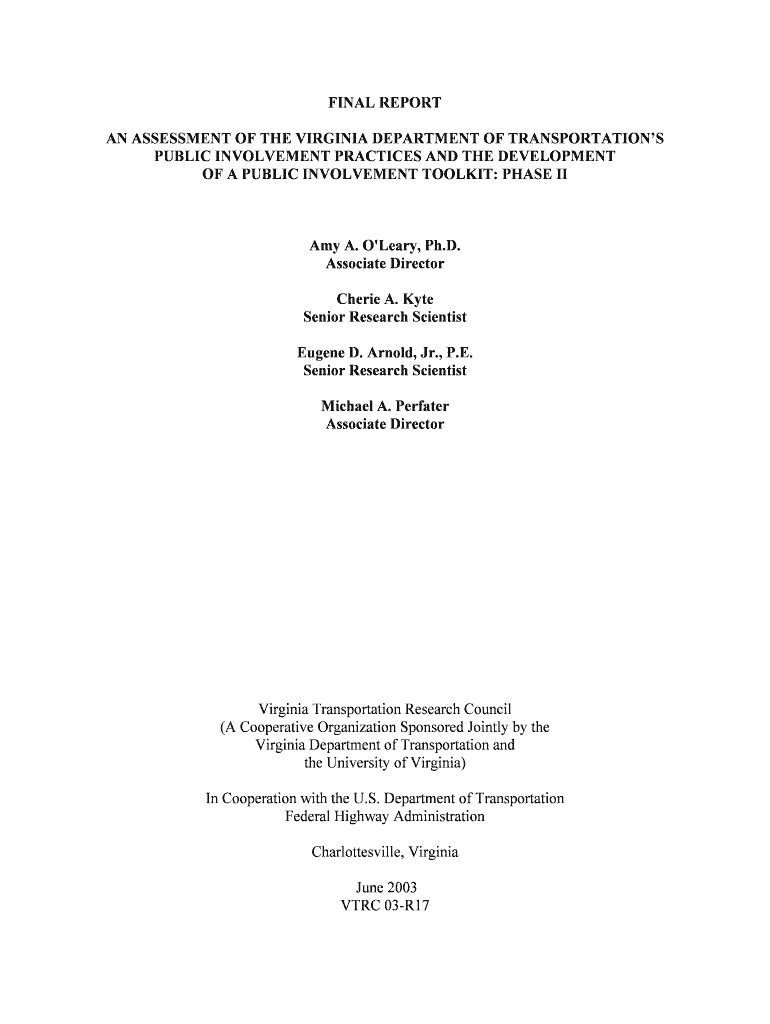
The "Assessment of VDOT's Public Involvement Practices - Virginia - virginiadot" is a comprehensive evaluation of how the Virginia Department of Transportation (VDOT) engages the public in its processes. This assessment is integral in developing strategies to enhance communication and involvement of citizens in transportation projects. The report outlines methods for gathering feedback, understanding public perception, and improving transparency in decision-making. Its objective is to ensure that public input is meaningfully integrated into VDOT’s planning and execution phases.
Key Elements of the Assessment
The assessment captures several critical components related to VDOT's engagement practices. These elements encompass the variety of communication channels used to engage the public, the type of feedback mechanisms in place, and the effectiveness of current outreach methods. By identifying strengths and weaknesses in these areas, VDOT can tailor its strategies to better meet community needs and expectations. Additionally, the assessment emphasizes the role of feedback loops in showing the impact of public input on transportation decisions.
Communication Channels
- Use of digital platforms for announcements and updates
- Traditional media outreach including newspapers and radio
- Community meetings and public forums
- Surveys and focus groups to gather direct feedback
Feedback Mechanisms
- Comment sections on official websites
- Formal submission forms for opinions and suggestions
- Regular follow-ups to ensure continued engagement
Steps to Complete the Assessment
Completing the assessment involves several systematic steps, each critical for an accurate evaluation. These steps ensure that all relevant aspects of VDOT's public involvement practices are examined thoroughly.
-
Data Collection: Gather data through surveys, focus groups, and interviews with both VDOT personnel and the public. This provides a diverse range of opinions and insights.
-
Analysis: Review the data to identify trends, common complaints, and areas of satisfaction. This step includes the evaluation of how well current practices align with public expectations.
-
Drafting Recommendations: Based on the collected data, draft recommendations aimed at improving VDOT's public involvement practices. These should focus on enhancing engagement and transparency.
-
Creating the Public Involvement Toolkit: Develop a toolkit outlining best practices and strategies for effective public involvement. This includes guidelines for communication, feedback collection, and community engagement tactics.
Additional Considerations
- Ensuring the assessment is unbiased and covers all demographic groups.
- Incorporating technology to improve feedback processes.
- Regularly reviewing and updating the public involvement strategies based on new insights.
Who Typically Uses the Assessment
The assessment is utilized by various stakeholders within and outside VDOT. It is especially useful for project managers, communication officers, and policy makers within the department. Additionally, external consultants, civic planners, and community organizations may reference the assessment to advocate for or design public involvement frameworks in other contexts.


Internal Stakeholders
- VDOT staff responsible for public communications
- Project managers overseeing transportation projects
- Policy makers involved in strategic planning
External Stakeholders
- Community leaders and local government officials
- Transportation consultants and advocacy groups
- Researchers evaluating public involvement effectiveness
Legal Use of the Assessment
Legally, the assessment serves as a document that reflects VDOT's commitment to public involvement and transparency. It ensures that the department adheres to state and federal regulations that mandate public participation in governmental processes.
Compliance and Reporting
- Ensures compliance with public involvement requirements under transportation legislation
- Provides documented evidence of outreach efforts for audits and reviews
- Facilitates transparency and accountability in public administration
State-Specific Rules
The assessment must consider Virginia’s specific legislative and regulatory frameworks governing public involvement in transportation projects. Unique state mandates may influence how public consultation processes are structured and implemented.
Virginia Regulations
- State laws concerning environmental assessments and public hearings
- Specific requirements for public notification and engagement in large-scale projects
- Standards for transparency and citizen inclusion in the planning stages
Examples of Using the Assessment
Practical applications of the assessment include reviewing past projects to identify successful public engagement strategies and modifying less effective ones. These examples illustrate how the assessment can directly influence future projects.
Real-World Scenarios
- Revamping outreach for a highway expansion project based on past public input
- Addressing community concerns in urban planning through improved consultation practices
- Designing more inclusive feedback mechanisms for diverse populations
Important Terms Related to the Assessment
Understanding key terminology used in the assessment ensures clear communication and accurate interpretation of its findings. These terms include both technical jargon and commonly understood concepts related to public involvement.
Key Terms
- Public Involvement Toolkit: A set of guidelines and resources for engaging public participants.
- Feedback Loop: A process through which public input is collected, reviewed, and responded to.
- Stakeholder Engagement: The practice of involving all relevant parties in decision-making processes.
Software Compatibility
For the digital aspect of the assessment, compatibility with various software platforms can enhance accessibility and data management. This includes tools for data collection and analysis, as well as platforms for public engagement.
Compatible Tools
- Data management platforms like Excel and SPSS for analyzing survey results
- Online survey tools such as SurveyMonkey and Google Forms
- Communication platforms including email newsletters and social media
Form Submission Methods (Online / Mail / In-Person)
The methods for submitting feedback or accessing the assessment data are varied to ensure inclusivity and convenience for all stakeholders.
Submission Options
- Online: Access and contribute to discussions via VDOT’s official website.
- Mail: Send written feedback through postal services for those preferring traditional methods.
- In-Person: Attend meetings and workshops to provide direct input.
Quick Facts
Offering concise, essential information can help stakeholders quickly grasp the purpose and scope of the assessment. Quick facts serve as an introductory snapshot for new users.
Highlights
- VDOT’s commitment to improved public involvement
- Comprehensive analysis spanning state-wide projects
- Focused on enhancing transparency and feedback mechanisms for future initiatives