






Definition and Purpose of the Measurable Learning Objective Form
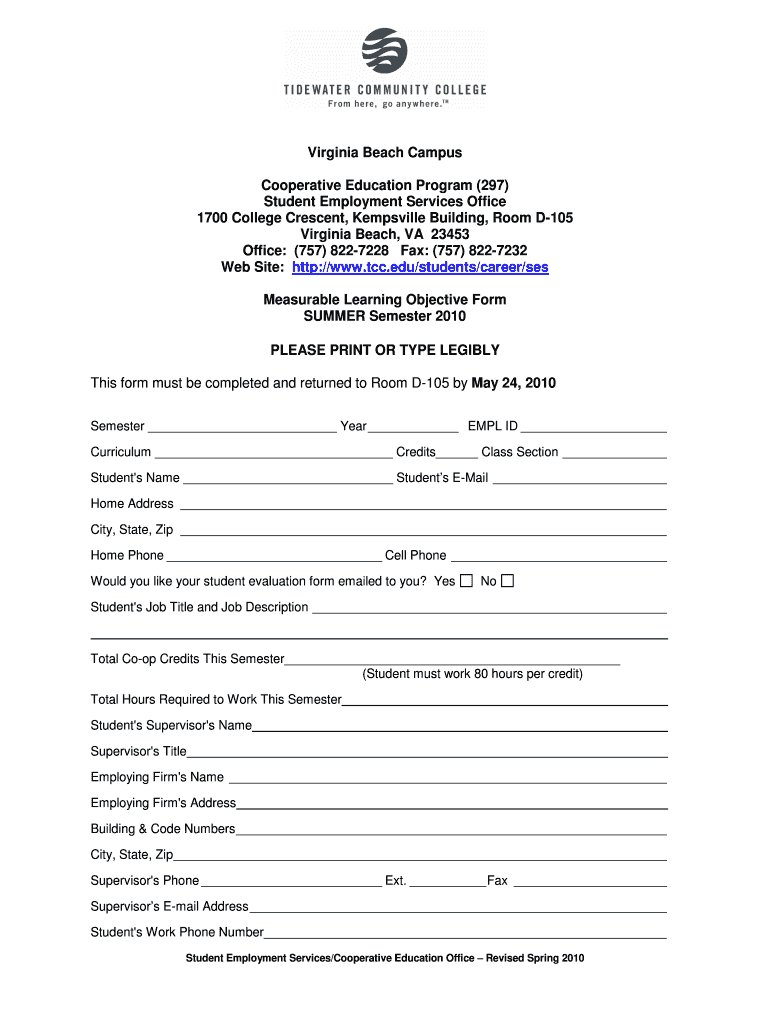
The Measurable Learning Objective Form serves as a tool to systematically outline, track, and evaluate specific learning outcomes related to student work experiences. It is primarily employed within educational settings, particularly those involving cooperative education programs. The form details job titles, job descriptions, and educational objectives, providing a structured format for defining what a student aims to learn during their work placement. The form's importance lies in its ability to link academic learning with practical application, offering a clear roadmap for students to achieve and measure intended educational goals.
Core Components
- Job Title and Description: Essential information about the position the student holds, including duties and responsibilities.
- Learning Objectives: Specific, measurable goals related to the student's work that align with their educational pursuits.
- Signatures: Verification from the student's supervisor and faculty that the learning objectives are recognized and validated.
How to Use the Measurable Learning Objective Form
Using the Measurable Learning Objective Form effectively involves a series of strategic steps to ensure clarity and alignment with educational objectives. Understanding these steps is crucial for both students and educators to benefit from this tool.
Detailed Steps
- Identify Objectives: Begin by identifying what you aim to achieve through the work experience—focus on skills, knowledge, and competencies.
- Draft Learning Goals: Draft specific, measurable, achievable, relevant, and time-bound (SMART) objectives.
- Consultation with Supervisors and Faculty: Engage with supervisors and faculty members to refine objectives, ensuring they align with course requirements and job relevance.
- Document and Submit: Clearly document the objectives on the form, obtain necessary signatories, and submit before the deadline.
Obtaining the Measurable Learning Objective Form
Accessing the Measurable Learning Objective Form typically involves a few straightforward steps. These may vary depending on the educational institution's protocols.
Common Methods
- Educational Institution’s Portal: Many institutions provide downloadable forms on their online academic portals.
- Direct Request from Faculty: Students might be required to request forms directly from their course instructors or cooperative education coordinators.
- Career Services Office: Institutions often have a career services office where forms can be collected in person or accessed digitally.
Key Elements of the Measurable Learning Objective Form
An in-depth understanding of the form's key elements ensures that users can maximize its functionality in setting practical and educational benchmarks.
Primary Sections
- Structured Learning Goals: Specific objectives that the form guides students to define, aligning educational theory with practical application.
- Verification Section: This area requires initials or signatures from supervisors and faculty, legitimizing the outlined learning objectives.
- Timeline for Achievement: Some forms may prompt students to identify specific timeframes for the completion of each learning goal.
Typical Users and Use Cases
The form is mainly used within academic settings by students, faculty members, and employer supervisors who are part of cooperative education programs.
Scenarios and Use Cases
- Student Internships: Students in internship roles benefit by articulating clear objectives that outline learning targets related to job duties.
- Educational Assessments: Faculty members use it to ensure that student objectives align with curriculum goals and evaluate educational efficacy.
- Mentor Feedback: Supervisors use the form to provide structured feedback on student performance relative to outlined objectives.
Steps to Complete the Measurable Learning Objective Form
Filling out this form is a systematic process that requires attention to detail and collaboration between students, faculty, and employers.
Comprehensive Guide
- Review Instructions Thoroughly: Begin by carefully reading the guidelines accompanying the form.
- Articulate SMART Objectives: Clearly define each learning objective using the SMART criteria to ensure they are precise and measurable.
- Seek and Incorporate Feedback: Discuss drafted objectives with both academic and workplace mentors, incorporating their feedback into a final draft.
- Get Required Signatures: Have the form signed by necessary parties to confirm the validity and approval of goals.
- Submission: Submit the completed form to the relevant educational office or platform by the specified deadline.
Examples of Using the Measurable Learning Objective Form
Understanding real-world applications can demystify the form's usage and help illustrate its effectiveness across various settings.
Practical Examples
- Business Students: Draft objectives focusing on understanding financial reports and customer service strategies during a retail internship.
- Engineering Students: Define goals around mastering specific machinery or software in a manufacturing internship.
- Healthcare Internships: Set priorities on patient interaction skills or administrative proficiency for nursing students during clinical placements.
Legal Aspects and Compliance
The form not only provides educational structure but also assures compliance with institutional regulations and educational standards.
Legal and Compliance Guidelines
- Verification and Accountability: Signatures assure that all parties are in agreement, which serves as a protective measure for both students and institutions.
- Adherence to Educational Standards: As part of accredited learning programs, these forms ensure that learning objectives meet institutional and industry standards.
- Record-Keeping: Proper documentation serves as a vital record for audits, assessments, and post-completion reviews.
Make ensuring compliance and understanding the legal relevance part of the objective-setting process while using the form. This comprehensive understanding not only fulfills educational and experiential learning goals but also facilitates alignment with legal educational guidelines.