






Definition & Meaning
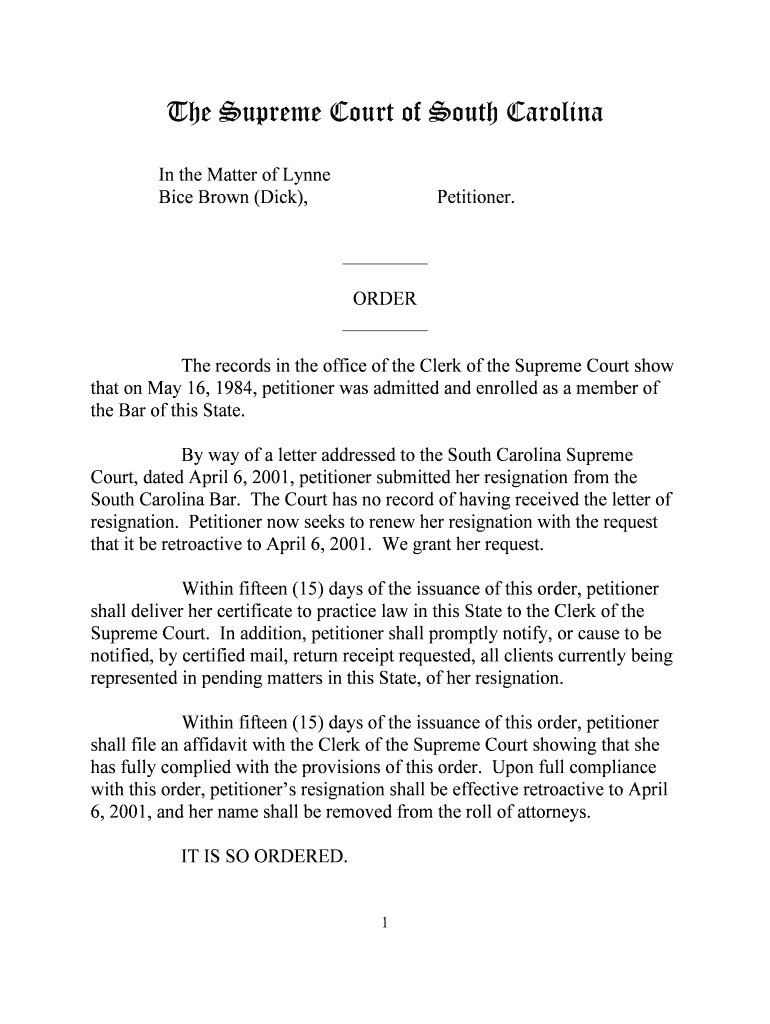
The "Order-IntheMatterofLynneBice-BrownDickcover doc - judicial state sc" refers to a legal document issued by a judicial authority, likely the Supreme Court or the Court of Appeals in South Carolina. It may involve decisions related to disciplinary actions, case rulings, or administrative orders. The document's formal nature signifies its importance and the necessity for precise comprehension of its contents.
How to Use the Order-IntheMatterofLynneBice-BrownDickcover doc
The document should be used to understand specific judicial decisions or instructions relevant to involved parties. When handling such orders:
- Read Thoroughly: Ensure that you grasp the language used, as legal terminology can significantly affect the outcome.
- Identify Obligations: Highlight parts of the document indicating any actions required from the parties involved.
- Consult Professionals: Engaging a legal expert can offer clarity and provide guidance on the necessary steps you should take in response.
Steps to Complete the Order-IntheMatterofLynneBice-BrownDickcover doc
Completing the document may involve providing required information or fulfilling conditions set by the judicial authority:
- Review Detailed Sections: Focus on each section's requirements to ensure no details are missed.
- Gather Necessary Documents: Compile any additional forms or files referenced.
- Submit Responses: Follow the appropriate channel for submission, whether online or in person, as dictated by the document.
Why You Should Order-IntheMatterofLynneBice-BrownDickcover doc
Ordering or obtaining this document may be critical for:
- Legal Compliance: Ensuring adherence to judicial orders.
- Informing Proceedings: Understanding the outcomes or instructions of a given legal case.
- Historical Record: Maintaining a record of decisions affecting legal rights or responsibilities.
Key Elements of the Order-IntheMatterofLynneBice-BrownDickcover doc
Key components of this document may include:
- Case Details: Information about the parties involved and the nature of the legal matter.
- Court Rulings: Decisions or orders issued by the court.
- Instructions: Any actions required from the individuals or bodies mentioned.
Legal Use of the Order-IntheMatterofLynneBice-BrownDickcover doc
Legally, this document serves as a binding directive:
- Compliance Obligations: Recognizing and complying with court rulings to avoid legal penalties.
- Legal Precedent: This can set a legal precedent affecting similar cases.
- Dispute Resolution: Utilizing the document to resolve or inform ongoing legal disputes.
Important Terms Related to Order-IntheMatterofLynneBice-BrownDickcover doc
Understanding terms used in this document can provide clarity. Some relevant terms include:
- Petitioner: The party initiating the legal action or appeal.
- Respondent: The opposing party in legal proceedings.
- Affirmation: The court's agreement with a lower court’s decision.
State-Specific Rules for South Carolina
In South Carolina, judicial documents may be subject to particular rules:
- Procedural Compliance: Meeting state-specific legal requirements outlined in the order.
- Filing Protocol: Adhering to the state’s guidelines for submitting responses or documents related to the order.
- Appeals Process: Understanding the state's rules on appealing court decisions if applicable.
Examples of Using the Order-IntheMatterofLynneBice-BrownDickcover doc
The document can be applied in:
- Bar Resignations: Documenting the conditions under which a lawyer may resign from the South Carolina Bar.
- Criminal Appeals: Referencing judicial orders that outline the outcome of criminal appeal cases.
- Negligence Claims: Using prior rulings as a reference for similar negligence-related legal issues.
Penalties for Non-Compliance
Failure to adhere to the directions in the judicial order can result in:
- Legal Sanctions: Penalties or fines imposed by the court.
- Contempt of Court: Legal consequences for failing to comply with court orders.
- Adverse Legal Outcomes: Negative effects on related legal proceedings or rights.
Digital vs. Paper Version
Choosing between digital and paper versions of the document may depend on:
- Convenience: Digital formats offer easier accessibility and sharing.
- Official Requirement: Some situations may require a printed hard copy for legal or verification purposes.
- Security: Digital documents should be handled with care to prevent unauthorized access.
Who Typically Uses the Order-IntheMatterofLynneBice-BrownDickcover doc
This document may be utilized by:
- Attorneys: Legal representatives managing cases affected by the rulings.
- Court Officials: Authorities responsible for upholding and enforcing judicial orders.
- Individuals Involved in Proceedings: Parties to a case needing to understand and comply with judicial decisions.


State-by-State Differences
While this document pertains specifically to South Carolina, one should be aware that:
- Jurisdictional Variations: Different states may interpret or implement similar orders differently.
- Legal Terminology Differences: Legal definitions and expectations can vary by state.
- Judicial Practices: Variations in how state courts handle similar judicial orders.