






Definition & Meaning
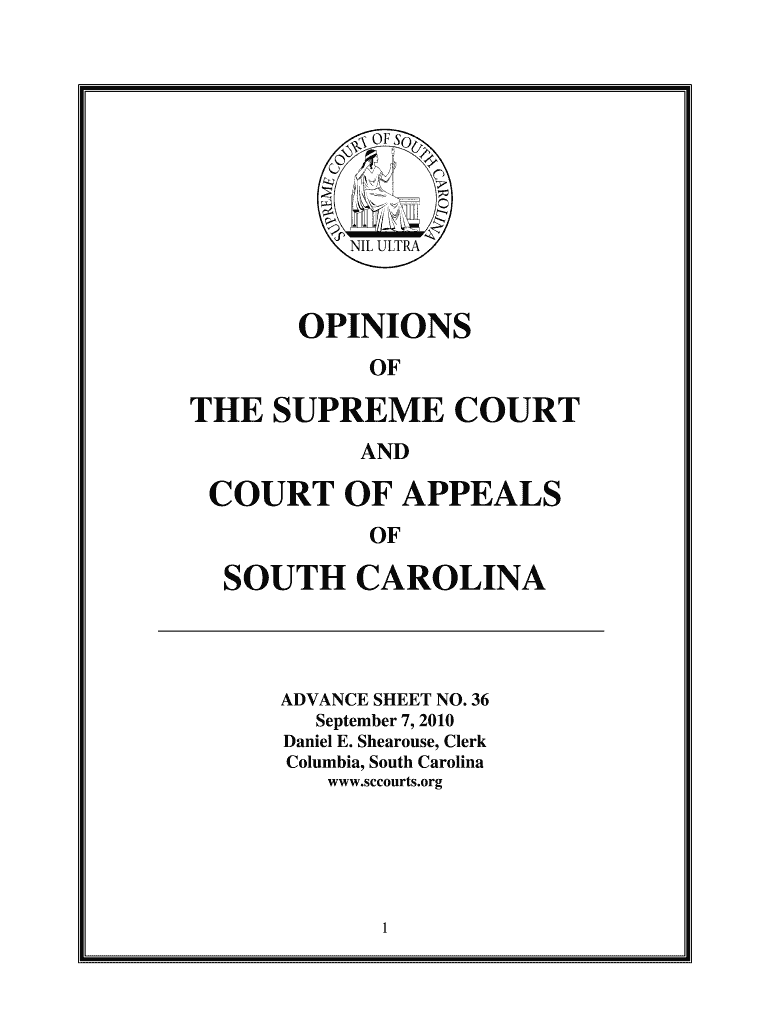
The "org 1 CONTENTS THE SUPREME COURT OF SOUTH CAROLINA PUBLISHED OPINIONS AND ORDERS 26875 SC Ambulatory" refers to a document collection featuring published opinions and orders from the Supreme Court of South Carolina. These documents provide insight into legal interpretations, rulings, and case summaries critical to understanding state law applications. The document includes specific cases such as SC Ambulatory Surgery v. SCWCC and addresses legal topics ranging from worker's compensation claims to family law procedural matters.
Key Elements of the Document
The document is divided into multiple sections, summarizing court decisions and their respective impacts on the interpretations of South Carolina law. Key elements include:
- Case Summaries: Overviews of each case, including SC Ambulatory Surgery v. SCWCC, detailing the legal context, core issues, and outcomes.
- Judicial Opinions: Detailed explanations of judicial reasoning behind each decision, shedding light on legal precedents.
- Orders: Decisions that have been affirmed, reversed, or remanded by the Supreme Court based on statutory interpretations or evidentiary standards.
How to Use the Document
Legal professionals and scholars use this document to analyze South Carolina Supreme Court rulings for precedents and insights into state legal procedures. It can be a valuable tool for:
- Legal Research: Understanding how similar cases have been handled in the past.
- Case Preparation: Preparing for hearings by examining analogous legal arguments and rulings.
- Educational Purposes: Teaching legal principles applied by the South Carolina Supreme Court.
Who Typically Uses the Document
The document is primarily utilized by:
- Legal Practitioners: Lawyers seeking to support their case arguments with precedents.
- Judges and Law Clerks: Reference for crafting judicial opinions.
- Law Students and Academics: Study material for understanding applications of state law.


Steps to Obtain the Document
To access the document, individuals can:
- Visit the South Carolina Judicial Department Website: Published opinions and rulings are often available online through the state's official judicial portal.
- Library Access: Some law libraries provide physical copies or online access to such documents.
- Request from Legal Organizations: Bar associations or legal aid groups may provide access to such resources for research purposes.
Important Terms Related to the Document
Understanding key terminology within the document can aid in deciphering legal texts:
- Opinion: A formal statement by a judge or court of the reasons for its decision.
- Order: A decision issued by a court or a judge.
- Appellant/Appellee: The parties involved in the appeal process, where the appellant is the party appealing, and the appellee defends the lower court's decision.
Examples of Using the Document
Practical applications of the document include:
- Case Analysis: Lawyers might study the SC Ambulatory Surgery v. SCWCC case to understand how the court interpreted workers' compensation laws.
- Academic Research: Scholars could analyze trends in judicial reasoning across similar cases over a period.
Legal Use of the Document
The document holds significant legal value in:
- Supporting Legal Arguments: Lawyers use case summaries to back claims in court presentations.
- Judiciary Insight: Provides a reference for judicial reasoning to be consistently applied in future cases.
State-Specific Rules
The document outlines how the Supreme Court of South Carolina handles cases according to state laws, offering insights into procedural nuances unique to South Carolina. This includes understanding local precedent and state-specific judicial processes.
State-by-State Differences
While this document focuses on South Carolina, it highlights how legal interpretations can vary markedly from those in other states. Each state's Supreme Court may address similar legal issues differently based on state statutes and judicial precedent.
Filing Deadlines / Important Dates
Recognizing significant filing deadlines associated with appeals based on this document is crucial for legal practitioners. Late submissions can impact case outcomes, emphasizing the necessity of understanding procedural timelines.
By understanding these aspects and utilizing the outlined steps, users can effectively navigate and apply the contents of the "org 1 CONTENTS THE SUPREME COURT OF SOUTH CAROLINA PUBLISHED OPINIONS AND ORDERS 26875 SC Ambulatory" for various legal procedures and educational initiatives.