






Definition & Meaning
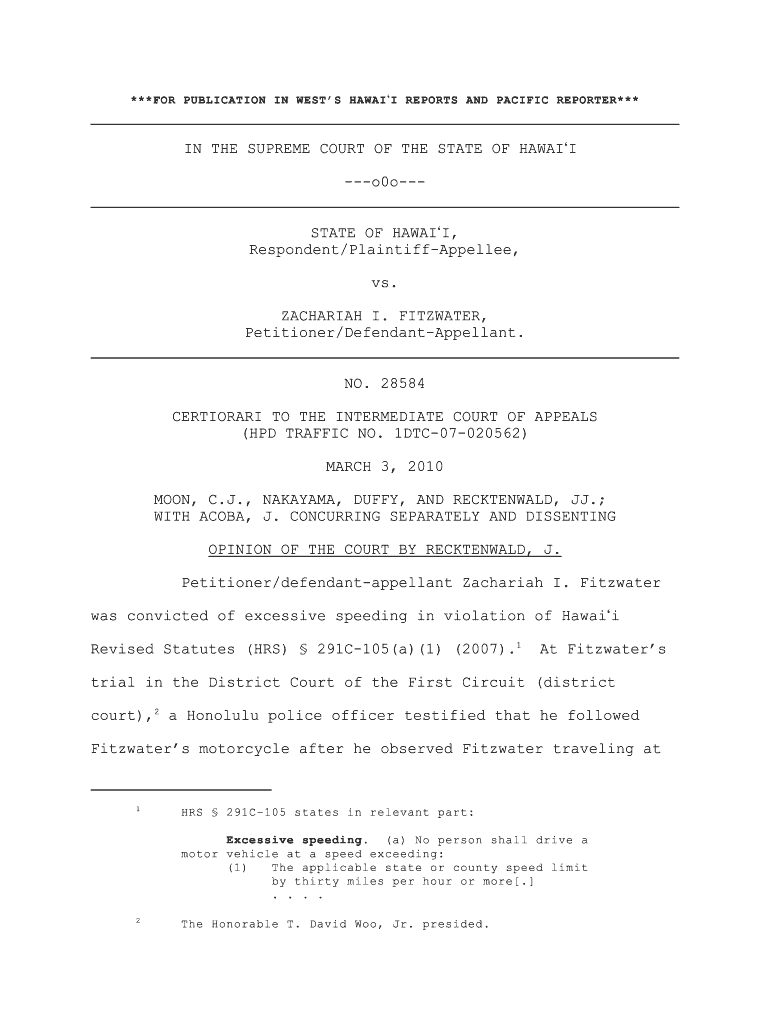
The "FOR PUBLICATION IN WESTS HAWAI#I REPORTS AND PACIFIC REPORTER IN THE SUPREME COURT OF THE STATE" refers to the practice and protocol of documenting and publishing judicial opinions and decisions from the Supreme Court of Hawai'i in recognized law reporting services. These reports serve as official records and are used for legal reference, academic study, and case law precedent.
- The content is aimed at professional legal entities, governmental bodies, and individuals involved in legal studies or practice.
- It provides a structured detailing of Supreme Court decisions, which help legal professionals analyze past rulings and understand their implications on future cases.
How to Use the Form in Legal Contexts
Using the Supreme Court publication format involves understanding its structure and relevance for legal purposes in Hawai'i and beyond.
- Legal practitioners utilize these reports to cite precedents in ongoing court cases, ensuring their arguments are substantiated with authoritative sources.
- Judicial reviews and evaluations often reference these publications to maintain consistency and familiarity with established legal standards.
Steps to Complete the Documentation
When involved in the submission or revision of documents for publication, follow these critical steps:
- Prepare the Document: Ensure all elements of the case, including findings, judgments, and relevant legal interpretations, are meticulously outlined.
- Review Legal Standards: Cross-verify the document against pre-existing cases with similar legal frameworks.
- Submit for Approval: Forward the document to the designated judicial office for review and approval for publication in official records.
Each step ensures that the documentation aligns with established legal protocols and accuracy standards.
Why Menu Options Matter in Legal Publications
Legal publications rely heavily on standardized and consistent documentation to uphold the integrity of legal proceedings.
- Legal transparency: Publications provide public access to legal decisions, promoting transparency within the legal system.
- Educational resource: Judicial decisions serve as educational materials for law students and academics analyzing legal trends and case law development.
Key Elements of the Form
The FOR PUBLICATION IN WESTS HAWAI#I REPORTS AND PACIFIC REPORTER form includes various components that establish comprehensive, authoritative legal reports:
- Case Title and Number: Identifies the specific legal case being documented and reported.
- Court Opinion: The official judgment and opinions delivered by the court.
- Legal Precedents Cited: References to previous legal decisions relevant to the present case.
- Judges' Contributions: Details the contributions and opinions of individual judges involved in the case.
Legal Use and Compliance
Ensuring compliance with legal guidelines is essential for the validity and acceptance of these publications in the judicial domain.
- Conformance to legal citation standards is critical, allowing legal professionals to reference cases confidently.
- Ensures the dissemination of accurate legal information that aligns with judicial norms and state regulations.
Important Terms and Concepts
Understanding specific legal terms associated with these reports is crucial for accurate interpretation:
- Admissibility: Refers to the conditions under which evidence is considered valid within a court setting.
- Vacate: The court’s decision to overturn a previous judgment or ruling.
These terms help in analyzing court decisions and understanding their implications.
Examples of Case Usage
Examples of how such documentation impacts real-world legal scenarios:
- Case Citation: Legal professionals cite these documents in court to support arguments, providing documented precedents.
- Law Education: Institutions use these reports as teaching aids, helping students analyze and debate real legal issues.
State-Specific Rules and Their Impact
Hawai'i follows distinct legal protocols and standards that may influence how these documents are generated and applied.
- Local legal statutes influence the interpretation and application of court rulings.
- Knowledge of state-specific legal traditions and statutes is vital for accurate legal practice.
Penalties for Non-Compliance
Failure to comply with publication standards can lead to significant legal repercussions:
- Legal malpractice or fines for incorrect documentation submission.
- An adverse impact on ongoing court proceedings or appeals that rely on accurate case documentation.
Who Typically Uses the Form
Understanding the typical users of these legal publications provides insight into their broader application and utility:
- Attorneys: Employ these reports for case research and to develop legal strategies.
- Judges: Reference prior cases to ensure continuity and consistency in judicial decisions.
The content caters primarily to legal professionals seeking thorough and accurate case documentation for legal and educational purposes.


Digital vs. Paper Version
Considering the format for distribution and access in contemporary legal environments:
- Digital Format: Provides easy access for legal practitioners and students, often available via legal databases.
- Paper Format: Traditionally used in courtrooms and libraries for reference, though less common in the digital age.
Choosing the appropriate format can affect accessibility and ease of use for different user groups.
Disclosure Requirements
Compliance with disclosure norms ensures transparency and reliability in the publication of legal documents.
- Ensures full comprehension of the legal context and implications of each judicial decision.
- Important for safeguarding the rights of individuals involved in the case and the broader legal community.