







Definition & Meaning
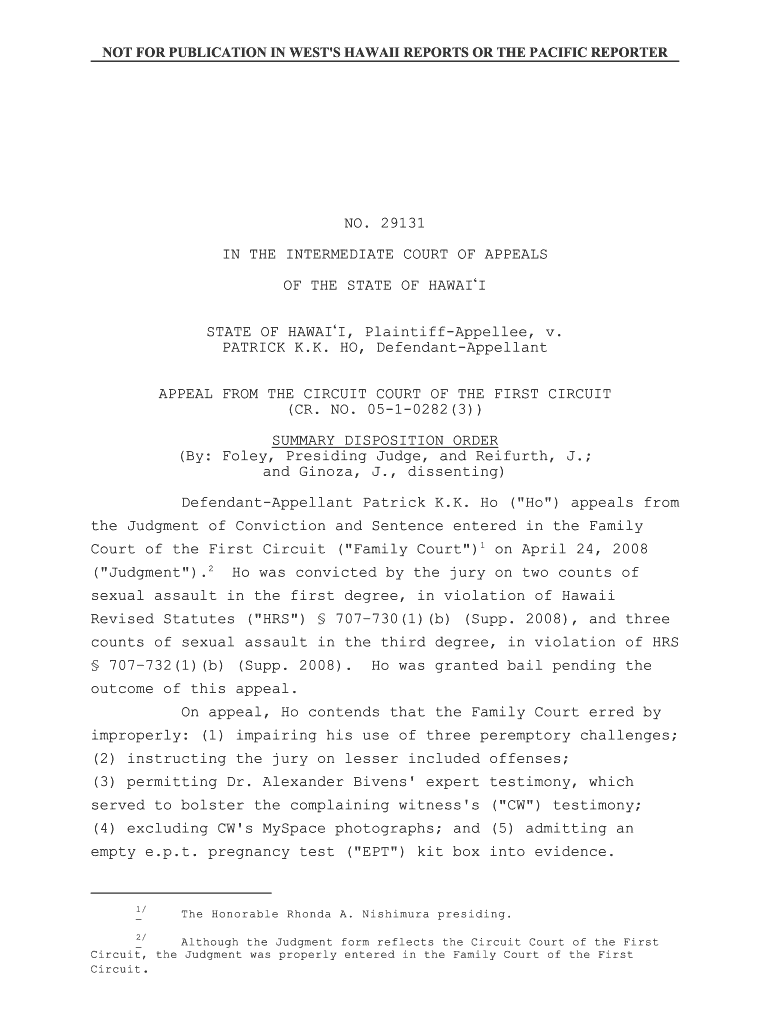
The 29131 in the Intermediate Court of Appeals of the State of Hawai'i State of Hawai'i is a summary disposition order that represents an appeal process in a legal context. This document is utilized when a party, typically the appellant, contests specific aspects of a trial verdict. The appeal aims to review the legal process of the trial conducted by the Family Court to uncover any errors that could have influenced the judgment. While summary disposition orders provide a concise resolution without detailed elaboration, their ultimate goal is to affirm or overturn parts of the prior court's ruling.
Steps to Complete the 29131 in the Intermediate Court of Appeals
-
Review the Trial Record: Start by obtaining the complete trial transcript and related documents from the original Family Court case. Ensure every detail is accurately captured, as these records form the basis of your appeal review.
-
Identify Grounds for Appeal: Clearly define the specific reasons for which the appeal is sought. This can include jury selection issues, errors in jury instructions, or improper admission of evidence.
-
Draft the Appeal Brief: Prepare a comprehensive appeal brief laying out the arguments and legal bases for the appeal. This document should cite relevant laws and prior case precedents.
-
Submit the Brief: File your brief with the Intermediate Court of Appeals. Adhere to submission guidelines regarding format, deadlines, and other procedural requirements.
-
Attend Oral Arguments: Engage in oral arguments if the court grants an opportunity. This allows for clarification of points raised in your written submissions.
-
Receive the Court's Decision: Await the court's ruling. The issuance of a summary disposition order will confirm or reject the appeal without extensive written opinion, focusing on correcting errors or affirming the original ruling.
Key Elements of the 29131 in the Intermediate Court of Appeals
-
Appellant and Appellee Role: The appellant initiates the appeal, challenging the initial court's decision, while the appellee responds, defending the original ruling.
-
Grounds for Appeal: Common grounds include incorrect legal interpretation, procedural errors, or mishandled evidence submissions.
-
Supporting Evidence: Presentation of clear, fact-based documentation from the original trial to support the appellate arguments.
-
Legal Representation: Often, both appellant and appellee are supported by legal professionals who navigate the complexities of appellate court requirements and argue on behalf of their clients.
Who Typically Uses the 29131 in the Intermediate Court of Appeals
-
Defendants and Plaintiffs in Family Court: Individuals involved in family-related legal disputes who believe that the trial court issued an incorrect judgment.
-
Legal Professionals: Attorneys specialized in appellate law assisting clients in refining arguments and navigating complex procedural rules.
-
Judges and Legal Aid Services: Providing interpretation and ensuring adherence to due process during appeals.


Examples of Using the 29131 in Legal Proceedings
-
Challenging Jury Instructions: An appellant may present evidence that the jury was improperly instructed on the laws applicable to the case, potentially affecting the verdict's fairness.
-
Addressing Evidence Admission: If inadmissible evidence was wrongly considered during trial, the appeal might argue it prejudiced the trial's outcome.
-
Reviewing Jury Selection Practices: Appeals could focus on unlawful exclusion or inclusion of jurors, arguing that it undermined the trial's impartiality.
Legal Use of the 29131
-
Appeal Mechanism: Provides a structured avenue for contesting and reviewing lower court decisions to ensure justice and correct any judicial errors.
-
Enhanced Legal Clarity: Through appeals, the legal process becomes more transparent, offering insight and improvement of legal practices.
-
Upholding Fair Trial Principles: Ensures every proceeding abides by established judicial standards, reinforcing belief in the legal system's integrity.
Important Terms Related to the 29131
-
Appellant: The party appealing a decision.
-
Appellee: The party responding to an appeal.
-
Summary Disposition Order: A concise court ruling on an appeal, without an extensive opinion.
-
Jury Instructions: Directions from the judge to the jury about the laws pertinent to the case they must apply when deciding a verdict.
By detailing these critical aspects, individuals and legal professionals better understand the purpose, process, and pivotal elements of the 29131 in the context of the Intermediate Court of Appeals of the State of Hawai'i.




