






Definition & Meaning
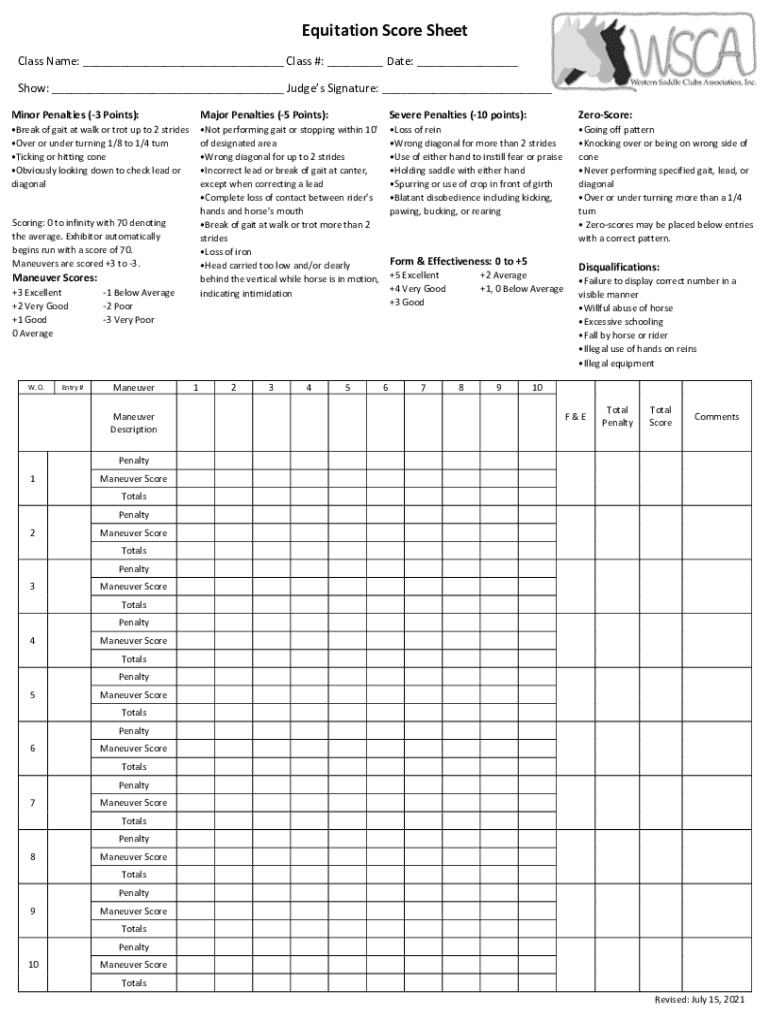
The Equitation Score Sheet is a specialized document used to evaluate and score the performance of riders in equestrian events. It is essential for judges to systematically assess riders based on specific criteria, allowing for a standardized approach in evaluating equestrian skills. This document captures a wide range of performance aspects, ensuring that judging is fair and comprehensive. Key elements scored include rider posture, control of the horse, and execution of maneuvers.
Key Elements of the Equitation Score Sheet
The Equitation Score Sheet is composed of several crucial elements that contribute to its function as a judging tool. These elements include penalties, scoring maneuvers, and a baseline score, typically starting at 70 points:
- Penalties: They are categorized into minor, major, and severe infractions. Each type affects the rider’s final score differently, emphasizing the importance of precision and skill in performance.
- Scoring Maneuvers: Each maneuver is assessed with a score ranging from +3 to -3, indicating the degree to which the maneuver was performed successfully or unsatisfactorily.
- Judges' Comments: An area where judges can record observations and specifics about the performance, providing valuable feedback for competitors.
Steps to Complete the Equitation Score Sheet
Completing the Equitation Score Sheet involves a detailed step-by-step process where judges must systematically evaluate each participant:
- Begin with the Baseline Score: Start each scoring sheet with a baseline of 70 points.
- Evaluate Each Maneuver: Assign scores to each maneuver based on criteria, using the +3 to -3 scale.
- Document Infractions: Record any minor, major, or severe infractions and adjust the score accordingly.
- Provide Comments: Utilize the comments section to offer constructive feedback.
- Finalize the Score: Sum individual scores and apply any necessary penalties to obtain the final rider score.
How to Use the Equitation Score Sheet
To effectively use the Equitation Score Sheet, judges and officials must be familiar with its structure and contents:
- Understanding Criteria: Familiarize with the scoring criteria and the significance of each maneuver.
- Real-time Assessment: During performances, judges must quickly and accurately note infractions and assign maneuver scores.
- Consistency: Judges should maintain consistency in scoring by adhering strictly to the sheet’s guidelines.
Who Typically Uses the Equitation Score Sheet
The primary users of the Equitation Score Sheet are judges and officials at equestrian events. They rely on this document to evaluate and provide fair assessments of rider performances:
- Judges: Use the sheet to assign scores based on established criteria and personal observations.
- Event Organizers: Ensure that all participants are judged uniformly by utilizing a standardized form.
- Riders: While not directly using the score sheet, they benefit from understanding scoring criteria for performance improvements.


Important Terms Related to the Equitation Score Sheet
Familiarity with terminology is crucial for comprehending the Equitation Score Sheet effectively:
- Baseline Score: The initial score from which adjustments for performance are made.
- Maneuver Score: A score assigned to the execution of specific maneuvers.
- Infraction: Any deviation from expected performance standards, affecting the score.
- Judge’s Comments: Feedback provided by the judge, offering insights into the performance.
Legal Use of the Equitation Score Sheet
The Equitation Score Sheet serves important legal roles in the equestrian community:
- Standardization: Provides a uniform method for scoring, reducing the chances of disputes over judgments.
- Transparency: Enables judges to provide clear, documented reasoning behind scores.
Examples of Using the Equitation Score Sheet
In practice, the Equitation Score Sheet is applied during competitions:
- Local Shows: Often used in smaller circuits to establish consistent judging practices.
- National Competitions: At higher levels, equitation score sheets ensure that competitors are judged to the same professional standards.
The balance between precision and flexibility is what makes the Equitation Score Sheet a vital tool in equestrian sports. By standardizing judging criteria while allowing for detailed commentary, it facilitates fair and comprehensive assessments of rider performance.