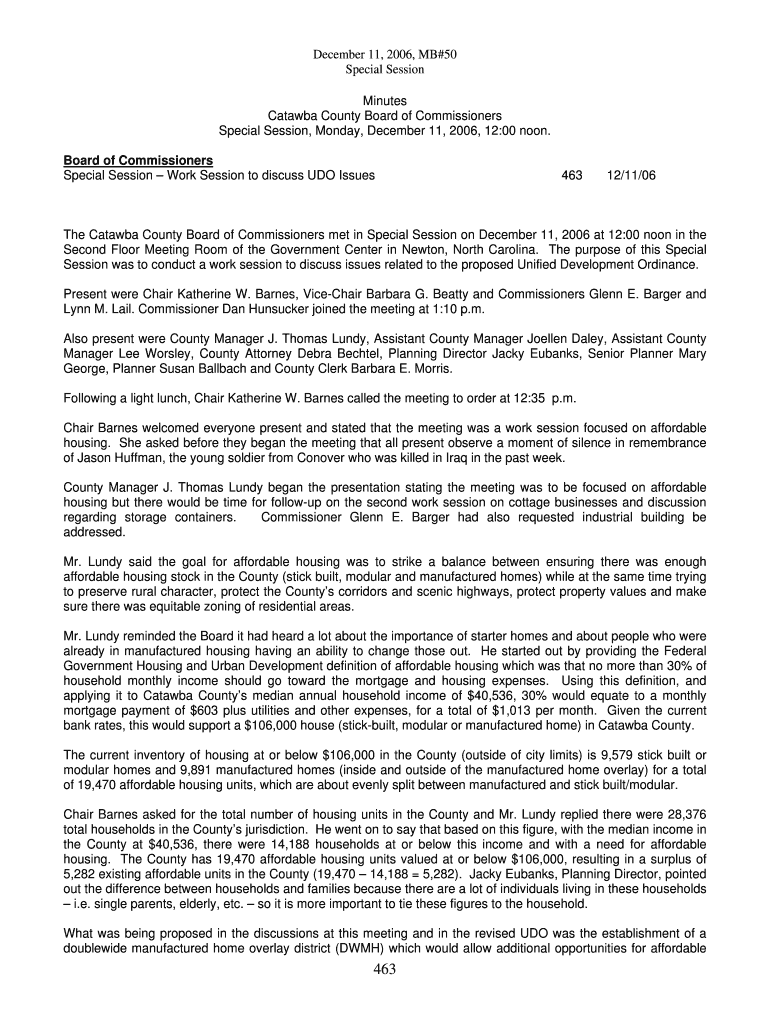







Definition and Purpose of the December 11, 2006, MB#50 Special Session
The December 11, 2006, MB#50 Special Session held by the Catawba County Board of Commissioners focused on discussing the Unified Development Ordinance (UDO). The primary intent was to address issues relating to affordable housing and zoning regulations. Key points included the creation of a doublewide manufactured home overlay district to boost affordable housing options while maintaining the rural character and property values. Additionally, the session tackled the use of metal as a primary building material in certain districts, aiming to harmonize aesthetic requirements with housing affordability.
Importance of the Session and Its Implications
The significance of the December 11, 2006, MB#50 Special Session lies in its efforts to balance community aesthetics with the need for affordable housing solutions. The session aimed to help Catawba County adapt to housing demands while preserving long-established community characteristics. This balance is crucial for ensuring that zoning ordinances continue to meet residents' needs without compromising the county's overall visual and environmental quality.
How to Access Information from the Session
To obtain information from the December 11, 2006, MB#50 Special Session, interested parties can contact the Catawba County Board of Commissioners. Detailed records of meeting minutes, documents discussed, and ordinances proposed can typically be accessed through their official website or by visiting their office. Engaging with local government representatives can also be a valuable way to gain insights into the session's outcomes and ongoing impacts.
Key Elements Addressed in the Session
During the session, several integral components were discussed:
- Affordable Housing: Establishment of dedicated zones to accommodate doublewide manufactured homes.
- Zoning Regulations: Introduction of new guidelines for storage containers and materials used in construction.
- Rural Preservation: Strategies to protect rural aesthetics while increasing residential options.
These elements highlight the session's comprehensive approach to regional development.
Legal Considerations and Compliance
The December 11, 2006, MB#50 Special Session brought forth legal considerations tied to zoning changes and compliance with the Unified Development Ordinance. Developers and homeowners should be aware of any new requirements or restrictions that may have resulted from the session. Understanding these legal aspects is crucial for staying compliant with local regulations and avoiding potential penalties.
Typical Users of the Information
The information from the December 11, 2006, MB#50 Special Session is primarily useful for:
- Homeowners: Individuals looking to understand how the changes may affect their property or future property development.
- Developers: Companies planning new projects that must comply with updated zoning laws.
- Policy Makers and Planners: Government officials and urban planners who need to align future projects with the directives established in the session.
Application Process for Development Changes
The application process for implementing changes as discussed in the session involves several steps:
- Review the Updated Ordinance: Familiarity with the new UDO guidelines is essential.
- Prepare Required Documentation: Gather all necessary plans, reports, and certifications related to the intended development.
- Submit an Application: Applications must be submitted to the appropriate county department for approval.
- Await Approval: Compliance reviews are conducted to ensure alignment with the session decisions before final approval.
Each step requires careful attention to detail and a thorough understanding of the session's output.
Examples of Application and Real-World Scenarios
Real-world application of the December 11, 2006, MB#50 guidelines is evident in several scenarios:
- Development of Affordable Housing Complexes: New housing projects compliant with zoning regulations can be put forth to cater to low-income families.
- Renovation of Existing Properties: Owners may need to adjust plans to the newly discussed materials and design guidelines.
- Community Engagement Initiatives: Encouraging public participation in decision-making processes related to future zoning and development projects.
These examples showcase the tangible impacts of the session on local development dynamics.
Software Compatibility and Modern Access
For individuals looking to convert, edit, or manage documents related to the December 11, 2006, MB#50 Special Session, DocHub provides a valuable platform. The platform's compatibility with various formats, alongside its integration with cloud services such as Google Drive and Gmail, enables seamless management of relevant documents. Users can securely edit and annotate minutes or related files directly within the platform, ensuring all stakeholders are viewing the most accurate and up-to-date information.