Definition and Meaning of Specialized Services Application
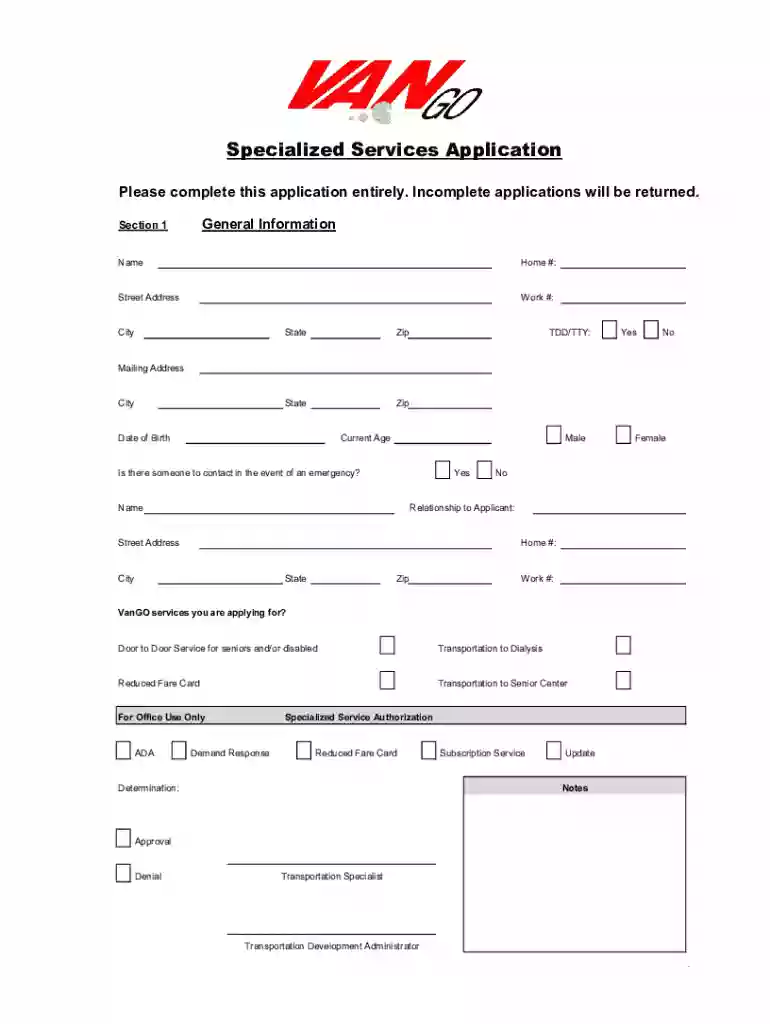
The Specialized Services Application is a crucial document for individuals seeking transportation services like VanGO due to disabilities or age-related needs. This form gathers essential information about the applicant's personal background and details concerning the specific transportation services required. It aims to ensure that those with mobility challenges receive appropriate accommodations, such as door-to-door service or access to reduced fare cards. Additionally, this application serves as a formal request for specialized transportation services, which helps service providers evaluate and verify the applicant's eligibility through specified criteria.
Key Components of the Application
- Personal Information: Collects basic applicant details, including name, contact information, and address, to ensure accurate identification and communication.
- Disability Details: Requires a comprehensive outline of the applicant's disability and how it affects their ability to use public transit.
- Service Type Request: Allows applicants to specify the types of services needed, such as door-to-door assistance or reduced fare options.
- Professional Verification: Requires input from qualified professionals to substantiate the applicant’s disability and its impact on their daily living.
Steps to Complete the Specialized Services Application
Completing the Specialized Services Application involves several steps to ensure all necessary information is provided accurately and comprehensively. Here is a structured guide to help applicants fill out the form:
- Gather Personal Information: Begin by collecting basic identification details such as full name, address, phone number, and email.
- Detail Your Disability: Clearly describe your disability, including its nature and how it impacts your use of public transportation.
- Choose Service Requirements: Identify and specify the types of specialized transportation services you seek, such as door-to-door or reduced fare.
- Seek Professional Verification: Contact a healthcare professional to complete the necessary sections verifying your disability and its functional impact.
- Review and Submit: Double-check the provided information for any errors or omissions before submission.
Practical Tips for Completion
- Accuracy is Essential: Double-check all entries to avoid delays due to incorrect information.
- Professional Coordination: Coordinate with a healthcare professional early in the process to ensure timely completion of the verification section.
Key Eligibility Requirements
- Disability Impact: The applicant’s disability must significantly hinder their capacity to use public transportation independently.
- Age Considerations: Applicants of advanced age facing mobility challenges may also qualify for these services.
- Residency Limitation: Typically, applicants should reside within the service area of the transportation provider offering these specialized services.
Examples of Eligibility Categories
- Mobility Impairments: Individuals who rely on mobility aids like wheelchairs.
- Vision Impairments: People with severe vision loss affecting independent travel.
- Cognitive Disabilities: Those with cognitive conditions impacting travel-related decision-making.
Professional Verification Process
The Specialized Services Application requires validation of the applicant's condition by a qualified professional. This verification process ensures that transportation services are aligned with the genuine needs of applicants.
Steps involved in Verification
- Professional Identification: Select a qualified healthcare professional familiar with your disability.
- Submission of Documentation: The professional must complete specific sections of the application, providing detailed insights into the applicant's condition.
- Professional Qualifications: The verifier should hold appropriate credentials in areas such as medicine, occupational therapy, or social work.
Real-World Application
For instance, a physical therapist may be asked to verify the mobility challenges of an applicant who uses a wheelchair. The therapist would outline the applicant’s daily limitations and how specialized transportation is essential for fulfilling their daily mobility needs.
Form Submission Methods for Specialized Services Application
Submitting the Specialized Services Application can be done through several methods, each offering convenience depending on the applicant's preferences and capabilities. Choosing the right submission channel can enhance the processing speed of the application.
Available Submission Options
- Online Submission: Applicants can complete and submit the form directly through the transportation provider’s website, ensuring faster processing times.
- Mail: The application can be printed and mailed to the respective service provider's address as listed on the application instructions.
- In-Person Submission: Drop off the completed form at designated service centers for a more personalized application process.
Selecting the Best Method
- Time Sensitivity: Online submission is advisable for applicants needing quick service confirmation.
- Personal Consultation: In-person delivery may suit individuals who prefer direct interaction with service coordinators.
Importance of the Specialized Services Application
This application plays a critical role in ensuring individuals with disabilities or age-related mobility challenges receive fair access to transportation services designed to improve their independence and quality of life.
Impact on Daily Living
- Enhanced Mobility: Provides access to transportation options that cater specifically to individual needs.
- Quality of Life Improvement: Ensures independence and improves participation in community activities by overcoming barriers posed by conventional public transit systems.
Broader Societal Benefits
- Inclusive Community Integration: Allows for more inclusive participation of all community members, irrespective of their physical capabilities.
- Resource Allocation: Helps service providers allocate transportation resources efficiently based on verified needs.
Key Elements of Specialized Services Application
Identifying the core elements of the application provides clarity on its structure and content, facilitating easier completion for applicants.
Core Sections
- Applicant Information: Includes basic personal details and contact information.
- Disability Description: Detailed narrative on the nature and extent of the disability.
- Service Request Options: Selection of specific transportation services needed.
- Professional Endorsement: Validation of the applicant's condition by a qualified professional.
Utilization Insights
Each section of the form should be accurately filled out to support the application’s acceptance, ensuring all relevant details are captured for a comprehensive assessment of the applicant's needs.
Digital vs. Paper Version of the Specialized Services Application
The Specialized Services Application is available in both digital and paper formats, providing flexibility based on user preference and technological capability.
Comparing Formats
- Digital Version: Accessible through online platforms, offering ease of editing and swift submission. Ideal for those comfortable with digital technology.
- Paper Version: Available for printing and manual completion, suitable for applicants who may not have reliable internet access.
Considerations for Choosing a Version
- Digital Accessibility: Digital versions can be filled out and submitted more quickly, shortening the application timeline.
- Personal Preference: Some applicants may prefer the tactile experience of completing a paper form, which can be easily reviewed without technical requirements.
Choosing the most appropriate format depends on the applicant's comfort with technology and access to necessary resources, ensuring that all applicants can submit their forms in a manner most suitable to them.