
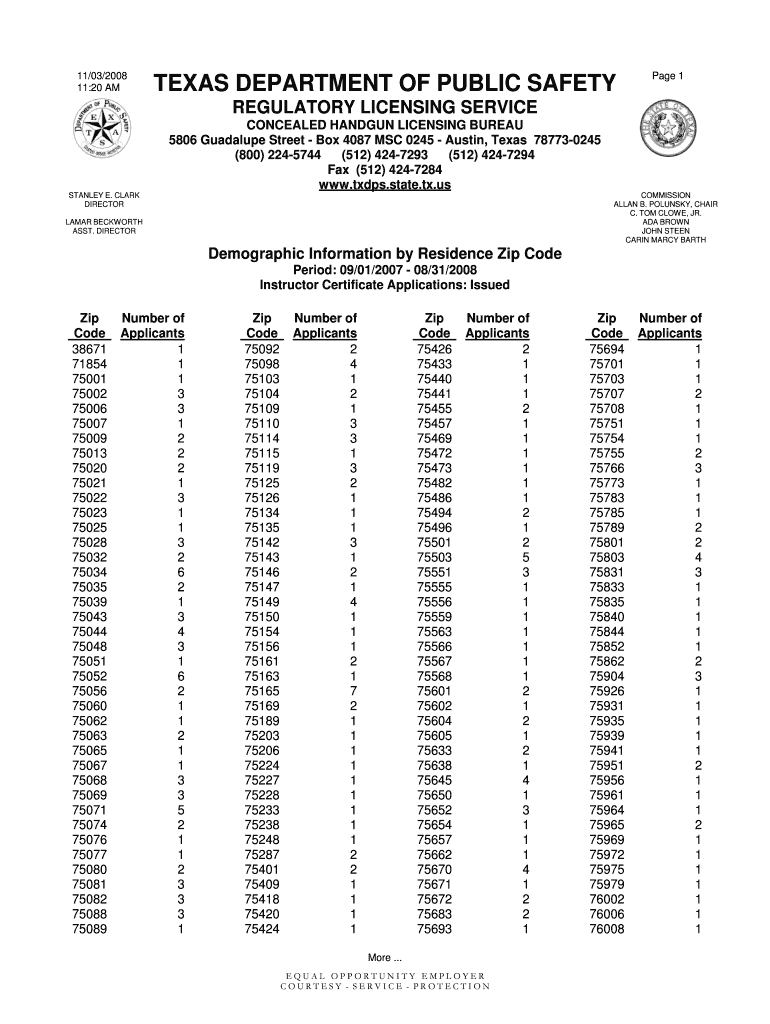







Understanding the Demographics by Residence Zip Code Report
The "Demographics by Residence Zip Code Report" is a detailed document issued by the Texas Department of Public Safety (TXDPS). It provides demographic data related to the distribution of instructor certificate applications for concealed handgun licensing. This report is vital for understanding demographic trends across different regions based on residence zip codes.
Purpose and Importance of the Report
This report serves multiple purposes:
- Policy Formulation: Helps policymakers analyze demographic concentrations and tailor public safety initiatives accordingly.
- Community Insights: Provides insights into community-specific data, aiding local government and NGOs in resource allocation.
- Research and Planning: Useful for researchers studying demographic changes and for planning future state-driven initiatives related to public safety.
How to Use the Demographics Report
To effectively utilize this report:
- Identify Target Areas: Use zip code data to pinpoint specific regions for targeted interventions.
- Analyze Trends: Compare data year-over-year to identify trends and make projections.
- Formulate Strategies: Develop strategies for resource allocation and community engagement based on demographic findings.
Obtaining the Report
To access the report, follow these steps:
- Visit the TXDPS Website: Check the official website for public safety reports.
- Contact Regulatory Licensing Service: Reach out via email or phone for direct access or specific data requests.
- Public Records: Check if the report is available under public records for more convenient access.
Completing the Demographics Report
Understanding the procedure to complete related forms or applications can facilitate better report usage.
Steps to Interact with the Report
- Gather Preliminary Data: Ensure you have basic demographic facts before diving into detailed exploration.
- Organize Data by Zip Code: Create a spreadsheet or database to manage information by zip code for easier analysis.
- Integrate Additional Data: Combine report findings with other regional data for a comprehensive view.
Stakeholders and Typical Users
Various groups utilize this report, including:
- Public Safety Officials: Use demographics to enhance security measures.
- Policy Analysts: Employ data for crafting public policy.
- Educational Institutions: Consider demographic factors for study programs or research projects.
Key Elements of the Report
The report comprises several critical components:
Important Data Segments
- Applicant Numbers: Breaks down certificate applicants by zip code.
- Demographic Composition: Includes age, gender, and other relevant demographic details.
- Comparative Analysis: Provides year-on-year comparisons to track changes and developments.
Legal and State-Specific Rules
Understanding the legal context is critical:
- Privacy Regulations: Ensure data usage adheres to privacy laws and regulations.
- State Compliance: Verify that any analysis aligns with Texas legal requirements and public policy goals.
Practical Examples and Usage Scenarios
This report is applicable in numerous scenarios:
Examples of Utilization
- Grant Applications: Use demographics to support funding requests for community programs.
- Public Health: Inform health departments for better targeted interventions.
- Urban Planning: Assist city planners in addressing population concentration areas.
Business Insights
Businesses can leverage demographic data for:
- Market Analysis: Determine potential markets based on population demographics.
- Site Selection: Use zip code analysis to decide on new locations for expansion.
Reporting Regulations and Technologies
When dealing with this report, consider its digital versus paper format, compatibility with various software, and technological enhancements.
Submission and Compatibility
- Digital Use: Prefer digital formats for ease of access and integration with analytical tools.
- Software Compatibility: Ensure compatibility with popular programs like QuickBooks or TurboTax for seamless data management.
Understanding Penalties and Compliance
Adhering to guidelines is crucial:
Compliance Penalties
- Non-compliance: Failing to use report data properly could result in ethical breaches or legal issues.
- Data Inaccuracy: Inaccurate data representation may lead to penalties or invalidation of findings.
State-by-State and Business Type Relevance
While the report primarily pertains to Texas, its methodology can serve broader purposes.
Broader Application
- State Variations: Consider adopting the methodology in other states for regional studies.
- Business Sectors: Tailor findings to sectors such as finance, healthcare, or real estate for strategic benefits.




