






Definition & Meaning
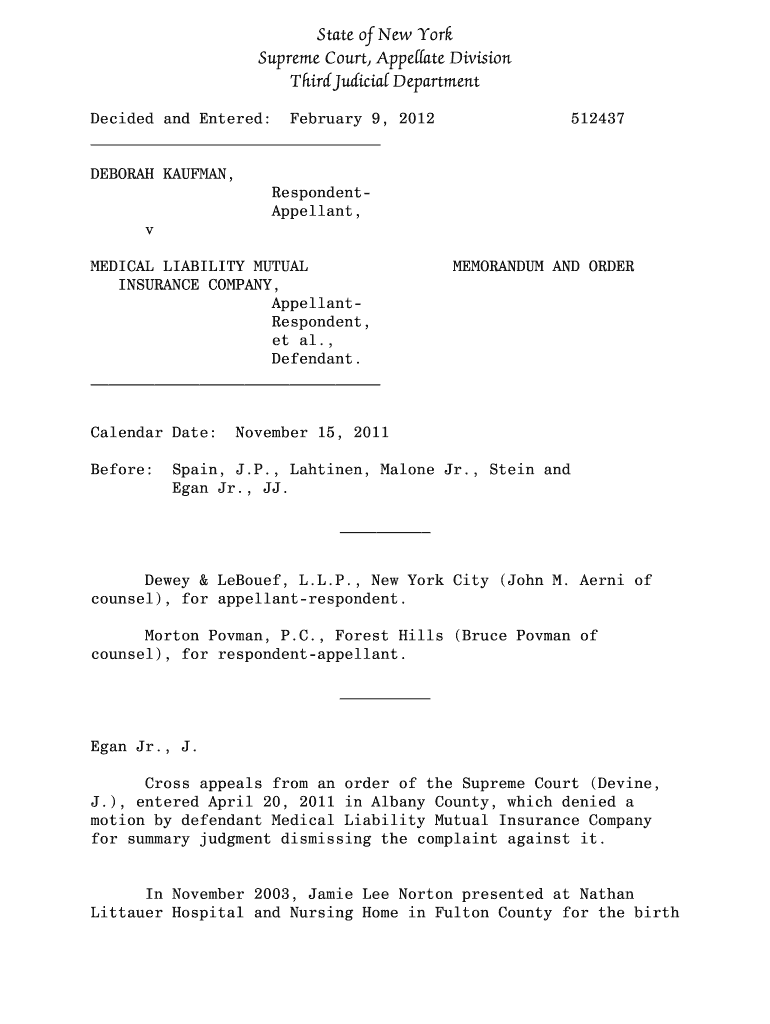
The "DEBORAH KAUFMAN, - decisions courts state ny" refers to judicial decisions from courts in New York involving Deborah Kaufman. These decisions typically arise from civil litigation, such as medical malpractice suits or insurance disputes. The term frequently pertains to case outcomes, legal interpretations, and procedural determinations made by the New York Supreme Court or Appellate Division, providing insights into how specific legal principles are applied.
Key Legal Terms
- Summary Judgment: A judicial determination ruling that one party is entitled to win the case without a trial because there is no dispute about the material facts.
- Cross Appeal: When both parties in a case file separate appeals against aspects of the court's decision.
How to Use the DEBORAH KAUFMAN, - Decisions Courts State NY
Individuals can use these court decisions to understand how similar cases might be adjudicated. Legal professionals, such as attorneys and paralegals, may analyze these decisions to prepare for court cases. By examining past rulings, they can anticipate arguments, predict potential outcomes, and craft strategies accordingly.
Practical Applications
- Use as case law references in legal briefs
- Utilize decisions for legal research and analysis
How to Obtain the DEBORAH KAUFMAN, - Decisions Courts State NY
Court decisions can be accessed through various methods, including online legal databases, public court records, and official court websites. These sources provide comprehensive access to case details, rulings, and legal precedents.
Access Sources
- Legal Databases: Westlaw, LexisNexis
- Court Websites: New York State Unified Court System
Steps to Complete a Legal Research on DEBORAH KAUFMAN Cases
- Identify the Case: Know the specific case name or docket number.
- Access the Database: Use online legal databases to locate the decision.
- Review Court Ruling: Analyze the legal reasoning and judgment details.
- Compile Related Cases: Find case laws cited within the decision for deeper research.
Why Legal Professionals Follow DEBORAH KAUFMAN, - Decisions Courts State NY
Understanding court decisions involving Deborah Kaufman provides valuable insights into legal reasoning and interpretations specific to New York's judicial system. These decisions can guide legal practices and inform tactical decisions in ongoing cases.
Benefits
- Precedential Value: Influences subsequent rulings on similar cases.
- Insight into Court Procedures: Helps in understanding procedural nuances.
Key Elements of the DEBORAH KAUFMAN, - Decisions Courts State NY
Court decisions encompass several critical components, including factual background, legal issues, and judgment rationale. These elements shape the decision's legal and factual basis, rendering it an authoritative point of reference.
Components of a Decision
- Factual Background: Summary of the case facts and procedural history.
- Legal Analysis: Discussion of legal principles applied.
- Judgment: Final decision of the court, including any directives.
State-Specific Rules for DEBORAH KAUFMAN Cases
New York law governs the procedural and substantive aspects of cases involving Deborah Kaufman. This includes distinctive procedural rules, legal standards, and evidentiary requirements that shape case outcomes.
Unique Aspects
- New York Civil Procedure: Specific procedural guidelines that must be followed.
- State Law Interpretation: State-specific legal standards and interpretations.
Examples of Using DEBORAH KAUFMAN, - Decisions Courts State NY
Legal practitioners often leverage past decisions for factual comparisons and strategic planning. For example, a similar medical malpractice case might use Kaufman's decisions to predict court attitudes toward breach of contract claims.
Case Study Example
- Medical Malpractice: Referencing Kaufman’s decision to support arguments involving breach of contract and deceptive business practices.
Legal Use of the DEBORAH KAUFMAN, - Decisions Courts State NY
These decisions serve as binding or persuasive legal authority in subsequent cases. Lawyers and judges may rely on the legal principles in these decisions to guide judicial reasoning and outcomes.
Applicability
- Binding Precedent: Used by lower courts in similar future cases.
- Persuasive Authority: Influences decisions in comparable jurisdictions.