






Definition and Meaning
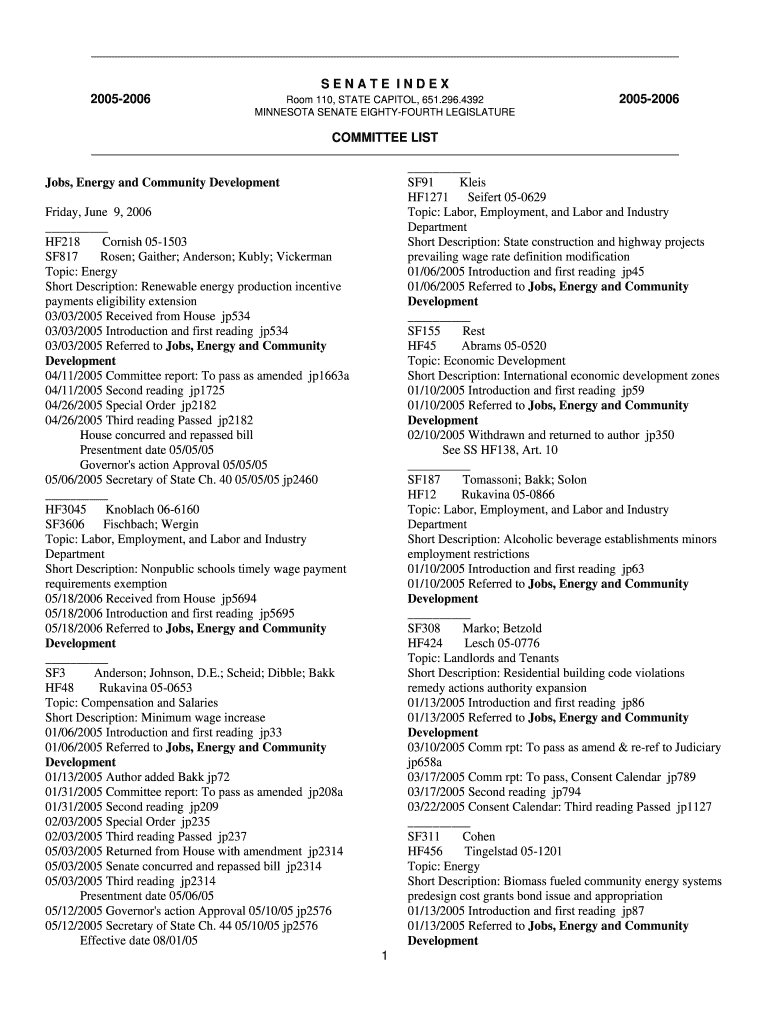
The "Committee List Jobs, Energy and Community Development doc - senate leg state mn" refers to a comprehensive index documenting the activities and legislative processes of the Minnesota Senate during a specific session, particularly during the 2 timeframe. This document includes detailed information regarding bill introductions, referrals, readings, and outcomes, focusing on sectors such as jobs, energy, housing, economic development, and public utilities. The collective information serves as a crucial reference tool for understanding legislative priorities and actions by the Minnesota Senate within the outlined period.
How to Use the Document
To effectively utilize the "Committee List Jobs, Energy and Community Development doc - senate leg state mn," one should start by identifying the specific areas of interest, such as energy policies or economic development initiatives. Users can then delve deeper into the document to find relevant bills, their progression through various readings, and committee referrals. Understanding these components can provide valuable insights into the legislative process and the focal points of the Minnesota Senate during that session.
Practical Applications
- Researchers and policy analysts might use the document to track legislative changes over time.
- Business leaders in the energy sector can assess the impact of passed bills on their operations.
- Community development professionals might analyze past priorities to predict future legislative trends.
Important Terms Related to the Document
Understanding the specific terminology associated with the "Committee List Jobs, Energy and Community Development doc - senate leg state mn" can enhance comprehension. Key terms include:
- Bill Introduction: The initial stage where a legislative proposal is presented for consideration.
- Committee Referrals: The process of assigning bills to specific committees for detailed examination.
- Readings: The multiple stages a bill goes through in the legislative process, often involving debates and amendments.
Steps to Complete the Document
As this is a reference document created by the Minnesota Senate, completion in the typical sense isn't applicable. Instead, if you're using it for research or analysis, here is an approach:
- Identify Objectives: Determine what information you need from the document.
- Search for Specifics: Use the document’s index to locate relevant bills or legislative actions.
- Analyze the Content: Review the details provided on legislative processes and outcomes.
- Document Findings: Record insights and information gleaned for future reference.
Key Elements of the Document
The core components of the "Committee List Jobs, Energy and Community Development doc - senate leg state mn" include:
- Bill Summaries: Concise outlines of each bill, detailing its intent and scope.
- Legislative Actions: Comprehensive records of readings, amendments, and voting outcomes.
- Committee Insights: Detailed records of which committees were involved in bill discussions and actions.
Who Typically Uses the Document
This document is a vital resource for various stakeholders:
- Policy Makers: Legislators and governmental officials use it to understand past legislative landscapes.
- Advocacy Groups: Organizations advocating for changes in areas like energy or housing rely on such documents to build their case.
- Academics and Historians: Educators and researchers use the document as a historical record of legislative activities.


Legal Use of the Document
The document is a legal and official record of the Minnesota Senate's legislative session activities. It is protected under government documentation laws and is often used to verify the legality and progression of certain legislative measures. Legal professionals may utilize this record to support cases involving legislative disputes or to provide context for specific legal frameworks enacted during the session.
Examples of Using the Document
Several scenarios emphasize the utility of the "Committee List Jobs, Energy and Community Development doc - senate leg state mn":
- Case Study on Energy Policy: A student conducting research could track how energy-related legislation has evolved.
- Policy Revision: Legislators might examine outcomes of past bills to guide future policy planning.
- Public Awareness: Community groups may reference the document when educating members about legislative impacts on local development projects.