






Definition & Meaning
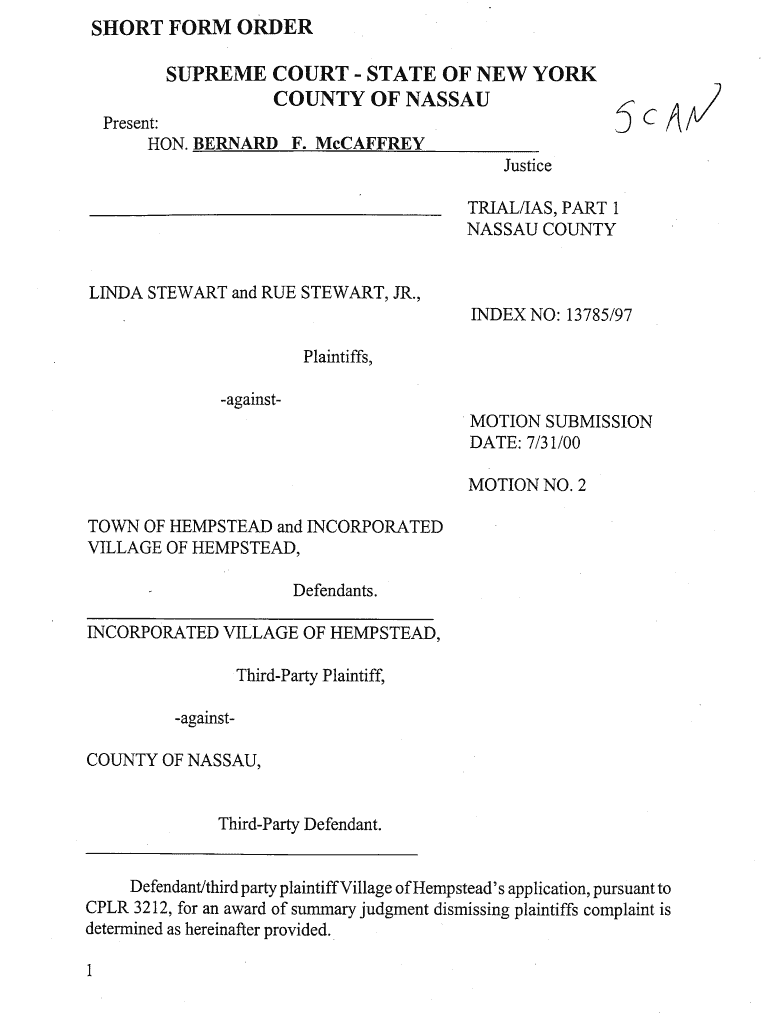
The phrase "NASSAU COUNT - decisions courts state ny" refers to judicial decisions issued by courts within Nassau County, New York, a locality on Long Island. These decisions usually involve interpretations and applications of New York State laws in various civil, criminal, and administrative matters. Courts within this jurisdiction include the Supreme Court of New York, Nassau County, and other lower courts that handle a variety of cases. Decisions rendered can serve as precedents and are essential for understanding legal standards applicable within the county.
How to Use the NASSAU COUNT - Decisions Courts State NY
Legal professionals, researchers, and the public can use Nassau County court decisions to glean insights into how specific laws are interpreted and enforced in the county. By analyzing these decisions, one can gain an understanding of local judicial trends, precedents that might influence similar cases, and legal reasoning for strategic preparation in upcoming cases. For example, prior decisions can guide attorneys in preparing arguments likely to resonate based on historical judicial behavior. They are also essential for academic pursuits, aiding students or scholars in studying New York State law's applications.
How to Obtain the NASSAU COUNT - Decisions Courts State NY
Accessing Nassau County court decisions is straightforward through various sources. The New York State Unified Court System provides online databases where decisions are archived. Legal databases like Westlaw, LexisNexis, and Bloomberg Law offer comprehensive access to court documents and decisions. Public records might also be available physically at court clerks' offices within the county for those seeking hard copies. It's crucial for users to have access to these resources, especially legal professionals who rely on precedents for case preparation.
Steps to Complete Research on NASSAU COUNT - Decisions Courts State NY
- Identify Needs: Determine the specific legal issue or question and the relevant court decisions needed.
- Select Database: Choose an appropriate legal database—like Westlaw or LexisNexis—or the New York State Unified Court System's online portal.
- Search Parameters: Use relevant search terms, such as case names, specific laws, or topics to locate pertinent decisions.
- Analyze Decisions: Review full texts, taking note of legal reasoning, outcomes, and potential applications to current issues.
- Cross-Reference: Verify findings by checking other similar cases or legal texts to ensure comprehensive understanding and accuracy.
- Prepare Documentation: Compile findings into a coherent format for reporting or strategic decisions.
Legal Use of the NASSAU COUNT - Decisions Courts State NY
Court decisions in Nassau County hold significant legal weight and are used to interpret the law in ongoing cases, influencing new rulings. These documents provide contexts for material facts and legal principles that might apply to new disputes. Lawyers leverage this understanding to predict court outcomes, structure their arguments, and advise clients on potential risks. Additionally, they might cite these decisions in legal briefs or motions to support their case narrative, referencing how courts previously interpreted similar legal questions.
Key Elements of the NASSAU COUNT - Decisions Courts State NY
- Case Identification: e.g., names of parties, case number, and date of judgment.
- Legal Context: Details about relevant statutes or case law considered during deliberation.
- Judicial Reasoning: Explanation of the court's decision-making process and application of legal standards.
- Outcome: The resolution of the case, such as judgments rendered, including any damages awarded or injunctions imposed.
- Dissenting Opinions: If applicable, separate opinions expressed by judges who differ from the majority.
Examples of Using the NASSAU COUNT - Decisions Courts State NY
An example scenario might involve a personal injury attorney examining a series of slip-and-fall cases decided by the Nassau courts. By studying past decisions, an attorney can form a basis for predicting compensatory damage amounts likely deemed appropriate by judges under similar circumstances, relying on prior judicial trends. This exemplifies how legal professionals predict litigation risks and tailor their case strategies accordingly.
State-Specific Rules for the NASSAU COUNT - Decisions Courts State NY
Legal decisions within Nassau County may interpret state laws unique to New York, which sets it apart from other jurisdictions. Understanding these interpretations is crucial for ensuring compliance with New York State's legal standards. Particular procedural rules, evidentiary standards, or statutory interpretations may vary, impacting how cases must be presented and argued. Practitioners should stay informed about any recent decision changes, as they can alter how specific matters are adjudicated in Nassau County courts.
Important Terms Related to NASSAU COUNT - Decisions Courts State NY
- Summary Judgment: A court decision without a full trial, based on statements and evidence that no material issues of fact exist to be decided.
- Prior Written Notice: Legal requirement that certain defects be communicated to a government entity before liability claims arise.
- Constructive Notice: Legal theory that knowledge of a fact is attributable to a party through reasonable diligence, even if they were unaware in reality.
Understanding these terms is integral for navigating court decisions and aligning strategic case elements accordingly.