






Definition and Purpose of the NY State Supreme Court - NY County - New York State
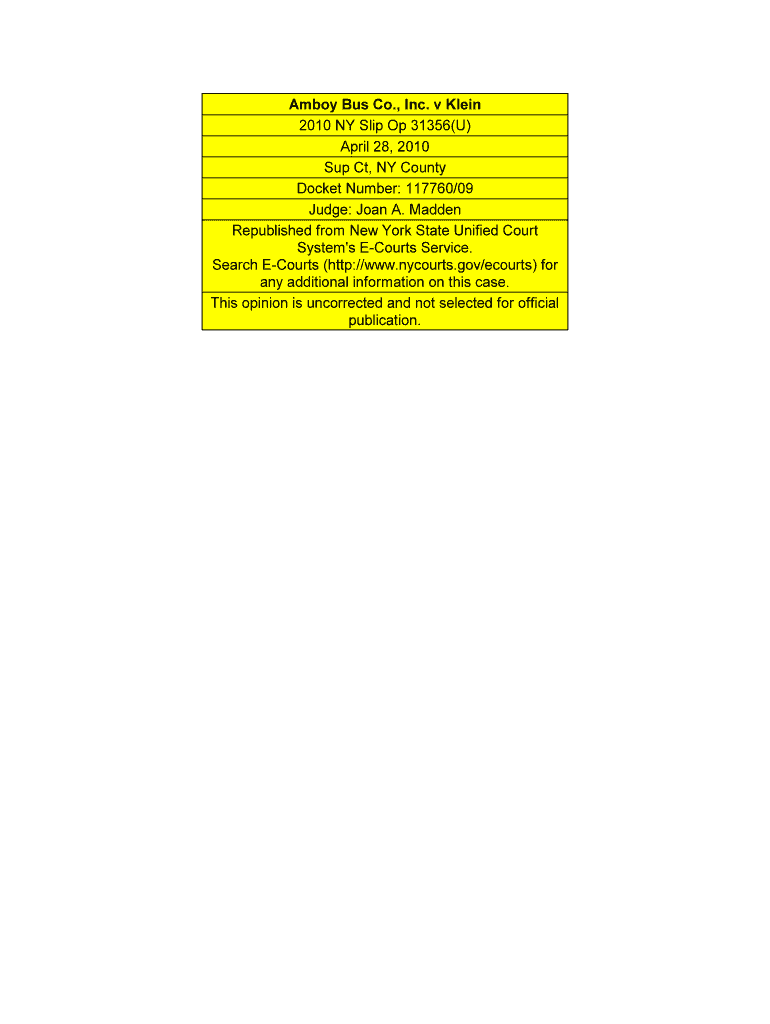
The NY State Supreme Court - NY County, often referred to as the New York Supreme Court in New York County, is an intermediate appellate court and general trial court within the New York State Unified Court System. This court handles a wide range of cases, including civil cases over significant sums of money, criminal cases, and certain appeals from lower courts. It is essential in adjudicating complex legal matters and ensuring that justice is administered fairly within New York County.
How to Use the NY State Supreme Court - NY County - New York State
To effectively use the services of the NY State Supreme Court - NY County, individuals or entities typically need to engage with it through legal proceedings. This includes filing a lawsuit, submitting motions, or responding to legal actions initiated by others. Legal representation by an attorney is often recommended given the complexities of court procedures and the nature of cases handled.
- Filing a Case: Parties must submit all necessary documentation and fees to the court clerk.
- Responding to a Case: Defendants must follow specific guidelines to submit their responses to allegations or charges.
Steps to Complete Legal Processes
Navigating the NY State Supreme Court - NY County involves several key steps. For those engaged in litigation or other legal processes, understanding these steps can enhance efficiency and compliance.
- Consult with an Attorney: Legal counsel can provide guidance tailored to individual cases.
- Preparation of Documents: Gather and compile required legal documents relevant to the case.
- Filing with the Court Clerk: Submit documents and pay any applicable filing fees.
- Notification of Other Parties: Ensure all involved parties are officially informed of legal actions.
- Court Proceedings: Attend hearings or trials as scheduled, presenting evidence and arguments.
- Await Judgment or Decision: The court will render a decision or judgment based on presented facts and legal standards.
Who Typically Uses the NY State Supreme Court - NY County - New York State
The NY State Supreme Court - NY County is used by a diverse clientele, including but not limited to:
- Individuals: Seeking resolutions in civil or criminal cases.
- Businesses: Engaging in business litigation or seeking judicial determinations in commercial disputes.
- Government Agencies: Occasionally involved in administrative or regulatory proceedings.
- Attorneys: Representing clients in various legal matters.


Important Terms Related to NY State Supreme Court - NY County - New York State
Understanding key legal terms is crucial for navigating court processes effectively.
- Plaintiff: The person or entity bringing a lawsuit.
- Defendant: The person or entity being sued or accused in a case.
- Motion: A formal request made to the court for a specific action or decision.
- Judgment: The final decision of the court resolving a dispute.
Key Elements of a Court Case
Court cases involve various essential elements that contribute to their resolution. These include:
- Complaint/Petition: The initial document outlining the plaintiff’s claims.
- Answer/Response: The defendant’s formal reply to the complaint.
- Discovery Process: The phase where parties exchange information and evidence.
- Trial: The stage where parties present their cases orally in court, if applicable.
Examples of Cases Heard by the NY State Supreme Court - NY County
The NY State Supreme Court - NY County handles numerous case types, offering a glimpse into the court's broad jurisdiction.
- Contract Disputes: Resolutions between businesses or individuals over agreement terms.
- Personal Injury Claims: Cases involving injuries allegedly caused by another's negligence.
- Criminal Proceedings: Trials where individuals are accused of committing crimes.
- Property Cases: Disputes over real estate ownership or lease agreements.
Filing Deadlines and Important Dates
Adhering to specific timelines is critical in court processes to avoid negative outcomes.
- Initial Filings: Statutes of limitation dictate how long a party has to file certain types of lawsuits.
- Responses: Defendants typically have a fixed number of days to respond to complaints.
- Appeals: Deadlines exist for appealing court decisions to higher courts.
Understanding and complying with these deadlines ensures smooth progress through the legal system.
Required Documents for Court Submission
Submitting complete and accurate documentation is fundamental to initiating or defending a case.
- Complaint or Petition: Details the plaintiff's assertions and desired outcomes.
- Answer or Motion to Dismiss: The defendant's formal reply or contestation of claims.
- Evidentiary Documentation: Includes exhibits, affidavits, and any relevant legal documents that support the case.
Ensuring these are correctly formatted and filed is essential for maintaining credibility and procedural correctness.
Form Submission Methods
Court filings with the NY State Supreme Court - NY County can be done in multiple ways:
- In-Person: Direct submission to the court clerk's office.
- Mail: Sending documents through postal services, ensuring delivery confirmation.
- Electronic Filing (E-Filing): An increasingly common and efficient method that involves submitting documents digitally through secure court portals.
Choosing the right method depends on convenience, urgency, and the specific requirements of the case.