






Definition & Meaning
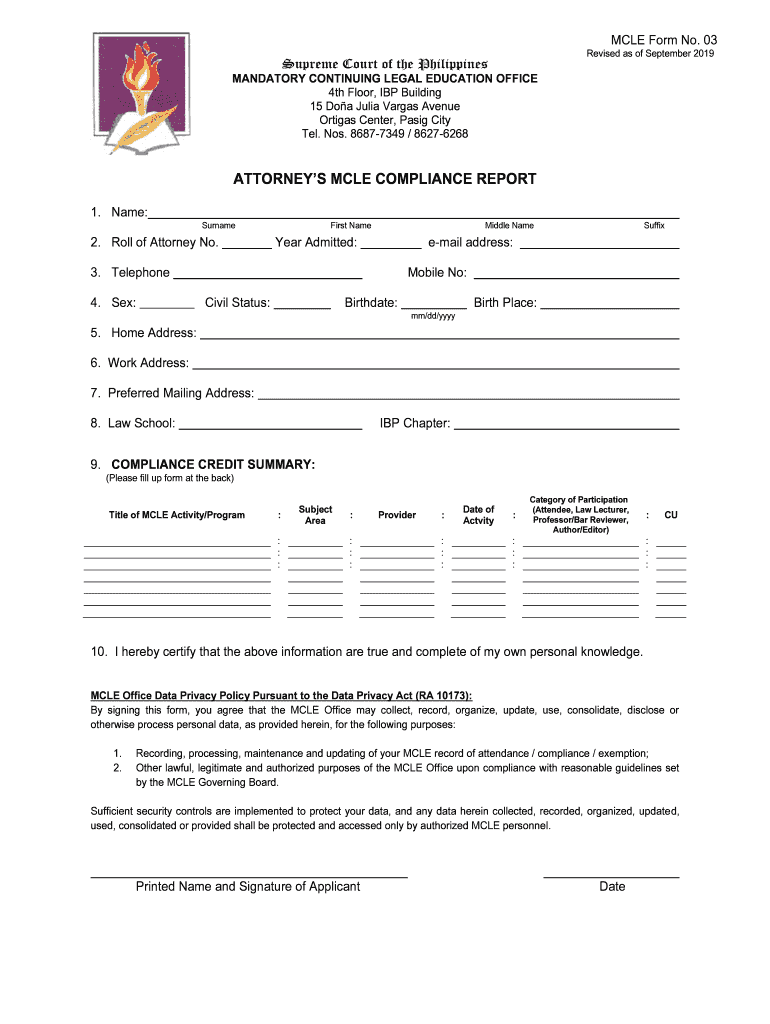
The "APPLICATION FOR EXEMPTION - MCLE Lecture Series" is a document used by attorneys to request exemption from the Mandatory Continuing Legal Education (MCLE) requirements. This form is vital for legal professionals seeking to demonstrate that they meet specific criteria for exemption, thus relieving them from the established ongoing educational requirements. Attorneys must complete this form to ensure compliance with the guidelines of their jurisdiction, leveraging it as a tool for maintaining their practice status without fulfilling the usual educational credits.
How to Use the APPLICATION FOR EXEMPTION - MCLE Lecture Series
-
Identify Eligibility: Before utilizing the form, attorneys must determine if they qualify for exemption based on predefined criteria, such as health reasons, retirement, or extended leave.
-
Complete Personal Information: Users should fill out personal details such as their full name, contact details, and bar association number.
-
Specify Exemption Grounds: Clearly outline the reasons for exemption, providing comprehensive documentation, if necessary, to support the claim. Examples include medical certificates or proof of retirement.
-
Review and Sign: It is crucial to review all entered information for accuracy before appending a signature. Signatures affirm the authenticity of the claims made within the form.
-
Submit the Form: Follow instructions on submission methods, be it online, via mail, or in-person, based on the juristic guidelines.
Steps to Complete the APPLICATION FOR EXEMPTION - MCLE Lecture Series
-
Access the Form: Obtain the form from your jurisdiction's official website or legal board.
-
Fill in Required Information: Enter all necessary personal and professional details, ensuring accuracy in every field.
-
Justify the Exemption Request: Provide detailed and legitimate reasons for seeking exemption. Include relevant supplementary documents as evidence.
-
Final Review: Carefully review the form to verify all fields are correctly filled, and ensure that attached evidences are correctly labeled.
-
Signature Confirmation: Sign and date the form to confirm all details are truthful and accurate.
-
Submission: Follow the designated method of submission as instructed in the guidelines, ensuring it reaches the correct department within the stipulated deadline.
Key Elements of the APPLICATION FOR EXEMPTION - MCLE Lecture Series
- Personal Information Section: Includes fields for the applicant’s name, address, and bar association number.
- Exemption Criteria: Sections to specify and justify the reason for exemption requests, including any relevant legal precedents or personal circumstances.
- Supporting Documentation: Attachments outlining medical records, retirement documentation, or other substantiating details supporting the exemption claim.
- Declaration and Signature: A mandatory declaration affirming the truthfulness of the provided information, accompanied by the applicant's signature.
Eligibility Criteria
- Health-Related Concerns: Attorneys with certified medical conditions prohibiting ongoing participation in continued education.
- Status Changes: Those retiring from practice or those on prolonged leave.
- Pre-approved Exemptions: Jurisdiction-specific exemptions based on legal practice specifics and historical waivers granted by the bar association.

Legal Use of the APPLICATION FOR EXEMPTION - MCLE Lecture Series
Primarily, the form is used to maintain legal compliance while abstaining from the usual MCLE requirements. Misuse or misrepresentation in this form can lead to severe penalties, including jeopardizing the practicing license. It's essential to ensure all statements and documents submitted correspond with the legal rules and expectations set forth by the bar association.
State-Specific Rules for the APPLICATION FOR EXEMPTION - MCLE Lecture Series
Each state may have different criteria, processes, and deadlines for applying for exemptions. It’s crucial to consult the local bar association’s guidelines to understand specific requirements, supporting documentation needed, and submission deadlines. Some states may have more lenient conditions, while others enforce strict procedural adherence.
Form Submission Methods (Online / Mail / In-Person)
- Online: Some jurisdictions offer digital submission platforms where forms can be uploaded directly after filling and signing electronically.
- Mail: Traditional submissions can be done via mail, accompanied by necessary attachments, to the address specified by the local bar association.
- In-Person: An option for personal delivery exists for those who prefer direct submission, allowing for immediate feedback when applicable.
Penalties for Non-Compliance
Failing to complete or misrepresent information within the application can result in:
- Fines or Fees: Financial penalties may be imposed for insufficient documentation or late submissions.
- License Suspension: Continued non-compliance can lead to suspension of the practicing license.
- Disciplinary Action: More severe breaches can trigger disciplinary hearings or actions from the bar association.
Required Documents
Applicants must include supporting documents such as:
- Medical Certificates: For health-related exemptions, medically certified documents must be provided.
- Proof of Status Change: Retirement papers or proof of long-term disability may be required.
- Legal Documentation: Any additional legal precedents or documents that bolster the exemption claim.
Each piece of documentation must substantiate the reasons outlined within the application to avoid rejection during review.