






Definition and Purpose of the Investigative Guideline: Vaping-Associated Lung Injury
The Investigative Guideline: Vaping-Associated Lung Injury (VALI) serves as a standardized tool for understanding and responding to incidents of lung injury related to e-cigarette use. Established by the Oregon Public Health Division, this guideline supports healthcare professionals and local health authorities by providing structured methods for identifying, reporting, and managing cases of VALI. It outlines critical epidemiological data, detailing how to recognize and classify cases, the clinical symptoms to observe, and steps for ensuring consistent reporting across involved parties. This standardization is crucial for accurate case tracking and for facilitating the development of strategies to mitigate and prevent such injuries.
How to Use the Investigative Guideline
To properly employ the Investigative Guideline, healthcare providers and public health officials must follow specific steps to assess potential cases of VALI. This involves:
-
Identifying Symptoms: Healthcare providers should look for respiratory symptoms such as cough, shortness of breath, and fever following e-cigarette use.
-
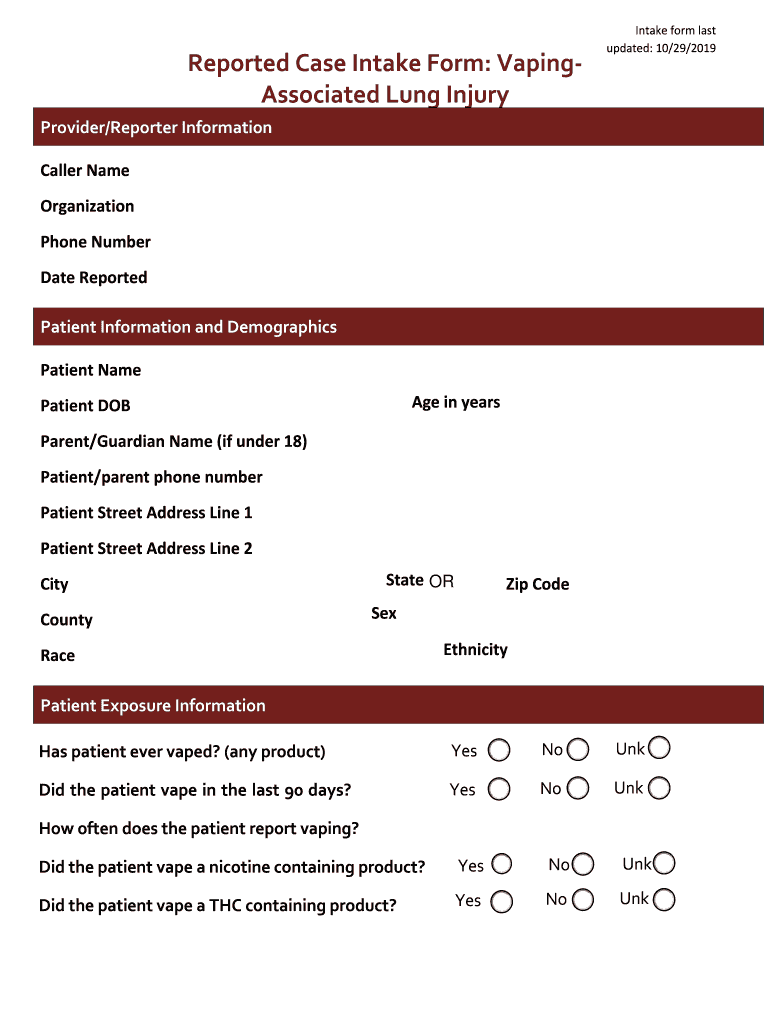
Assessing Patient History: Obtain a thorough history of the patient’s vaping habits, including device types and substances used.
-
Reporting Procedures: Use the guideline’s case definitions to determine if a case should be reported. Ensure data captured aligns with epidemiological standards set by the Division.
-
Implementation of Treatment Protocols: Follow recommended treatment plans outlined in the guide, adjusting for individual patient needs.
-
Case Documentation: Meticulously document all findings, treatments, and patient outcomes to contribute to collective data on VALI.
Key Elements of the Investigative Guideline
The guideline comprises several essential components. These include:
- Disease Reporting Requirements: Specifications on how and when cases need to be reported to public health authorities.
- Case Definitions: Detailed criteria for suspected and confirmed cases, categorized primarily by hospitalization status and symptomatology.
- Educational Resources: Information aimed at both healthcare providers and patients to raise awareness and promote cessation of vaping.
- Data Collection and Analysis: Tools and methodologies for collecting and interpreting data that supports ongoing research into vaping-associated injuries.
Steps to Complete the Investigative Guideline
Completing the guideline involves a series of systematic actions. These include:
-
Initial Case Evaluation: Determine if the symptoms align with those presented in the guideline.
-
Use of Case Definitions: Apply specific case definitions to ascertain the status of the incident, leveraging hospitalization data if applicable.
-
Engagement with Public Health Authorities: Report findings to the relevant health bodies using outlined procedures.
-
Follow-Up Actions: Continue monitoring patient health status while adhering to follow-up protocols to ensure data remains updated.
-
Feedback Mechanism: Contribute insights and additional findings to public health bodies to improve guideline effectiveness.
Who Typically Uses the Investigative Guideline
The guideline is predominantly used by:
- Healthcare Providers: Doctors and nurses who encounter patients with respiratory symptoms potentially related to vaping.
- Public Health Officials: Individuals tasked with disease control and prevention initiatives.
- Epidemiologists: Professionals analyzing data on incidences to identify broader health trends.
- Educational Professionals: Institutions using the guideline for health education and preventive campaign designs.


Legal Implications and Use
The guideline is structured to support compliance with healthcare and public health laws within the United States. It ensures that healthcare providers and public officials have a clear protocol that aligns with national health standards. By adhering to the guideline, entities mitigate legal risks associated with negligence in reporting and treatment of VALI.
State-Specific Rules and Applications
While the guideline is broadly applicable across the United States, individual states may have additional requirements or specific reporting mandates. States such as Oregon, where the guideline originated, might have more stringent criteria or supplemental forms that need to be included in the investigative process. Always verify with local health authorities to ensure alignment with any additional regulatory requirements.
Examples of Using the Investigative Guideline in Practice
Illustrative case studies include:
- University Health Clinics: Using the guideline to develop educational programs and health screenings for students who vape.
- Local Health Departments: Employing data from reported cases to launch public awareness campaigns targeting vaping-related health risks.
- Hospital Settings: Integrating the guideline into patient intake protocols to efficiently identify and treat cases of VALI.
By focusing on these areas, healthcare professionals and public health officials can effectively apply the Investigative Guideline: Vaping-Associated Lung Injury to safeguard public health and contribute to the broader understanding of vaping-related impacts.