Definition and Meaning
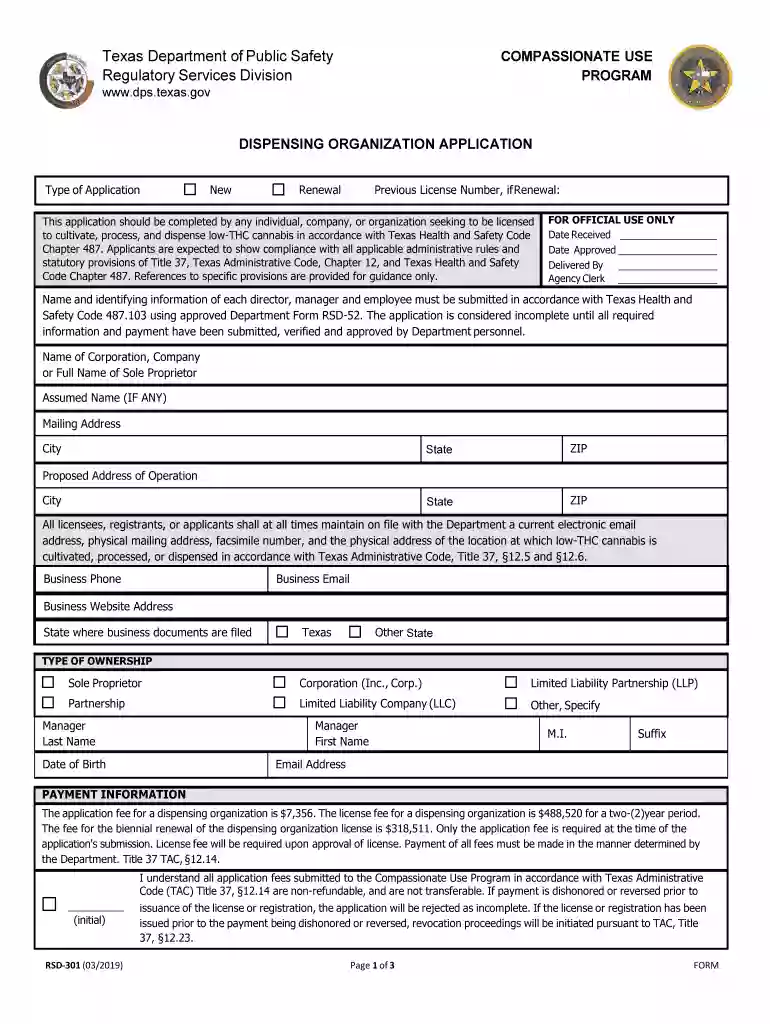
The "Dispensing Organization Application" is a formal request form utilized by entities aiming to participate in the cultivation, processing, and dispensing of low-THC cannabis. Under the Texas Compassionate Use Program, this application is essential for obtaining the necessary license to legally operate within the state. Specifically designed to ensure compliance with regulatory standards, the application includes various sections that outline the applicant's qualifications, business intentions, and adherence to state laws. This document serves as a critical tool for the Texas Department of Public Safety's Regulatory Services Division to evaluate potential participants in the program.
Key Elements of the Application
- Applicant Information: Includes details such as name, address, and contact information.
- Business Structure: Specifies the type of business entity applying, whether it's an LLC, corporation, or partnership.
- Operational Details: Describes proposed operations, including cultivation processes, security measures, and facility locations.
- Compliance Attestation: The applicant must affirm understanding and willingness to adhere to all state regulations regarding low-THC cannabis.
How to Use the Dispensing Organization Application
Understanding the effective use of the Dispensing Organization Application is vital for a successful submission. The application is designed to gather comprehensive information about the applicant and ensure they meet all necessary qualifications to legally operate.
Usage Steps
- Review Requirements: Before filling out the application, familiarize yourself with the legal and operational criteria specific to the Texas Compassionate Use Program.
- Gather Documentation: Ensure that all required documents are prepared, such as proof of business registration, facility plans, and security protocols.
- Fill Out the Form: Accurately complete all sections of the application, providing detailed responses to ensure clarity and completeness.
- Certify Compliance: Sign the compliance attestation section, confirming your commitment to meet all applicable laws and regulations.
Practical Examples
- A new LLC formed specifically to dispense cannabis must provide all legal documents establishing the company.
- Applicants must evidence their cultivation facility meets state security standards.
Steps to Complete the Dispensing Organization Application
Completing the Dispensing Organization Application effectively requires attention to detail and adherence to specific steps. This structured process ensures compliance and maximizes the chances of successful approval.
Step-by-Step Guidance
- Initial Preparation: Review the checklist provided by the Texas Department of Public Safety to ensure all necessary information and documents are ready.
- Section-by-Section Filling: Methodically complete each section of the form, from business details to operation plans, ensuring accuracy.
- Document Attachment: Attach all required documents, such as licenses, company formation documents, and insurance policies.
- Submission Review: Double-check all entries for completeness and accuracy before submission.
- Final Submission: Submit the completed application alongside any applicable fees through the designated submission method, whether online or via mail.
Considerations and Tips
- Detail-Oriented Approach: Each section requires thorough and detailed information; insufficient detail can lead to application rejection.
- Seek Professional Help: For complex applications, consider consulting with a legal or regulatory expert specializing in cannabis operations to ensure compliance.
Required Documents
A successful application hinges on the detailed provision of all necessary documents. These documents substantiate the applicant's qualifications and readiness to operate within legal frameworks.
Comprehensive List of Required Documents
- Business Registration Certificate: Proof of legal business entity formation.
- Facility Plans: Detailed blueprints of the proposed cultivation or dispensing site.
- Security Protocols: Comprehensive security plans illustrating adherence to state-mandated safety requirements.
- Insurance Documentation: Proof of liability and other relevant insurance to cover operations.
Document Preparation Advice
- Ensure all documents are current and reflect the most recent company data.
- Double-check that all supporting documents align with the details provided in the application.
Legal Use of the Dispensing Organization Application
This application facilitates the legal participation of entities in Texas's low-THC cannabis market, aligning their operations with state laws and regulations.
Legal Compliance Components
- Licensing Requirements: Applicants must obtain proper licensure to legally cultivate, process, and dispense low-THC cannabis.
- Adherence to Regulations: The application includes assurances that the organization will comply with Texas cannabis laws and regulations.
- Monitoring and Reporting: Ongoing compliance checks and regular reporting to regulatory bodies are required post-approval to maintain legal status.
Real-World Scenarios
- An organization seeking to expand its operations into cannabis must use the application to secure legal permission to include cannabis in its offerings.
- License revocation can occur if an organization is found non-compliant with regulatory standards post-approval.
Eligibility Requirements
- Business Entity Formation: The applicant must be a legally recognized business entity in Texas.
- Background Checks: Key personnel involved must pass criminal background checks as per state regulations.
- Operational Readiness: Demonstrated capability to comply with operational protocols, including security and quality control measures.
Evaluation Factors
- The track record of compliance with related regulations.
- Organizational capacity to sustain operations adhering to state laws.
Application Process and Approval Time
The application process is structured to evaluate and approve qualified applicants efficiently, allowing them to legally commence operations.
Application Submission Steps
- Complete the Form: Ensure all information is accurate and comprehensive.
- Submit Documentation: Attach all necessary documents to provide evidence of eligibility.
- Pay Required Fees: Remit any applicable fees to move the application into the review phase.
Approval Timeline
- Initial Review: Typically takes between 30 to 90 days, depending on completeness and complexity.
- Further Clarifications: Requests for additional information may prolong the process.
- Final Decision: Communication of approval or denial will be sent to the applicant, outlining any next steps.
Edge Cases and Variations
- Application amendments may be necessary if an applicant discovers errors post-submission.
- Discrepancies in provided data can delay processing and require corrective action.
Penalties for Non-Compliance
Entities that fail to comply with guidelines after approval may face significant penalties, emphasizing the importance of understanding and adhering to all requirements.
Compliance Violations
- License Revocation: Operating outside the legal parameters can lead to temporary or permanent revocation of licenses.
- Fines and Sanctions: Financial and operational penalties may be imposed for non-compliance.
- Legal Action: Continued violations can result in legal proceedings initiated by the state.
Preventative Measures
- Regular compliance audits can help ensure continued adherence to all legal and operational standards.
- Investing in ongoing staff training to reinforce regulatory knowledge and practices.
Conclusion
The Dispensing Organization Application is a pivotal tool for legal entry into Texas's low-THC cannabis market. Understanding its intricacies ensures compliance and operational success. Each block discussed offers vital insight into the application process, emphasizing meticulous preparation and commitment to state law adherence. Ensuring that potential participants understand these nuances promotes a robust and legally compliant cannabis industry in Texas.