Definition and Purpose of the Declaration of Landowner's Consent
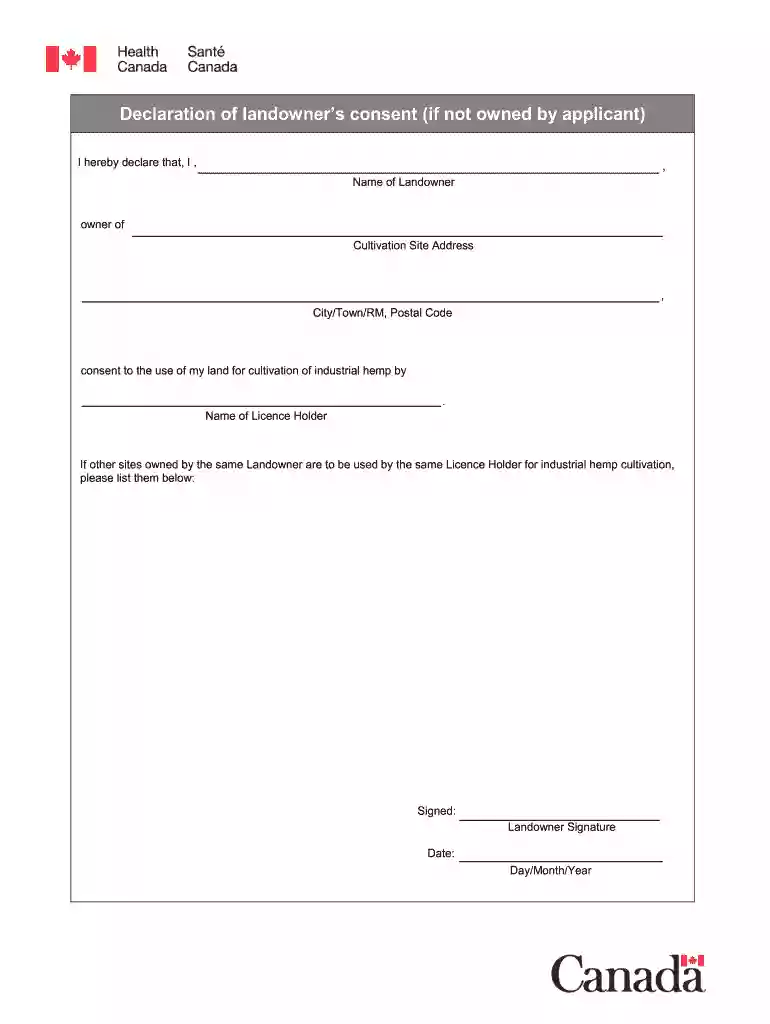
The Declaration of Landowner's Consent is a formal document that grants permission from a property owner to an individual or entity, who is not the owner of the land, to utilize the land for specific purposes. This consent is crucial in scenarios where the applicant needs to apply for licenses or permits that require proof of land access and utilization. Often linked to agricultural uses like the cultivation of industrial hemp, this form delineates explicit terms under which the land can be used, thereby safeguarding both the landowner's and the applicant's interests.
Key Components of the Consent Form
Landowner Details:
- Full name, address, and contact information of the landowner.
- Legal description of the property, ensuring no ambiguity in identifying the land in question.
Applicant Information:
- Details of the individual or entity seeking consent, including contact information and any known affiliations.
Purpose of Use:
- A clear statement of the intended use of the land, such as agricultural activities, construction, research, etc.
Extent of Access:
- Terms regarding what areas of the land can be accessed, and any limitations to the rights granted for use.
Duration of Consent:
- Specific dates or conditions that define the temporal scope of the agreement.
Additional Provisions:
- Space for supplementary conditions or requirements imposed by the landowner to ensure that their property rights and interests are protected.
How to Use the Declaration of Landowner’s Consent
Utilizing the Consent Document
Utilizing this document typically involves several key steps to ensure that the consent provided is both legally enforceable and aligns with both parties' expectations. Each step must be approached carefully:
- Initial Proposal: Discuss with the landowner the intended use of their property.
- Drafting the Document: Use precise language to draft a consent form that covers all areas of the agreement.
- Review and Agreement: Both parties should review the document independently and collectively to clarify any ambiguities.
- Signing and Documenting: Ensure both landowner and applicant sign the document, and document this agreement with witnesses where necessary or mandated by law.
Common Use Cases
- Agricultural Purposes: Farmers who are expanding operations onto leased land need documented consent to comply with agricultural zoning laws.
- Construction Projects: Developers requiring temporary access for survey work or initial construction setup must secure consent.
- Research Activities: Organizations conducting environmental studies may need to document landowner consent to legally access test sites.
Steps to Complete the Declaration of Landowner’s Consent
Completing the form requires methodical verification of details and information submission by all involved parties.
Gather Required Information:
- Collect full names, addresses, and legal descriptions of the property from land records.
- Accurate descriptions ensure the document's validity when reviewed by third parties, such as zoning boards or legal entities.
Complete the Document:
- Use the collected information to meticulously fill in all parts of the form.
- Avoid abbreviations that could introduce confusion or misinterpretation.
Verification and Notarization:
- Both the applicant and landowner should verify the details for accuracy and truthfulness.
- In some jurisdictions, notarization of the signatures may be necessary to legitimize the document under state regulations.
Final Review and Submission:
- Complete a final review of the form to confirm all sections are filled and any additional conditions are clearly stated.
- Depending on the local rules, submit the form to the appropriate authorities or retain it for future legal or operational reference.
State-Specific Regulations
Different U.S. states impose varying requirements on the Declaration of Landowner’s Consent, impacting its preparation and enforceability.
Examples of State Variations
- California: Requires specific environmental clauses to address state land use laws.
- Texas: May require additional forms to confirm adherence to county-specific agricultural use restrictions.
- New York: Requires inclusion of detailed property descriptions compliant with local property and leasing laws.
Legal Use of the Declaration of Landowner’s Consent
The legal use of this document affirms compliance with applicable state and federal regulations.
Protective Measures
- Property Rights: Ensures the landowner's rights are not infringed by detailing what activities the applicant can undertake.
- Liability Protection: Documenting consent can limit the landowner’s liability should any disputes regarding land use arise.
Legal Compliance
- ESIGN Act Adherence: If executed electronically, the document must comply with standards ensuring its authenticity and enforceability.
- Zoning Law Compatibility: The consent must be compatible with local zoning laws governing the permitted uses of the property.
Important Terms Related to the Form
Understanding central terminology is vital for effective utilization of the Declaration of Landowner’s Consent.
- License Holder: An individual or corporate entity granted permission to use the land.
- Industrial Hemp: A frequently mentioned agricultural product subject to varied state cultivation permissions.
- Signatory Rights: The legal capacity and authority of an individual to sign a document on behalf of an entity.
By exploring these comprehensive areas, the form’s purpose and application become clearer, ensuring robust understanding and adherence to relevant legal frameworks.