






Definition and Meaning
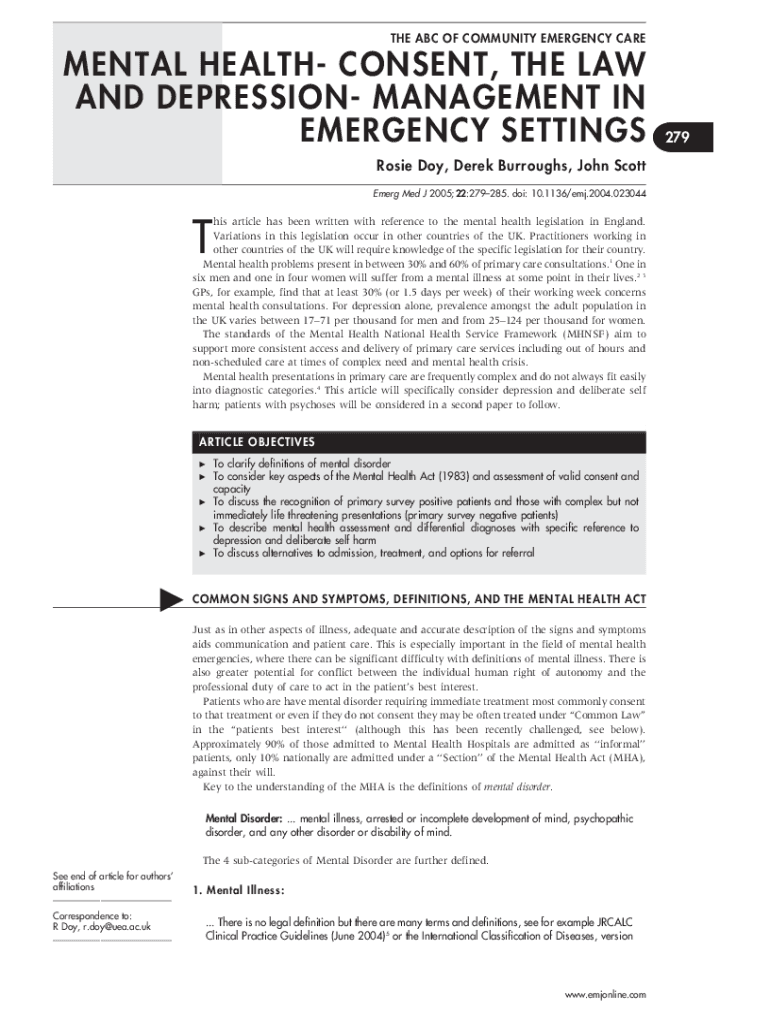
The document "PubMed NCBI NLM NIH 15788835: Mental Health—Consent, the Law, and Depression—Management In" refers to an entry in PubMed, a free search engine accessing primarily the MEDLINE database of references and abstracts on life sciences and biomedical topics. The number 15788835 is a unique identifier for a specific article that discusses the intersection of mental health management, including the handling of consent and legal considerations, within the treatment of depression. The article highlights significant definitions and frameworks relevant to practitioners dealing with patients who have mental disorders, providing essential context for understanding the legal implications of mental health care.
How to Use the Article
To effectively utilize "PubMed NCBI NLM NIH 15788835: Mental Health—Consent, the Law, and Depression—Management In," healthcare professionals should consider it a valuable resource in navigating the complex landscape of mental health treatment. The article can guide decision-making processes regarding patient consent, legality in clinical settings, and best practices for managing depression:
- Refer to the article for definitions and explanations of legal terms associated with mental health.
- Use the document as a reference point for developing treatment plans aligned with legal requirements.
- Apply insights from the article to improve communication strategies among healthcare teams.
How to Obtain the Document
The document is accessible through several means:
- Visit the PubMed website and enter the identifier "15788835" in the search bar to locate the relevant article.
- Access the National Center for Biotechnology Information (NCBI) database, where the document is listed for online viewing or download, depending on the publication's availability.
- Check library resources at educational institutions or healthcare facilities that may provide access to PubMed records.
Steps to Complete Understanding
Thorough comprehension of the discussions in this document involves several steps:
- Identify Key Concepts: Start by reviewing the abstract to identify key topics.
- Interpret Legal Frameworks: Examine sections concerning legal frameworks to understand the responsibilities of practitioners.
- Analyze Case Studies: Study any included case studies that illustrate real-world applications.
- Discussion and Collaboration: Engage with peers or legal advisors to discuss interpretations and implications.
Important Terms Related to the Document
Understanding this document requires familiarity with several critical terms:
- Consent: The process by which a patient authorizes medical treatment, critical in mental health contexts where cognitive abilities may be impaired.
- Legal Framework: Laws and regulations governing the treatment of mental health patients, which practitioners must follow to ensure legality and ethical practice.
- Depression Management: Strategies and methods used to treat depression, including psychological and pharmaceutical interventions.
Legal Use and Implications
The document offers guidance on the legal applications of consent in mental health scenarios:
- It emphasizes the requirement for valid consent, particularly in cases involving mental health crises.
- Legal frameworks discussed in the document are crucial for practitioners to understand their legal responsibilities and rights.
Key Elements of the Document
The document is rich with essential elements that guide mental health practice within legal contexts:
- Prevalence of Mental Health Issues: The document provides statistical insights into the occurrence of mental health issues in primary care settings.
- Assessment Techniques: Various techniques are discussed for evaluating patients, ensuring accurate diagnoses and treatment plans.
- Coordination Among Professionals: Emphasizes the importance of communication and collaboration for optimal patient outcomes.
Examples of Using the Document
Healthcare providers can apply the document’s guidance in diverse scenarios:
- Emergency Care Settings: Utilize the legal insights when assessing depression and deliberate self-harm, ensuring alignment with legal obligations.
- Primary Care Integration: Enhance mental health services in primary care by referring to outlined consent processes and responsibilities.
State-Specific Rules
While the document broadly addresses legal contexts, practitioners must consider state-specific regulations that might alter its application:
- State Mental Health Laws: Variations exist in how states interpret and enforce mental health laws, impacting how consent and treatment plans are managed.
- Practice Regulations: Medical boards in each state might have specific rules for documentation and patient interaction.
Penalties for Non-Compliance
Failing to adhere to the guidelines and legal requirements outlined in the document can result in:
- Legal Penalties: Practitioners may face fines or litigation if patient consent is not properly obtained and documented.
- Professional Sanctions: Breaches of legal requirements may lead to disciplinary actions or loss of licensure.
By thoroughly understanding and applying the guidance within "PubMed NCBI NLM NIH 15788835: Mental Health—Consent, the Law, and Depression—Management In," practitioners can ensure their legal compliance while optimizing mental health outcomes for their patients.