






Definition & Meaning
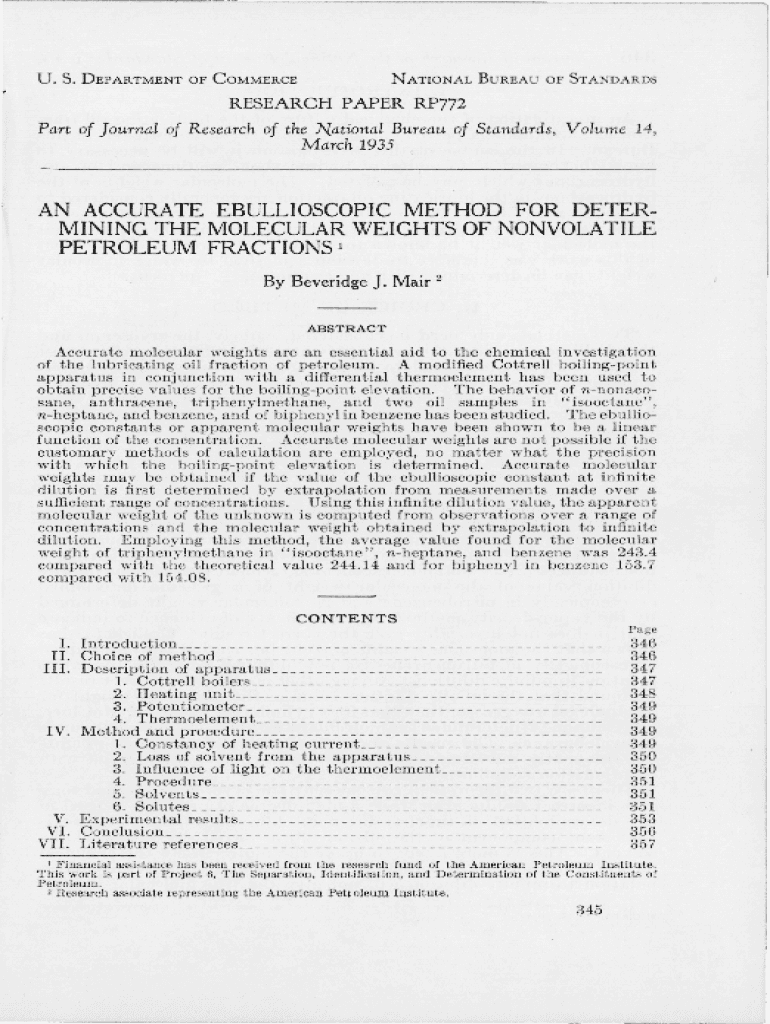
The "Get the free Department Commerce National Bureau Standards" likely refers to obtaining publications or resources made available by the National Institute of Standards and Technology (NIST), an agency within the U.S. Department of Commerce. Historically, the National Bureau of Standards (NBS) was the name of this agency before it became NIST in 1988. The organization provides essential scientific data and guidelines that support technological advancement and innovation. These standards play a crucial role in enhancing trade compliance, ensuring manufacturing quality, and promoting consumer safety.
How to Obtain the Free Department Commerce National Bureau Standards
To acquire resources or standards from NIST, you can visit their official website. Publications are typically available in PDF format and can be freely downloaded. For physical copies, you may need to request them through direct communication with NIST or via authorized distributors. The process is streamlined to ensure easy access, contributing to a wide distribution of the latest standards and findings.
Steps to Complete the Acquisition
- Identify the Publication: Start by identifying the specific publication or standard you're interested in. Use the search function on the NIST website to refine your options.
- Access the Resource: Once the desired document is located, follow the download page instructions. Documents usually come as PDFs, ensuring compatibility across devices.
- Request Physical Copies: If a physical copy is preferred, contact NIST's publication office. They provide instructions on ordering documents, which might involve filling out a request form or sending an email.
- Subscribe for Updates: Consider subscribing to updates or news alerts from NIST to be informed about new publications or changes to existing standards.
Key Elements of the Standards
NIST standards encompass a wide range of sectors. Key elements often include:
- Technical Specifications: Detailed information on parameters for materials, procedures, or technologies.
- Measurement Techniques: Standardized methods for measuring various metrics, indispensable for research and implementation.
- Safety Guidelines: Recommendations to ensure that technologies and practices adhere to safety norms, protecting users and practitioners.
Legal Use of the Standards
The standards serve as voluntary guidelines unless specified by government regulations, where compliance becomes mandatory. Legal usage includes implementing standards in manufacturing, ensuring that goods meet consumer protection requirements, and supporting innovation without infringing on proprietary technology. Understanding the legal framework around these standards is critical for businesses to remain compliant and competitive in their industries.
Who Typically Uses the Standards
These standards are leveraged by:
- Manufacturers: Ensuring products meet quality and safety expectations.
- Researchers: Obtaining credible benchmarks and methodologies.
- Government Agencies: Setting regulatory requirements and ensuring public safety.
- Educators: Teaching up-to-date scientific and technical knowledge.


Important Terms Related to the Standards
- Calibration: Essential for ensuring precision in measurements performed by instruments and devices.
- Benchmarking: Using standards as reference points to assess the performance of products or processes.
- Metrology: The science of measurement, integral to product development and quality assurance.
Examples of Using the Standards
Examples include:
- Electrical Integrity: Manufacturers of electronic goods using standards to ensure devices do not pose fire hazards.
- Construction Quality: Builders adhering to material standards to ensure structural integrity and durability.
- Healthcare Safety: Medical device manufacturers implementing standards to guarantee patient safety and device efficacy.
Software Compatibility
NIST publications offer accessibility in various digital formats, ensuring compatibility with software like Adobe Reader for PDFs and digital libraries within organizational databases. This versatility supports widespread utilization across different operational and research applications.
Business Types That Benefit Most
Industries that derive the most benefits include:
- Electronics and IT: Reliance on standards to keep pace with technological advancements and international trade requirements.
- Manufacturing: Utilizing guidelines to improve product consistency and adherence to global quality norms.
- Health and Safety Environmental Services: Applying standards to promote safety and environmental stewardship.