
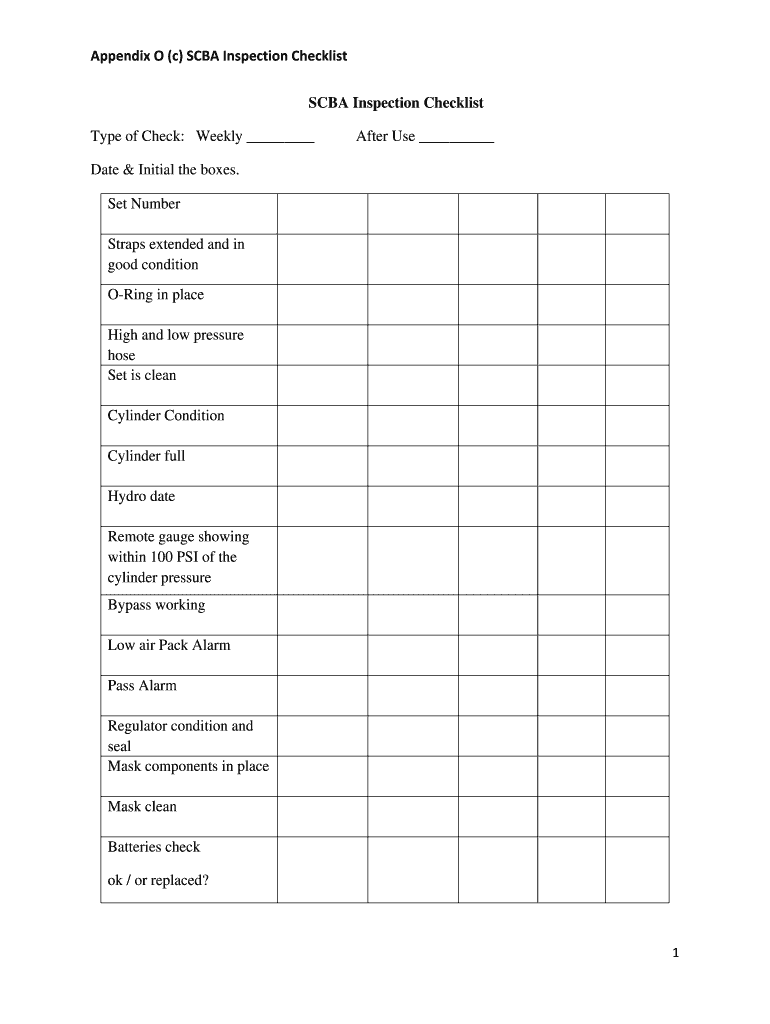







Definition and Meaning of the SCBA Inspection Checklist
The SCBA (Self-Contained Breathing Apparatus) Inspection Checklist is a crucial tool designed to assess the functionality and safety of breathing apparatus used in various environments, particularly those with hazardous materials. This inspection checklist outlines specific components that must be evaluated regularly, ensuring that SCBAs perform effectively when needed. Proper use of the checklist helps maintain compliance with Occupational Safety and Health Administration (OSHA) standards and National Fire Protection Association (NFPA) regulations, safeguarding the health of personnel who rely on these devices during emergencies.
Components of the SCBA Inspection Checklist
- Strap Condition: Inspect straps for wear or damage. Damaged straps can compromise the secure fit of the SCBA during use.
- O-rings and Hoses: Check all O-rings and hoses for tears or leaks. These components are critical for maintaining airtight integrity.
- Cylinder Status: Verify the pressure gauge readings and visual condition. Cylinders must be fully charged and free of corrosion.
- Alarms: Test alarms and alert systems. Ensure that the low-pressure alarm functions correctly to alert users when the cylinder pressure is critically low.
- Regulator and Mask Components: Ensure all parts fit correctly and are free of cracks or damage. Improper fittings can lead to respiratory failure in toxic environments.
Regular inspections with a comprehensive checklist ensure that all components function properly before use, significantly increasing user safety and operational readiness.
Steps to Complete the SCBA Inspection Checklist
Completing the SCBA inspection checklist involves a systematic approach to ensure every component is thoroughly assessed. Here are the key steps:
- Gather Necessary Equipment: Before starting, ensure that you have the checklist, a functional SCBA unit, and any tools required for inspection.
- Conduct a Visual Inspection: Begin with an overall visual assessment of the SCBA. Look for obvious signs of wear or damage.
- Inspect Components Individually:
- Check all straps and adjustments.
- Inspect the hoses for cracks, tears, or leaks.
- Verify that O-rings are intact.
- Test Functionality:
- Power on the alarms to ensure they sound correctly.
- Assess the pressure gauge readings to confirm the unit is fully charged.
- Document Findings: Record the results of each inspection on the checklist. If there are deficiencies, note them for corrective action.
- Verify Compliance: Ensure that the inspection meets all relevant OSHA and NFPA guidelines. This may require reviewing updated regulations.
Documenting each step provides a clear audit trail and helps in maintaining compliance with regulatory standards for SCBA usage.
Importance of the SCBA Inspection Checklist
The SCBA inspection checklist serves several critical functions in both safety management and regulatory compliance:
- Enhances Safety: Regularly checking SCBA units helps identify and mitigate risks, fostering a safer working environment.
- Compliance with Regulations: Adhering to the SCBA inspection checklist ensures that all necessary OSHA and NFPA regulations are met, preventing legal penalties.
- Performance Reliability: Inspections help confirm that SCBAs are operational, providing peace of mind for first responders and workers in hazardous locations.
- Training Tool: The checklist can be used as an educational resource for new team members, ensuring they understand the significance of each component's functionality.
The consistent application of the inspection checklist contributes substantially to operational safety and compliance protocols.
Who Typically Uses the SCBA Inspection Checklist
The SCBA inspection checklist is utilized by a diverse array of professionals, primarily in high-risk environments:
- Firefighters: Integral to firefighting operations, ensuring SCBAs are ready prior to entering hazardous conditions.
- Hazardous Material Responders: Personnel involved in managing spills or chemical exposure situations rely on a functional SCBA for personal safety.
- Industrial Safety Personnel: Users in manufacturing and construction oversee safety measures that require SCBA use, ensuring equipment is functioning correctly before personnel employ them.
- Occupational Safety Inspectors: Compliance officers use the checklist to assess the adequacy of safety procedures and equipment within workplaces.
These diverse users highlight the checklist's role in promoting workplace safety across various high-risk industries.


Key Elements of the SCBA Inspection Checklist
The SCBA inspection checklist encompasses essential elements that ensure thorough evaluation of the device:
- Functional Tests: Each SCBA must undergo functionality tests on alarms and pressure gauges.
- Physical Examination: All physical components, including hoses, masks, and straps, should be examined for integrity and wear.
- Documentation Requirements: Findings from inspections should be documented comprehensively to provide a clear record of compliance and performance status.
- Frequency of Inspections: The checklist should define how often inspections are to occur—typically daily, weekly, or monthly, depending on usage and environmental conditions.
By ensuring these elements are considered during inspections, users can maintain high safety standards and operational readiness.




