
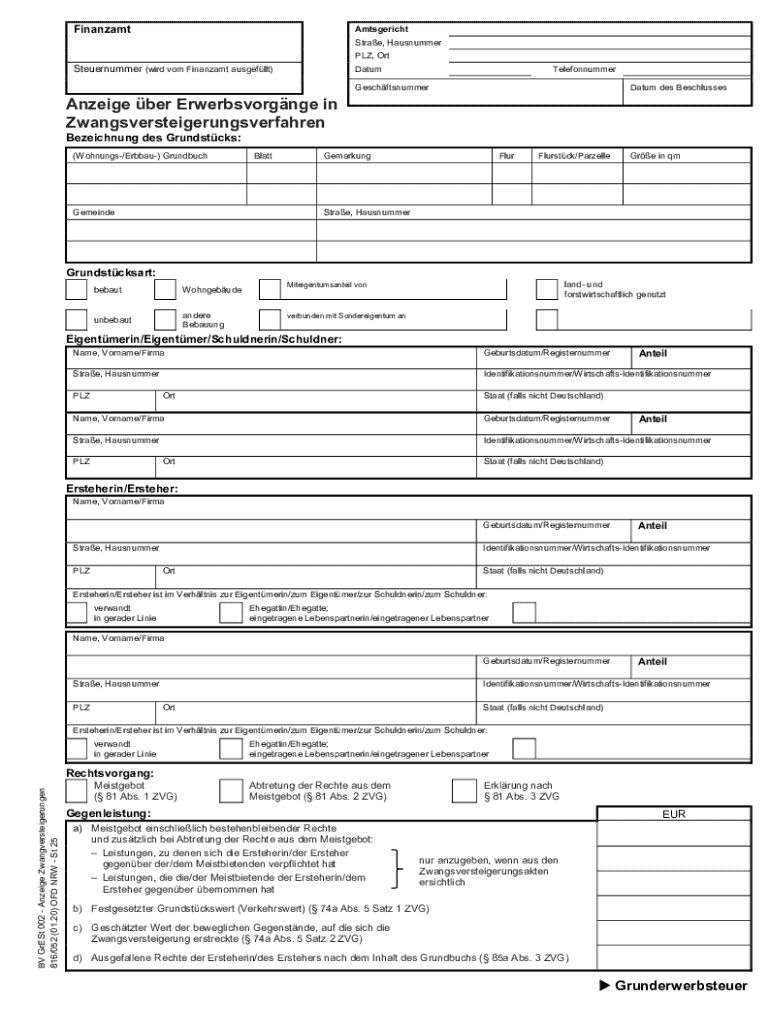







Definition and Meaning
The term "Datum des Beschlusses" refers to the official date a legal resolution or decision was made by an authorized body, such as a court or government agency. This date is crucial as it marks when the resolution takes effect and can trigger specific legal obligations or rights. Understanding this term is essential for individuals involved in legal or financial transactions, as it provides a clear timeline for compliance and enforcement of the decision.
Practical Examples
- Court Cases: In legal proceedings, the "Datum des Beschlusses" could indicate the official date when a judge's ruling becomes effective.
- Tax Assessments: For financial documents, it may refer to the date when a tax assessment or property evaluation is approved by the relevant authorities.
How to Use the Datum des Beschlusses
Correctly utilizing the "Datum des Beschlusses" involves recording and referencing this date in related documentation and communications. This practice ensures that all parties involved are aware of the timing of decisions and any deadlines for actions that stem from the resolution.
Real-World Scenarios
- Contractual Agreements: Include the "Datum des Beschlusses" within contracts to establish when terms become enforceable.
- Regulatory Compliance: Use this date in compliance reports to verify adherence to regulatory timelines.
Steps to Obtain the Datum des Beschlusses
-
Identify the Resolution Source: Determine the authority or body responsible for the decision. This could be a court, governmental agency, or organizational board.
-
Document Request: Contact the issuing body to request official documentation that includes the "Datum des Beschlusses." This might involve filing a formal request or application.
-
Verification: Review the received documents to ensure the "Datum des Beschlusses" is clearly stated and accurately reflects the intended decision timeline.
Additional Tips
- Official Channels: Always use official channels for requests to maintain the integrity and validity of the obtained date.
- Digital Record Keeping: Store the information securely in digital formats for easy access and sharing.
Who Typically Uses the Datum des Beschlusses
The "Datum des Beschlusses" is typically used by stakeholders involved in legal, financial, or governmental transactions. These users rely on precise dates to fulfill their respective duties and rights as defined by the resolution.


Common Users
- Legal Professionals: Lawyers and paralegals reference this date to manage client cases effectively.
- Tax Advisors: Financial consultants use it when advising clients on tax-related matters post-resolution.

Legal Use of the Datum des Beschlusses
In a legal context, the "Datum des Beschlusses" serves as a pivotal element when interpreting the commencement and enforcement of legal instruments. Its recognition is imperative for maintaining lawful proceedings.
Regulatory Importance
- Enforcement: Determines when legal obligations commence under the resolution.
- Appeals: Sets the timeline within which parties can legally contest a decision.
Required Documents
To acquire the "Datum des Beschlusses," certain documents may be required depending on the context and jurisdiction. The exact requirements can vary, but typically involve formal requests and identification.
Typical Documents
- Application Form: For requesting formal documentation of the decision.
- Identification: Proof of identity or authorization to obtain the date.
Filing Deadlines and Important Dates
Understanding the timeline surrounding the "Datum des Beschlusses" is critical for ensuring all subsequent actions, such as filings or appeals, are completed within regulatory timeframes.
Key Timeframes
- 30-Day Appeal Period: Common in legal contexts for submitting appeals against decisions.
- Tax Filing Deadlines: Dependent on the decision date, affecting compliance submission timelines.
Key Elements of the Datum des Beschlusses
Several elements define the "Datum des Beschlusses," setting its significance in documents and processes. Identifying these helps clarify its role in various contexts.
Essential Components
- Issuing Body: The authority that made the resolution.
- Applicable Laws: Legal statutes or guidelines under which the resolution falls.
Penalties for Non-Compliance
Failure to act upon the "Datum des Beschlusses" can result in legal or financial penalties, emphasizing the necessity of adhering to stipulated timelines.
Types of Penalties
- Fines: Monetary penalties for failure to comply within prescribed periods.
- Legal Sanctions: Additional legal actions may be pursued for significant non-compliance.
State-Specific Rules for Datum des Beschlusses
Different states within the United States may have specific interpretations or additional rules concerning the "Datum des Beschlusses," impacting its application and significance.
Examples of State Variations
- Different Appeal Periods: Some states might offer alternative timelines for appeals or compliance.
- Unique Filing Processes: Variations in how dates are officially recognized and recorded.




