
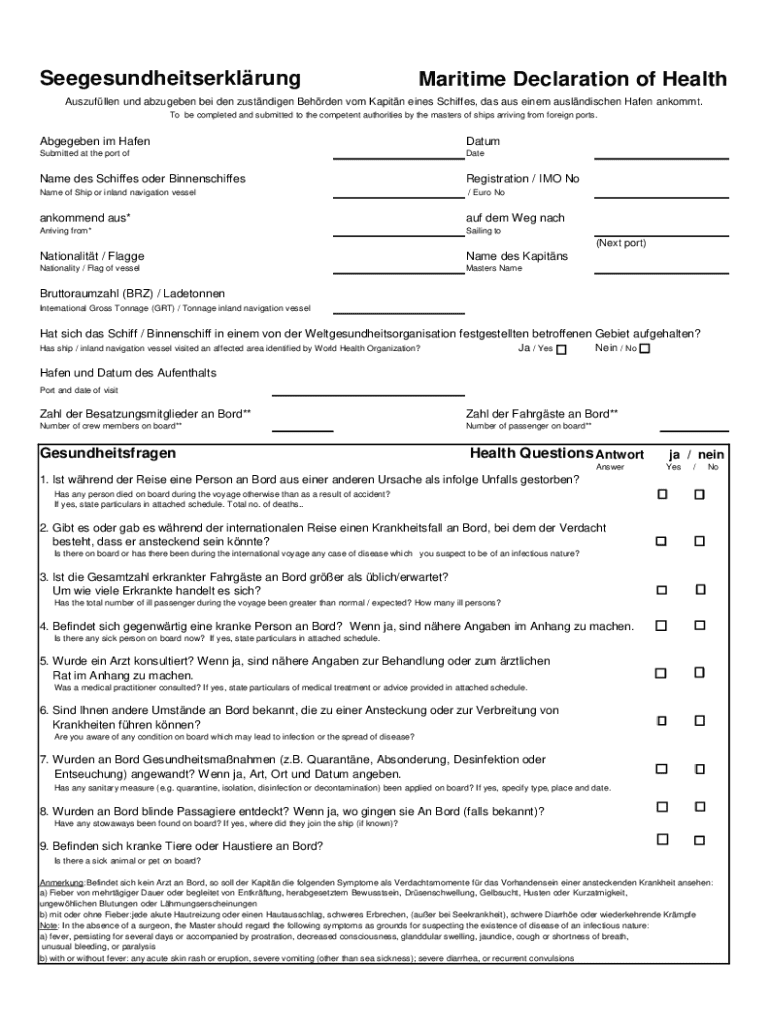







Definition and Meaning
The Seegesundheitserklärung, known in English as the Maritime Declaration of Health, is a critical document required for maritime operations. It is essential for assessing health risks associated with infectious diseases and ensuring compliance with international and local sanitation regulations. The form typically includes sections for the captain to declare ship details, health conditions of crew and passengers, and measures taken to uphold health standards on board. Its primary purpose is to protect public health by providing health authorities with necessary information about potential risks before the ship docks, allowing them to take appropriate actions if required.
How to Use the Seegesundheitserklärung
To effectively use the Seegesundheitserklärung, one must understand its structure and requirements. Typically filled out by the captain of the vessel, the document is crucial for communicating health statuses and preventive measures taken during the voyage. The process usually involves:
- Documenting Ship Information: This includes the vessel's name, registration number, and country of origin.
- Filling in Health-Related Information: Indicating the health status of crew and passengers, any cases of illness, and steps taken to manage these situations.
- Describing Health Measures: Providing details on measures and sanitary practices enforced on the ship, such as disinfection procedures and quarantine areas.
- Submission Method: The completed form should be submitted to port health authorities ahead of arrival. This can usually be done electronically or in paper format, depending on the port's requirements.
How to Obtain the Seegesundheitserklärung
Acquiring the Seegesundheitserklärung typically involves several steps, ensuring you meet the jurisdiction's specific requirements. The process generally includes:
- Contacting Port Health Authorities: Reaching out to the relevant maritime authorities for the latest version of the form.
- Accessing Online Resources: Many ports allow for the downloading of the form via their official websites.
- Consulting with Shipping Companies: They often provide the necessary documentation and guidance to comply with health regulation requirements.
Steps to Complete the Seegesundheitserklärung
Completing the Seegesundheitserklärung accurately is vital for compliance with health regulations:
- Gather Required Information: Collect data regarding ship operations, crew health, and any incidents that occurred during the voyage.
- Carefully Fill Out Each Section: Ensure all questions are answered truthfully and completely, particularly those related to any outbreak or symptoms observed.
- Review for Accuracy: Double-check all entries for correctness to avoid delays in processing.
- Submit to Authorities: Depending on the port’s requirements, submit the declaration either electronically or in person, ensuring it is received before arrival.
Why is the Seegesundheitserklärung Important?
The importance of the Seegesundheitserklärung lies in its role as a preventive measure against the spread of infectious diseases. By documenting health information from ships arriving from foreign ports, port authorities can efficiently assess and mitigate potential health threats, ensuring the safety of both the local population and incoming travelers. The form thus plays a crucial role in public health management, acting as an early warning system to prevent outbreaks and ensure compliance with international health regulations.
Key Elements of the Seegesundheitserklärung
Several crucial elements comprise the Seegesundheitserklärung:
- Ship Identification Data: Details like the ship's name, call sign, and IMO number.
- Current Health Status: Information about the health of crew and passengers, including any recent illnesses or symptoms observed.
- Preventive Health Measures: Evidence of sanitary actions taken on board, such as cleaning protocols and quarantine measures, if necessary.
- Health Incident Reports: Documentation of any health-related incidents during the voyage, such as illness outbreaks or emergencies.
Legal Use of the Seegesundheitserklärung
Legally, the Seegesundheitserklärung functions as part of compliance with international maritime health guidelines. It ensures ships adhere to health regulations set by organizations such as the World Health Organization and local health departments. Failure to submit the form, or inaccurate reporting, can result in significant penalties, including fines or denial of entry into a port. Hence, accurate and timely submission is not only legally mandated but essential for smooth maritime operations.
Examples of Using the Seegesundheitserklärung
Various scenarios illustrate the use of the Seegesundheitserklärung. For example, a cruise ship traveling between multiple international ports may use the declaration to report on the health conditions of its crew and passengers, while demonstrating compliance with strict sanitation regulations. Cargo vessels, too, rely on this form to detail crew health, especially if previous ports have reported health issues. This ensures they meet the legal entry requirements and maintain a clean bill of health for trading activities.




