






Definition and Meaning of TRADOC Regulation 25-36
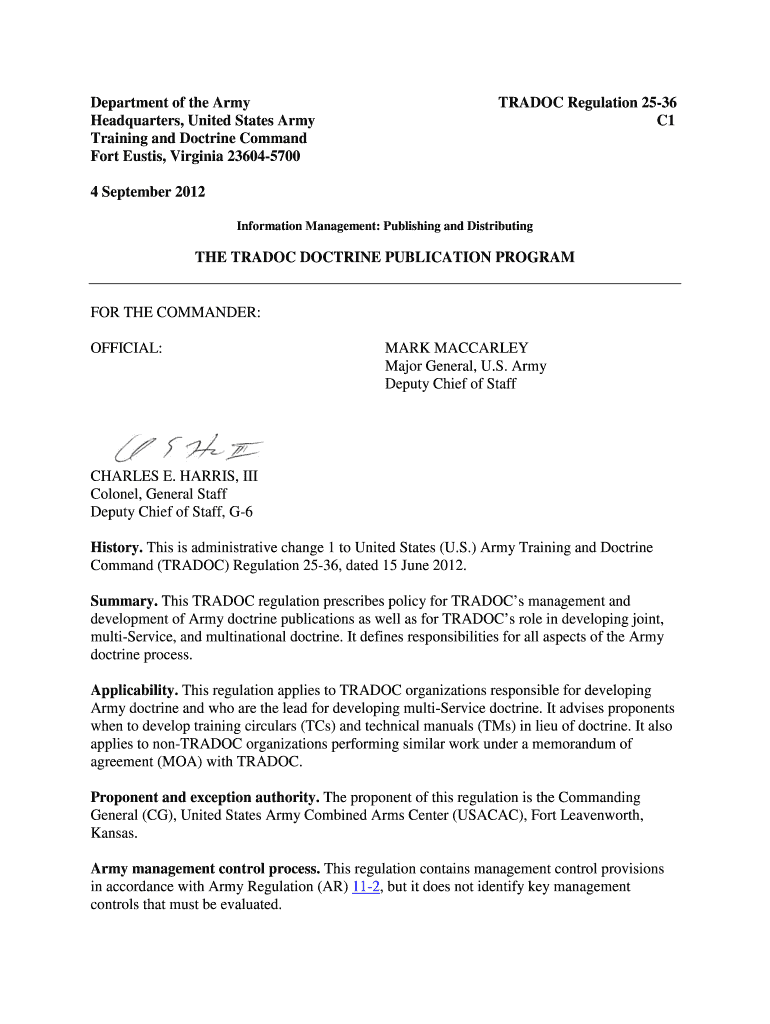
TRADOC Regulation 25-36 is an essential directive from the United States Army Training and Doctrine Command (TRADOC), guiding the management and development of Army doctrine publications. This regulation sets the foundation for creating, reviewing, and distributing doctrine materials, ensuring they align with standardized formats and adhere to historical records. It emphasizes the importance of maintaining contemporary relevance and addresses the roles of various stakeholders in developing joint and multinational doctrines.
How to Use the TRADOC Regulation 25-36 Effectively
Understanding how to utilize TRADOC Regulation 25-36 involves familiarizing oneself with its procedural guidelines. Users must adhere to specified formats for documentation and keep in mind the importance of maintaining accuracy and up-to-date content. The regulation serves as a roadmap for coordinating efforts across organizations involved in doctrine publication to ensure consistency and compliance with army standards. Ongoing collaboration and feedback are critical elements, allowing for refinements and adjustments over time. For effective application, stakeholders need to clearly understand their roles and responsibilities as outlined in the regulation.
Obtaining the TRADOC Regulation 25-36 Document
Accessing TRADOC Regulation 25-36 is straightforward. The document is typically available through official Army channels, including the Army Publishing Directorate's website. Military personnel and relevant staff within defense departments often have streamlined access through internal networks. For those outside the military framework, public access might be restricted, highlighting the need for authorized personnel to facilitate acquisition in compliance with security protocols.
Steps to Complete Tasks Using the TRADOC Regulation 25-36
- Identify Requirements: Begin by examining the specific requirements outlined in the regulation to understand what tasks need completion.
- Data Collection: Gather all necessary data and documentation as stipulated by the regulation.
- Format Adherence: Ensure that any material produced complies with the established formats outlined in TRADOC 25-36.
- Collaborative Review: Conduct a collaborative review process with involved stakeholders to verify accuracy and completeness.
- Submission: Follow the prescribed submission routes whether through digital platforms or physical channels, ensuring timelines are met.
Common Users of TRADOC Regulation 25-36
The primary users of TRADOC Regulation 25-36 include military personnel involved in doctrine development, such as doctrine writers, analysts, and reviewers within the United States Army. Additionally, various departments in TRADOC and associated training commands employ this regulation to guide their operational procedures. Outside partners engaged in joint doctrine efforts also interact with this regulation to align their work with Army standards.


Important Terms Related to TRADOC Regulation 25-36
- Doctrine Materials: Documentation that outlines strategic and operational procedures, policies, and practices within the Army.
- Format Compliance: Adherence to specific layout and content guidelines established by the regulation.
- Joint Doctrine: Strategies and policies developed collaboratively with other military branches or nations.
- Foreign Disclosure: Guidelines for sharing Army doctrine materials with allied and partner nations.
Legal Considerations of TRADOC Regulation 25-36
Compliance with TRADOC Regulation 25-36 is not merely administrative but has significant legal implications. It ensures that doctrine materials meet Department of Defense requirements and supports lawful foreign disclosure processes. The regulation helps safeguard sensitive information through approved channels and protocols, thus playing a critical role in maintaining national security.
Key Elements of TRADOC Regulation 25-36
- Responsibility Assignment: Clearly defines the responsibilities of various organizations in the doctrine process.
- Record Maintenance: Emphasizes the need for maintaining historical records.
- Review Processes: Outlines systematic procedures for the review and approval of doctrine materials.
- Distribution Protocols: Provides guidelines for the circulation of doctrine publications both within the Army and to external partners.
Practical Examples of Using TRADOC Regulation 25-36
An example of TRADOC Regulation 25-36 in action includes the synchronization of doctrine updates across Army divisions. When a new strategic policy is formulated, stakeholders use the regulation to format and revise existing documents, ensuring uniformity. Additionally, in multinational training exercises, TRADOC 25-36 guides the integration of doctrine materials contributed by partner nations, ensuring consistency and operational cohesion.