






Definition & Purpose of the NJ Courts Form 10308 OSC
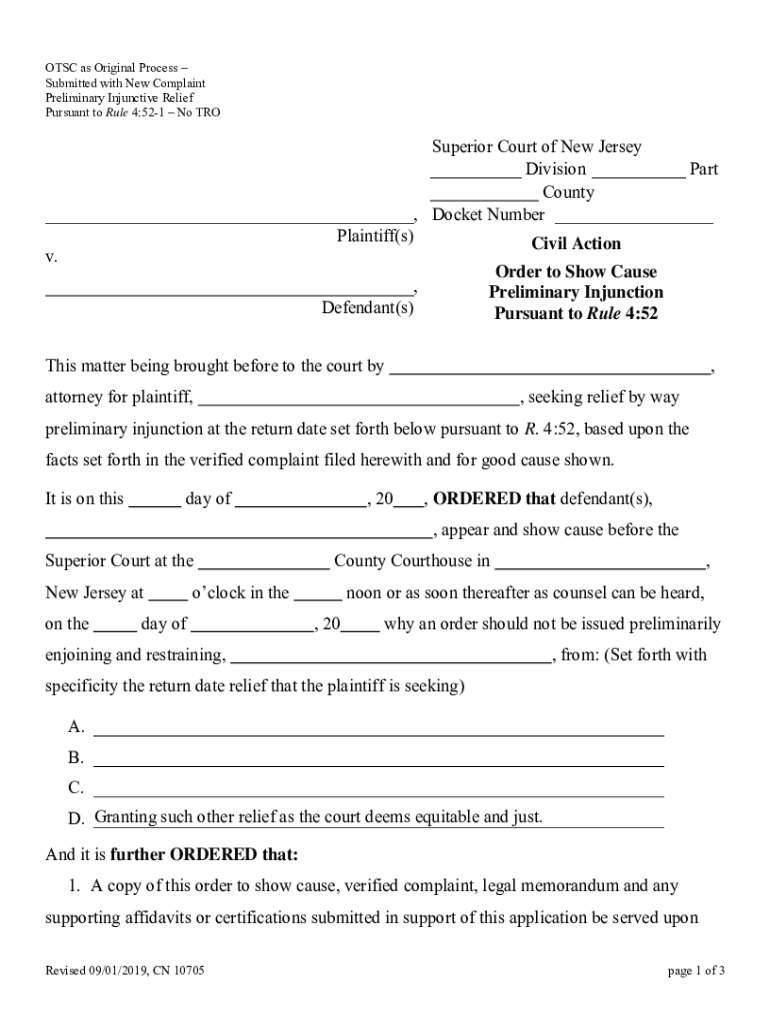
The NJ Courts Form 10308 OSC, known formally as an "Order to Show Cause Temporary Restraint as Original Process Submitted with New Complaint," is a legal document used within the Superior Court of New Jersey. This form allows plaintiffs to request a temporary restraining order or preliminary injunction against a defendant as a part of a new legal complaint. The primary purpose is to maintain the status quo pending resolution of the underlying legal matter, which the court evaluates based on whether irreparable harm might result in the absence of such temporary measures.
Key Elements of the Form
Understanding the core components of this form provides insight into its functionality and legal implications:
- Title of the Court: Specifies the court in which the complaint has been filed.
- Parties Involved: Lists the names of the plaintiff(s) and defendant(s) engaged in the litigation.
- Nature of the Relief Sought: Details the specific temporary restraints or injunctions requested by the plaintiff to prevent imminent harm.
- Supporting Affidavit or Certification: Accompanies the form to substantiate the plaintiff's claims with evidence or testimony, which might include sworn statements or documented proof.
- Order to Show Cause: Directs the defendant to appear in court and explain why the requested temporary restraints should not be granted.
- Consequences for Non-Compliance: Outlines potential legal repercussions, such as sanctions or default judgments, if the defendant fails to comply with the court’s directives.
How to Complete the NJ Courts Form 10308 OSC
Accurate completion of this legal form is critical to ensuring your request is properly considered:
- Gather Necessary Information: Collect all relevant details about the parties and allegations, ensuring accuracy to avoid delays.
- Draft a Clear Complaint: Present a clear, concise account of your case, highlighting the need for immediate court intervention.
- Prepare Supporting Evidence: Attach affidavits, certifications, or any supporting documents that verify the urgency and legitimacy of your claims.
- Review Legal Requirements: Ensure compliance with New Jersey court rules regarding form submission and requirements.
How to Obtain the NJ Courts Form 10308 OSC
Securing the NJ Courts Form 10308 OSC involves several steps:
- Online Resources: Check the official New Jersey Courts website for downloadable forms and guidelines.
- Local Court House: Visit your local courthouse to access a physical copy of the form and any instructions provided by court clerks.
- Legal Counsel Assistance: Engage with a qualified attorney who can provide both the form and guidance through the completion process, ensuring compliance with all legal standards.
State-Specific Rules for Using the Form
Each state may have distinct requirements regarding injunctive relief forms and filings. In New Jersey, pertinent rules include:
- Court Jurisdiction: The form is specifically tailored for use in the Superior Court of New Jersey.
- Filing Procedure: Must align with the New Jersey Rules of Court, ensuring timely submission and adherence to defined processes.
- Service of Process: Plaintiffs must ensure proper notification to defendants regarding the court appearance, usually via certified mail or personal service.
Legal Use of the NJ Courts Form 10308 OSC
The NJ Courts Form 10308 OSC serves several legal functions:
- Temporary Restraints: Prevents immediate changes to conditions or actions that might cause irreparable harm during pending litigation.
- Litigation Tool: Provides leverage in disputes by demonstrating the urgency and seriousness of a plaintiff’s claims.
- Court Order Compliance: Ensures adherence to court-mandated actions, with repercussions for defendants neglecting court instructions.
Steps to Submit the NJ Courts Form 10308 OSC
Once the form is complete, submission involves several procedural steps:
- Verification and Signing: Affirm the accuracy of the information provided and sign the form as required.
- Filing with the Court: Submit through the appropriate court channel, either in-person or through e-filing systems if available in your jurisdiction.
- Paying Applicable Fees: Ensure all associated filing fees are paid to facilitate processing.
- Evidence Submission: Provide the required number of copies to the court and opposing parties, alongside any necessary supporting documents.
Important Considerations and Exceptions
While utilizing this form, consider these additional factors and potential exceptions:
- Evidentiary Standards: The court requires convincing proof, hence plaintiffs must furnish comprehensive documentation.
- Timeliness: Filing must align with judicial timelines to be effective.
- Legal Representation Advised: Although not mandatory, engaging a legal professional can safeguard against procedural missteps.
Understanding the interplay of these components aids in effectively navigating the intricacies of filing an NJ Courts Form 10308 OSC.