






Definition and Meaning
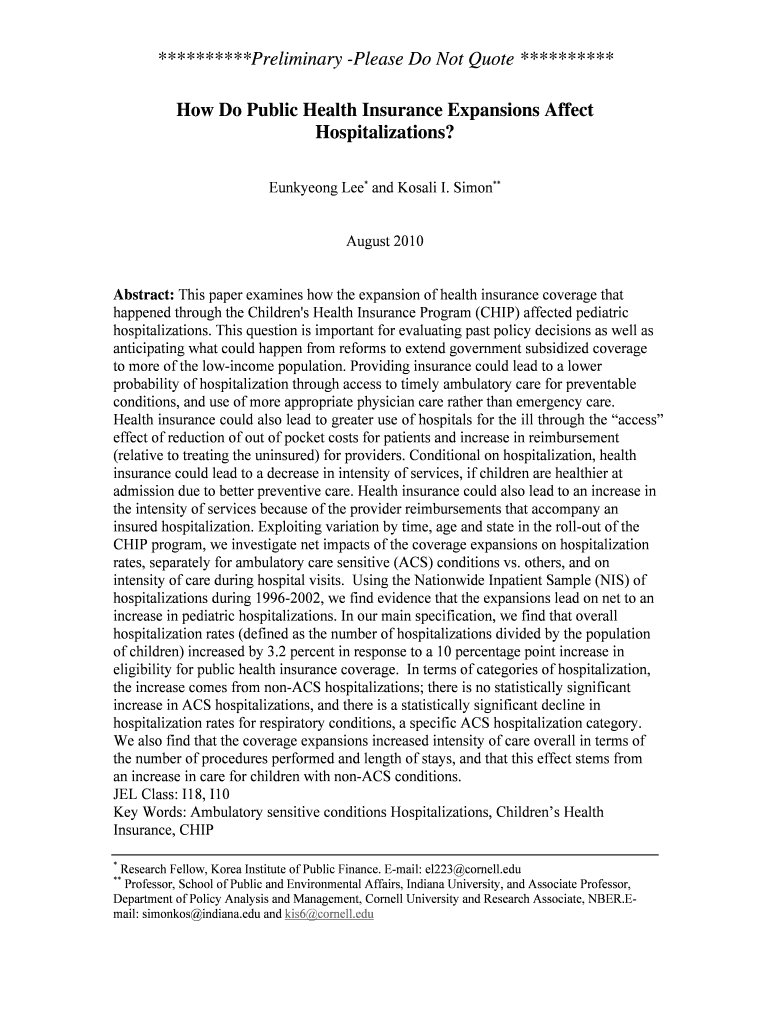
The title "Preliminary - Please Do Not Quote ********** How Do Public Health" suggests a document or inquiry that is still in the draft stages and not ready for citation or publication. In the realm of public health, such a document could be a preliminary analysis or survey related to health policies, programs, or statistics. It's crucial to understand that the preliminary nature implies that the content is subject to change and should not be considered final or conclusive.
Key Aspects of Preliminary Documents
- Draft Status: Indicates that the document is still undergoing review and revisions.
- Restricted Use: Usually, these documents are for internal review and not to be shared publicly or quoted.
- Purpose: Commonly used to gather feedback or for limited distribution among experts.
How to Use the Document
Utilizing a preliminary document like this requires careful consideration of its intended purpose and limitations. Since it is marked as a draft, it is typically used for specific, internal tasks.
Guidelines for Use
- Internal Review: Use for collecting feedback within a specific circle of experts or stakeholders.
- Feedback and Suggestions: Provide insights or suggestions on improving or refining the content.
- Data Analysis: Preliminary data can guide early analysis but should not be the basis for final conclusions.
Steps to Complete the Form
Completing the form "Preliminary - Please Do Not Quote ********** How Do Public Health" involves multiple steps, assuming this form requires user input.
- Review Initial Instructions: Understand the form's purpose and requirements before starting.
- Gather Necessary Information: Compile all required data or documents needed to fill out the form accurately.
- Complete Each Section: Methodically fill out the form, ensuring all requested information is provided.
- Consult with Team Members: If necessary, seek input from relevant team members to ensure accuracy.
- Provide Feedback: Use the last section to offer suggestions or highlight areas for improvement.
Who Typically Uses the Document
This type of preliminary public health document is generally used by specific groups involved in public health initiatives or research.


Typical Users
- Public Health Researchers: To discuss preliminary findings and methodological approaches.
- Government Agencies: For early stage policy development or program assessment.
- Health Policy Experts: To review and suggest improvements before final publication.
Key Elements of the Document
Understanding the key elements of this form can help decipher its purpose and content.
Critical Components
- Preliminary Data: Initial findings or data sets that form the basis for further research.
- Policy Considerations: Early insights related to public health policies or programs.
- Feedback Sections: Areas for users to input their comments, suggestions, and critiques.
State-Specific Rules for the Document
Given that public health regulations can vary by state, it's critical to acknowledge any state-specific rules that might influence the content of the document.
Considerations for State Variance
- Regulatory Differences: Each state may have unique public health priorities or data reporting requirements.
- Adaptation to Local Needs: Adjustments might be necessary to meet specific state-level health challenges or demographics.
Important Terms Related to the Document
A glossary of relevant terms can enhance comprehension, particularly for those unfamiliar with public health terminology.
Common Terminology
- Non-ACS Conditions: Health conditions that are not directly ambulatory care sensitive.
- ESIGN Act: Legislation that grants legality to electronic signatures in the United States.
- Pediatric Hospitalization: Refers to the incidence and nature of hospital visits for children.
Legal Use of the Document
Understanding the legal context is vital for the appropriate use of preliminary documents related to public health.
Legal Considerations
- Confidentiality: Ensure that the preliminary status is respected to avoid unauthorized sharing.
- Compliance with Guidelines: Follow any outlined guidelines to adhere to legal standards.
- Identification of Sensitive Data: Recognize and safeguard any sensitive information within the document.
Digital vs. Paper Versions
The form may exist in both digital and paper formats, each with distinct advantages.
Comparison
- Digital Version: Easier to distribute and collect feedback, especially when edits are frequent.
- Paper Version: Useful for environments where digital access is limited or where hard copies are required in meetings or reviews.
Advantages of Each
- Digital: Quick distribution, environmentally friendly, and often includes interactive fields.
- Paper: Tangible, suitable for those uncomfortable with digital platforms, and can be physically annotated.
By focusing on these aspects, individuals can maximize the utility of the preliminary document while ensuring compliance with its intended use and constraints.