






Definition and Purpose of The Use of Knowledge in Natural Disaster Relief Management
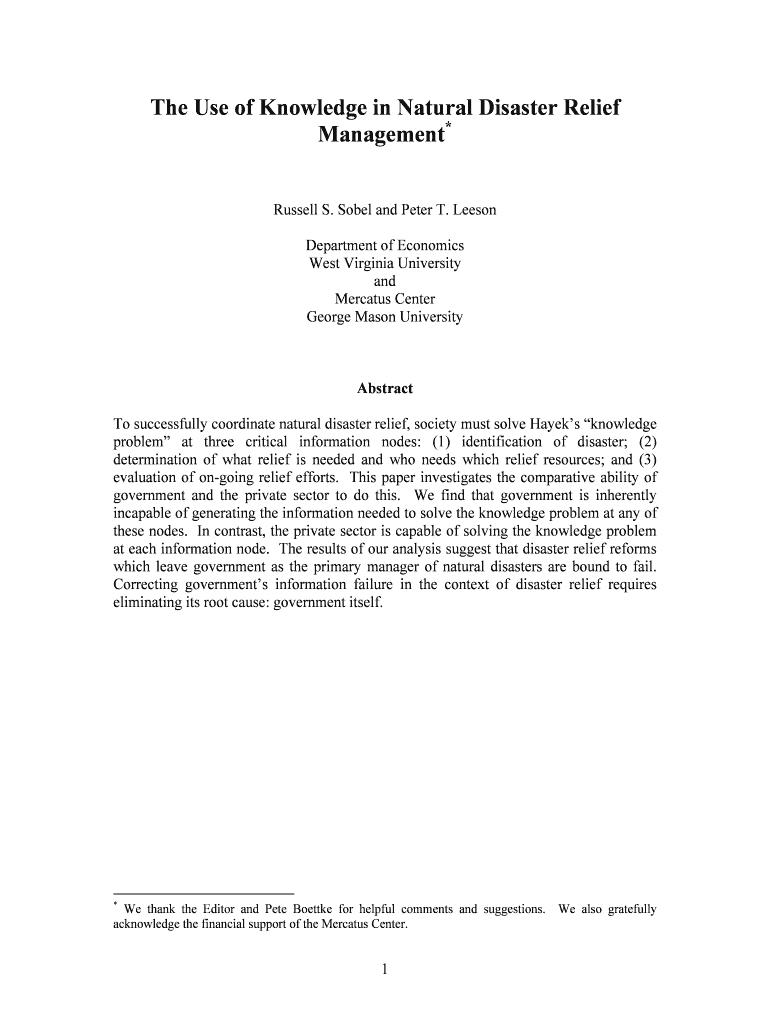
The document referred to as "The Use of Knowledge in Natural Disaster Relief Management" addresses the coordination and management of relief efforts during natural disasters, centered around the challenges found within disaster management frameworks. This management approach examines the application of knowledge at critical junctures such as identifying disasters, understanding the needs, and evaluating relief efforts. Typically, the document contrasts the ability of government bodies versus private enterprises to effectively manage and respond during crises. The emphasis is on resolving Hayek’s 'knowledge problem' within the context of disaster relief, advocating for market-based solutions over government-led initiatives.
Steps to Effectively Utilize The Use of Knowledge in Natural Disaster Relief Management
-
Identifying Disasters:
- Early detection methods, such as satellite imagery or seismographic data.
- Community alerts and information dissemination protocols to ensure rapid response.
-
Assessing Needs:
- Evaluate the immediate and long-term needs of affected communities.
- Understand resource allocation, considering food, shelter, healthcare, and infrastructure.
-
Evaluating Relief Efforts:
- Use data analytics to measure the effectiveness of relief programs.
- Engage with feedback from affected populations to improve future responses.
Key Elements of The Use of Knowledge in Natural Disaster Relief Management
-
Identification and Communication:
- Advanced warning systems and their role in mitigating disaster impact.
- Channels for communicating with affected populations, including digital platforms and traditional media.
-
Resource Allocation:
- The role of local and international entities in providing aid.
- Systems for tracking resources and ensuring they reach those in need efficiently.
-
Continuation of Services:
- Strategies to maintain essential services like healthcare and utility supply during disasters.
- Partnerships between public and private sectors to maintain infrastructure.
Importance of Implementing The Use of Knowledge in Natural Disaster Relief Management
Implementing the strategic use of knowledge in disaster relief management is vital for minimizing loss of life and property. By employing a structured approach to disaster preparedness, communities can enhance their resilience against natural calamities. Properly executed, this management system ensures that all relevant entities operate in unison, maximizing the efficiency and impact of relief efforts. It also introduces accountability by measuring relief efficacy and adapting strategies based on empirical data.
Who Typically Engages in The Use of Knowledge in Natural Disaster Relief Management
-
Government Agencies:
- Departments of Emergency Management at federal and state levels.
- Local governments tasked with direct implementation and oversight.
-
Private Sector:
- Companies specializing in logistics, construction, and communications.
- NGOs and other non-profit organizations dedicated to humanitarian aid.
-
Research Institutions:
- Universities and think tanks conducting research on disaster management practices.
- Expert groups providing consultancy on best practices and technological integration.
Legal Considerations in The Use of Knowledge in Natural Disaster Relief Management
Understanding legal frameworks and compliance is crucial in disaster relief operations. This includes adhering to federal regulations concerning emergency management and the legalities of deploying private entities in public welfare scenarios. Protocols must be established to ensure that all practices are aligned with existing laws, particularly regarding funding, data privacy, and international aid standards.
State-Specific Rules for Natural Disaster Relief Management
Disaster management and relief protocols often vary by state, given differing geographic vulnerabilities and legislative requirements. For instance, coastal states might prioritize hurricane preparedness while midwestern states focus on tornado response. Understanding these nuances is vital for the effective application of disaster knowledge management, leading to tailored responses that address the specific needs and regulations of each region.
Examples of Successful Applications in Disaster Relief
-
Case Study: Hurricane Relief in Florida:
- Successful coordination between state agencies and private sectors led to swift relief operations.
- Mobile technology was used for real-time communication with affected areas.
-
Wildfire Management in California:
- Use of satellite data to track fire patterns and deploy resources effectively.
- Engagements with local communities to develop resilience plans and improve response techniques.
Each example highlights how the strategic application of knowledge through data, collaboration, and technology forms the backbone of effective disaster relief and management efforts, positioning communities to swiftly recover and rebuild post-disaster.