






Definition & Meaning
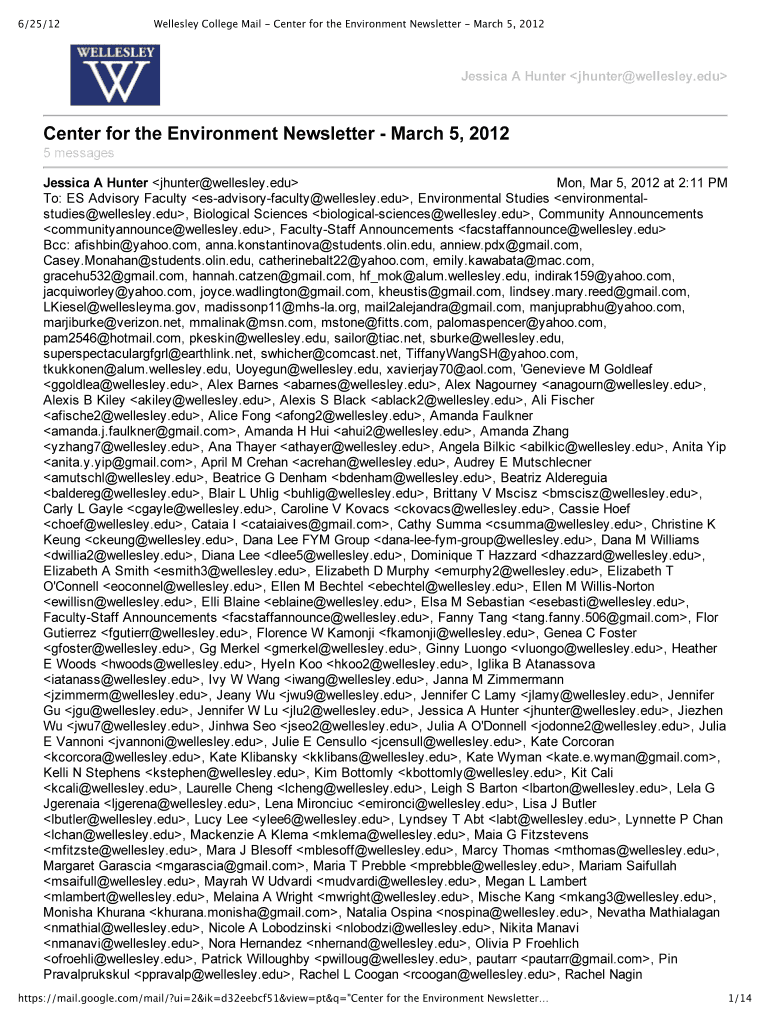
The "6 25 12 Wellesley College Mail Center for the Environment Newsletter March 5, 2012 JessicaAHunterjhu" form appears to be an internal communication document from Wellesley College, specifically related to their Mail Center for the Environment. This newsletter, dated March 5, 2012, likely serves as a medium to disseminate information about environmental initiatives, events, and opportunities within or associated with the college. It might also include updates about the Center for the Environment's activities and achievements.
Key Elements of the Newsletter
Understanding the key components of this newsletter will help in maximizing its utility for the intended audience.
- Upcoming Events: Details about events such as the information session on off-campus programs or social gatherings like Smoothie Night.
- Opportunities for Students: Information on paid summer research positions, internships, and roles related to sustainability.
- Participation Encouragement: Encourages student involvement in various environmental projects and provides application details.
How to Use the Newsletter
The newsletter is designed to be a reference and planning tool for students and staff at Wellesley College.
- Event Planning: Utilize the details provided for scheduling participation in upcoming environmental events and sessions.
- Apply for Opportunities: Follow the application processes outlined for internships and research positions.
- Engagement and Networking: Use the newsletter as a guide to connect with peers and faculty interested in environmental issues.
Important Terms Related to the Newsletter
Understanding specific terminology is crucial for grasping the content of the newsletter:
- Sustainability: Practices focusing on meeting current needs without compromising future generations.
- Internship: A temporary position offering practical experience in a particular field.
- Environmental Studies: An academic field exploring the relationship between humans and the environment.
Steps to Complete Forms Mentioned
The newsletter may reference forms or applications necessary for participating in programs or roles:
- Identify Relevant Opportunities: Look for positions or projects that align with your interests.
- Gather Necessary Documents: Ensure all required documents, such as resumes or letters of recommendation, are ready.
- Follow Application Instructions: Complete and submit any forms by the deadlines provided in the newsletter.
Examples of Using the Newsletter
Real-world scenarios highlight how students and faculty utilize the newsletter.
- A student interested in marine biology attends the Woods Hole program session to learn more about practical training opportunities.
- A sustainability-focused club uses event announcements to plan joint activities with the Center for the Environment.
Legal Use of the Newsletter
While primarily for information, adherence to legal and institutional guidelines is important:
- Confidential Information: Respect any privacy statements and proprietary guidelines mentioned within the newsletter.
- Student Participation: Ensure all participatory activities comply with college policies and relevant laws.
Who Typically Uses the Newsletter
The primary audience includes:
- Wellesley College Students: Particularly those studying environmental science or related disciplines.
- Faculty Members: Professors or staff involved in sustainability projects or environmental education.
- College Administration: Departments coordinating events and managing environmental initiatives.


Digital vs. Paper Version
Different formats might be available for this newsletter:
- Digital Version: Allows quick access and easy distribution; ideal for electronic archiving.
- Paper Version: Useful for physical bulletin boards or in locations where digital access is limited.
Accessing the Newsletter
Knowing how to obtain the newsletter ensures you are always informed:
- Digital Subscriptions: Sign up through the college's website or the Center for the Environment to receive it directly in your email.
- Physical Copies: Available at the college's Mail Center or environmental department offices.
Event Participation
Understanding the importance of engaging with newsletter events:
- Networking Opportunities: Connect with peers and experts who share interests in environmental science.
- Skill Development: Gain practical experience and insight into real-world environmental challenges.
Each block provides comprehensive insights to ensure readers maximize the benefits of the "6 25 12 Wellesley College Mail Center for the Environment Newsletter March 5, 2012 JessicaAHunterjhu," aligning with institutional goals and personal interests in environmental studies.