SES Performance Management System - OPM 2026

Get Form
SES Performance Management System - OPM Preview on Page 1

Here's how it works

01. Edit your form online
Type text, add images, blackout confidential details, add comments, highlights and more.

02. Sign it in a few clicks
Draw your signature, type it, upload its image, or use your mobile device as a signature pad.

03. Share your form with others
Send it via email, link, or fax. You can also download it, export it or print it out.

Definition & Meaning

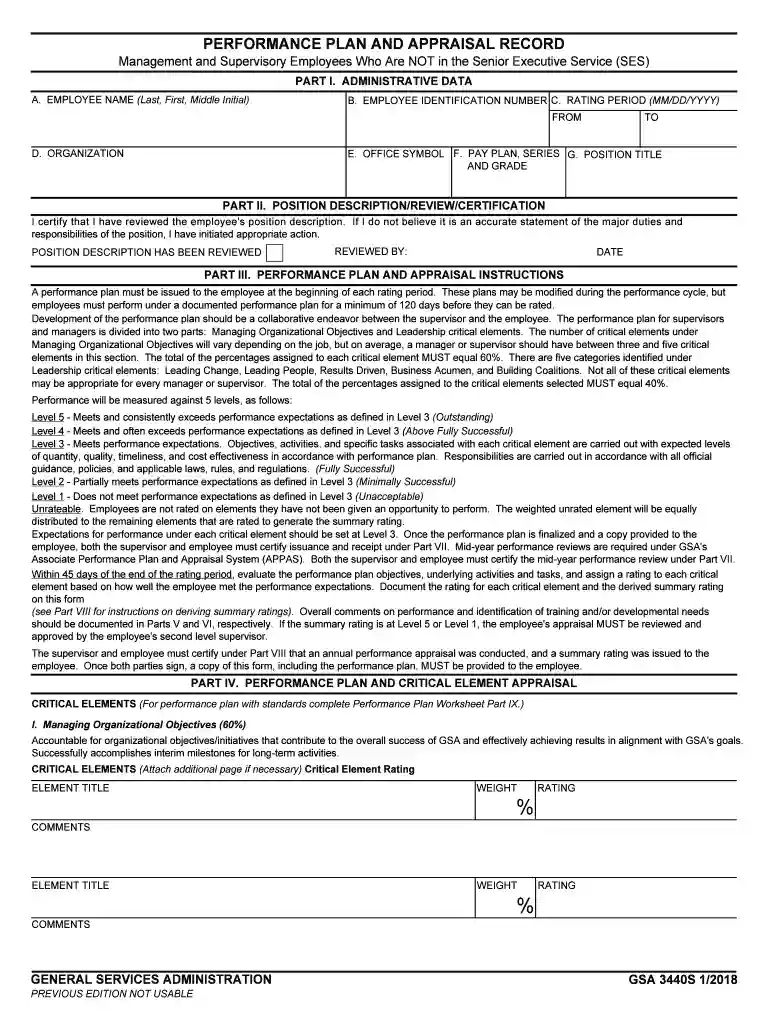
The SES Performance Management System (PMS) - OPM is designed specifically for the effective evaluation and development of Senior Executive Service (SES) members within the federal government. This system is a structured approach that encompasses the creation of performance plans, continuous feedback, and appraisals to ultimately enhance organizational performance. The focus is on aligning SES members’ goals with strategic objectives, ensuring that government leaders are accountable while fostering professional growth. The OPM oversees this system to ensure standardization and effectiveness across various federal agencies.

Steps to Complete the SES Performance Management System - OPM

  1. Develop Performance Plans: Collaboratively create plans with clear objectives and deadlines. Plans should align with agency goals and include specific criteria for success.

  2. Mid-Year Reviews: Conduct an interim evaluation to provide feedback and discuss progress toward objectives. This stage is crucial for adjusting goals if necessary.

  3. Final Appraisal: At the end of the appraisal period, evaluate performance against the established plan. Determine a rating based on evidence of achievements related to the performance elements.

  4. Documentation & Certification: Complete and submit all necessary documentation, ensuring that the performance appraisal is certified by the appropriate parties.

  5. Continuous Feedback and Development: Encourage ongoing communication and professional development opportunities throughout the performance cycle.

Key Considerations During Completion

  • Collaboration: Ensure that plans are developed in collaboration with supervisors to accurately reflect goals and responsibilities.
  • Consistency in Rating: Apply consistent evaluation criteria across all SES members to maintain fairness in appraisals.
  • Adaptability: Be prepared to adjust performance plans during the mid-year review to accommodate changes in organizational priorities.

Key Elements of the SES Performance Management System - OPM

  • Performance Elements: The system includes critical elements that define responsibilities and measurable achievements.
  • Rating Levels: The system categorizes performance into five levels, with 'Outstanding' being the highest.
  • Certification Process: There are clear guidelines for certifying ratings, ensuring transparency and accountability.
  • Training and Development: The system includes provisions for identifying training needs to support executive development.

Legal Use of the SES Performance Management System - OPM

The SES PMS is regulated under federal law, ensuring that the processes and appraisals are fair, unbiased, and in compliance with legal standards. The system is designed to protect the rights of SES members while promoting efficiency and accountability in public service leadership. Performance appraisals and related documentation are subject to federal records management regulations, emphasizing the importance of accurate and secure record-keeping.

Who Typically Uses the SES Performance Management System - OPM

The primary users are:

  • SES Members: Senior executives in federal agencies who are subject to performance evaluations.
  • Supervisors and Managers: Responsible for creating performance plans, conducting evaluations, and providing ongoing feedback.
  • Human Resources Personnel: Facilitate the administration and implementation of the SES PMS within agencies.
  • OPM Officials: Oversee the integrity and consistency of the system across all agencies.
decoration image ratings of Dochub

Role of Supervisors

  • Engage closely with SES members to develop meaningful performance plans.
  • Provide regular feedback and conduct evaluations based on pre-defined criteria.
  • Ensure compliance with OPM guidelines throughout the appraisal process.

Important Terms Related to the SES Performance Management System - OPM

  • Critical Elements: Essential components of a performance plan tied to the overarching agency goals.
  • Feedback Mechanism: The processes in place for providing continuous, constructive feedback.
  • Appraisal Period: The designated timeframe during which performance evaluations occur, typically annually.
  • Rating Scale: A five-level scale used to rate SES member performance, from 'Unacceptable' to 'Outstanding.'

Examples of Using the SES Performance Management System - OPM

  • Case Study: Agency X: Agency X successfully aligned its SES members' objectives with its strategic plan, leading to improved project outcomes.
  • Performance Improvement Example: An SES member, initially rated as 'Fully Successful,' received targeted development interventions and achieved an 'Exceeds Fully Successful' rating in the subsequent cycle.
  • Feedback Utilization: In Agency Y, feedback from the mid-year review led to the revision of objectives, aligning better with new legislative mandates.

Software Compatibility

The SES PMS documentation is designed to be compatible with software like QuickBooks and TurboTax for financial and administrative data management. This ensures that performance management data can be integrated easily into broader agency systems for seamless reporting and analysis. Ensuring that data entry and reporting systems are compatible with existing financial tools is crucial for efficient management.

State-specific Rules for the SES Performance Management System - OPM

SES PMS rules and regulations are standardized across federal agencies; however, their implementation might be influenced by state-specific legal frameworks regarding labor laws and employment practices. It's essential for agencies to be aware of these differences when applying PMS guidelines. For instance, state labor boards might have varying requirements for documentation and employee rights, which must be harmonized with the federal standards.

be ready to get more

Complete this form in 5 minutes or less

Get form

Got questions?

We have answers to the most popular questions from our customers. If you can't find an answer to your question, please contact us.
Contact us
The basic SES appraisal system promotes consistency, clarity, equity, and transferability of performance processes, standards, feedback and ratings throughout Government.
5S is a five-step methodology that creates a more organized and productive workspace. In English, the 5Ss are: Sort, Straighten, Shine, Standardize, and Sustain. 5S serves as a foundation for deploying more advanced lean production tools and processes.
What are the 5 phases of management process? Planning. Organizing. Leading. Controlling. Evaluating.
▪ Senior executive performance plan means the written summary of work the senior executive is expected. to accomplish during the appraisal period and the requirements against which performance will be. evaluated.
The Senior Executive Service was established by the Civil Service Reform Act and went into effect on July 13, 1979. The SES is comprised of the men and women charged with leading the continuing transformation of our government.

Security and compliance

At DocHub, your data security is our priority. We follow HIPAA, SOC2, GDPR, and other standards, so you can work on your documents with confidence.

Learn more
ccpa2
pci-dss
gdpr-compliance
hipaa
soc-compliance

People also ask

All five component processes (i.e., planning, monitoring, developing, rating, rewarding) work together and support each other, resulting in natural, effective performance management. Effective employee performance management encompasses the five key components presented above.
Ans. The performance management cycle involves four primary stages: planning, monitoring, developing, and rating rewarding, and then loops back to begin anew.

Related links