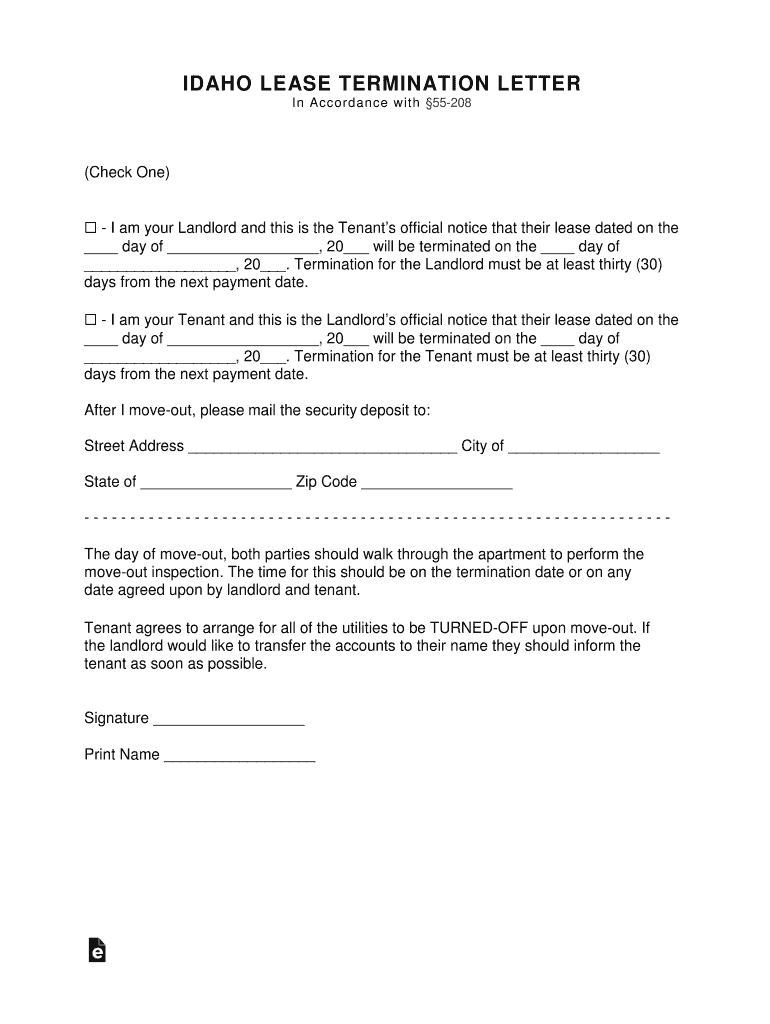







Definition and Purpose of the Iowa Lease Termination Letter Form 30-Day Notice
The Iowa Lease Termination Letter Form 30-Day Notice is a formal document used by landlords or tenants in Iowa to terminate a lease agreement. This letter serves as an official notification, providing the other party with a minimum of thirty days' notice before ending the tenancy. It ensures both parties comply with legal obligations and allows for an orderly transition, mitigating potential disputes.
Examples of Use
- Landlord Scenario: A landlord may use this form to terminate a month-to-month lease when deciding to sell the property.
- Tenant Scenario: A tenant may serve this notice to vacate a rental unit due to a job relocation.
How to Use the Iowa Lease Termination Letter Form 30-Day Notice
To effectively utilize this form, the initiating party must follow certain steps to ensure compliance with Iowa law.
- Complete the Form: Fill out all required fields, including names, addresses, and lease details.
- Provide Notice: Deliver the letter to the other party, ensuring proof of receipt.
- Maintain Records: Keep a copy of the signed document for personal records.
Important Inclusions
- Identification of both parties involved.
- The address of the rental property.
- The exact date of termination.
Obtaining the Iowa Lease Termination Letter Form 30-Day Notice
There are multiple ways to obtain this form to facilitate a smooth leasing closure process.
Common Sources
- Online Platforms: Many legal document sites offer downloadable templates.
- Property Management Companies: Often provide standardized forms for tenants and landlords.
Considerations
Ensure the form aligns with current Iowa state regulations, as laws can evolve.
Steps to Complete the Iowa Lease Termination Letter Form 30-Day Notice
Completing the Iowa Lease Termination Letter involves thorough attention to detail to ensure its validity.
- Enter Party Information: Clearly state the names and contact details of both the landlord and tenant.
- Fill in Lease Details: Specify the start date of the lease and the address of the property.
- State Termination Date: Clearly indicate the date when the lease will be terminated.
- Sign and Date: The initiating party must sign and date the form to make it official.
Pro Tips
- Use clear, concise language.
- Double-check all details for accuracy before submission.
Key Elements of the Iowa Lease Termination Letter Form 30-Day Notice
Several critical components must be present in the form to ensure it serves its intended purpose legally.
- Notice Period: Must clearly state a minimum of thirty days' notice.
- Legal Reference: Should cite applicable Iowa lease termination laws.
- Signatures: Must include signatures of the issuing party for authenticity.
Legal Use of the Iowa Lease Termination Letter Form 30-Day Notice
The legal framework surrounding this notice is straightforward but must be adhered to for enforceability.
Obligations
- The notice cannot be issued arbitrarily; there must be a legal or justified reason.
- Non-compliance with the notice period can result in legal disputes or financial penalties.
Legal Context
Under Iowa law, tenants are protected from eviction without proper notice, and this form serves as a crucial legal tool in maintaining that balance.
State-Specific Rules for the Iowa Lease Termination Letter Form 30-Day Notice
Iowa has unique legal stipulations that govern lease termination notices, differing slightly from federal guidelines.
Iowa State Regulations
- Specificity: Iowa requires explicit details about the lease and termination conditions.
- Delivery: Must be delivered via certified mail or other verifiable methods.
Examples of Using the Iowa Lease Termination Letter Form 30-Day Notice
Real-world scenarios demonstrate the practical application of this notice form.
Case Studies
- Landlord's Perspective: A landlord serves the notice to reclaim a property for renovations, providing tenants adequate time to find a new home.
- Tenant's Perspective: A tenant uses the notice to exit a lease early due to unacceptable living conditions, backed with proper documentation to avoid penalties.