






Definition and Meaning
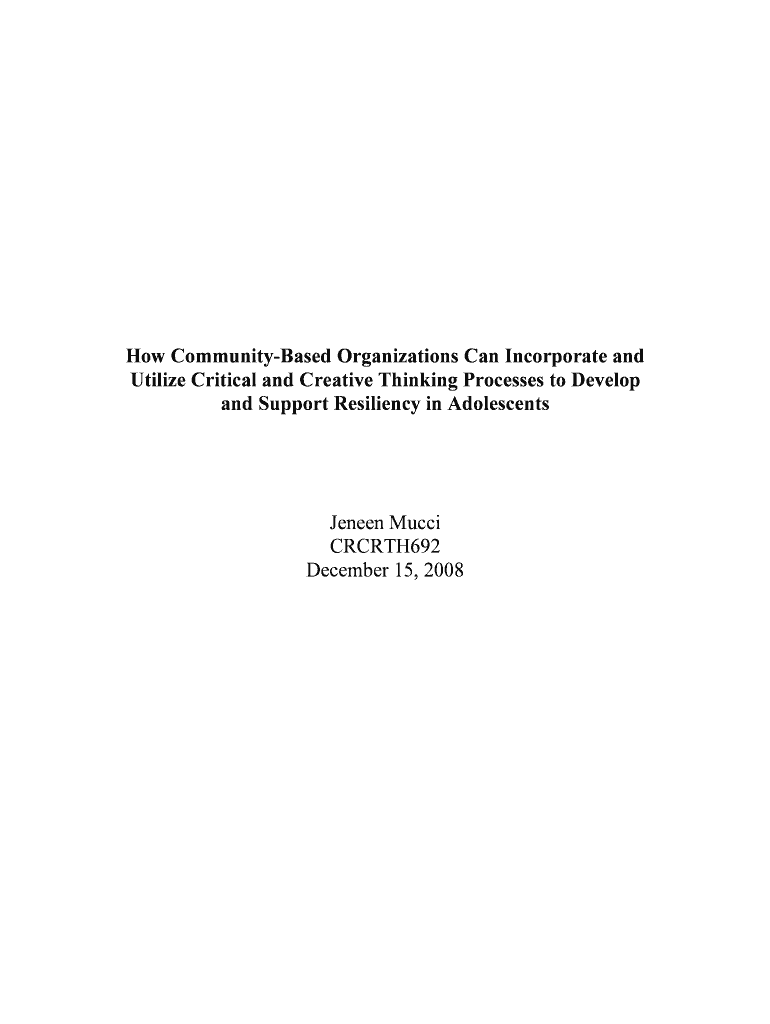
The "How Community-Based Organizations Can Incorporate and Utilize - faculty umb" form is a resource designed for community-based organizations (CBOs) to integrate critical and creative processes into their operations. This approach emphasizes fostering resiliency among adolescents by creating supportive environments that promote personal growth and engagement. The form provides a framework for CBOs to transition from a problem-focused approach to one that proactively nurtures innate resiliency in youth, encouraging higher-order thinking and meaningful participation.
Key Elements of the Form
The form outlines several critical elements for community-based organizations aiming to foster resilience in young individuals. These include strategic engagement in creative processes, promoting environments conducive to inquiry, and facilitating personal reflection. The document details specific methodologies for developing supportive spaces where youth can become active participants in their personal and community growth, ultimately advocating for practices that bolster resiliency.
Steps to Complete the Form
-
Identify Key Objectives: Begin by outlining the primary goals of incorporating critical and creative thinking within your organization.
-
Evaluate Current Practices: Assess existing methodologies and how they align with fostering resilience among adolescents.
-
Integrate New Strategies: Implement the form's recommended strategies, focusing on active youth participation and supportive environments.
-
Collaborate and Reflect: Engage with youth to gather feedback and reflect on the effectiveness of the new approaches.
-
Document Progress: Keep records of changes made and their impact on the organization's goals.
Who Typically Uses the Form
Community-based organizations, particularly those focused on youth development and engagement, are the primary users. These organizations may include non-profits, educational institutions, and social service agencies looking to enhance their programs by incorporating creative and critical thinking strategies.


Examples of Using the Form
Consider a youth center that adopts this form to revamp its after-school programs. By shifting from purely recreational activities to those that include creative problem-solving workshops, they notice an increase in youth participation and improved feedback from program evaluations. Another example might be a community college using the form to guide faculty in integrating innovative teaching methods aimed at enhancing student resilience.
Important Terms Related to the Form
- Resiliency: The capacity of individuals, particularly youth, to recover from difficulties and adapt successfully.
- Higher-Order Thinking: Engaging in complex judgments, problem-solving, and critical analysis beyond basic learning.
- Supportive Environments: Contexts that foster growth, acceptance, and learning through encouragement and reflection.
Legal Use of the Form
The form should be used within the legal frameworks and educational guidelines applicable in the United States. It is essential for CBOs to ensure compliance with local and federal laws regarding youth engagement and educational program structuring.
State-Specific Rules for the Form
While the form provides a general framework, CBOs should adapt its strategies to comply with state-specific regulations and educational standards. Each state may have different provisions regarding youth programming and educational initiatives, which should be reviewed before implementation.
Form Submission Methods
Although this form serves as a guide rather than an official document requiring submission, community-based organizations should maintain documentation of their strategy implementation and outcomes for internal review and potential reporting to governing bodies or funders.