




01. Edit your sc religious exemption form online
Type text, add images, blackout confidential details, add comments, highlights and more.

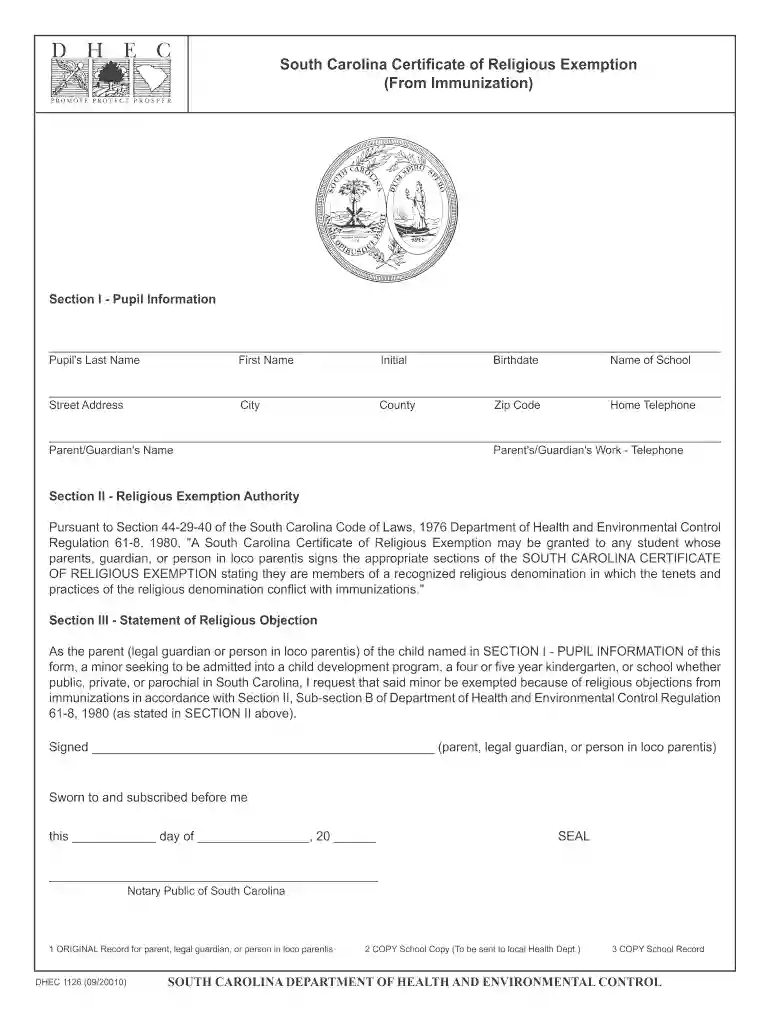
Type text, add images, blackout confidential details, add comments, highlights and more.

Draw your signature, type it, upload its image, or use your mobile device as a signature pad.

Send sc religious exemption form pdf via email, link, or fax. You can also download it, export it or print it out.
A COVID vaccine exemption letter is a formal document that individuals can use to request an exemption from receiving the COVID-19 vaccine. This letter serves as an official means to state one's grounds for exemption, which can be based on medical, religious, or personal beliefs. It is essential for individuals who may be required to provide proof of their vaccination status but are seeking an exemption for eligible reasons.
Medical Exemptions: These exemptions are based on specific medical conditions that may prevent an individual from receiving the vaccine. Common examples include severe allergies to vaccine components or certain health conditions that contraindicate vaccination.
Religious Exemptions: Individuals may also request exemptions based on sincerely held religious beliefs. This type of exemption typically requires a statement explaining the religious basis for the refusal of the vaccine.
Personal Belief Exemptions: Some states allow exemptions based on personal beliefs or philosophical opposition to vaccines. This category often requires individuals to outline their beliefs regarding vaccination.
An effective COVID vaccine exemption letter should include several key elements to ensure clarity and completeness:
Personal Information: The letter should contain the individual's full name, address, contact information, and date of birth.
Statement of Exemption: Clearly articulate the reason for seeking an exemption, whether it is medical, religious, or based on personal beliefs. Providing detailed justifications can strengthen the request.
Signature and Notarization: To add credibility and formality, the letter should be signed by the individual. In some cases, notarization might be required, particularly for medical exemptions.
Date: Including the date on which the letter is written can be crucial for reference and processing.
Individuals seeking a COVID vaccine exemption letter can follow these steps:
Research Requirements: Check with the relevant state public health department or employer policy to understand the specific criteria for exemption applications.
Consult with a Professional: For medical exemptions, it might be necessary to consult a healthcare professional who can provide a formal recommendation or letter supporting the exemption request.
Draft the Letter: Use a template or create a personalized letter, ensuring that all necessary information and justifications are included.
Submit the Letter: Follow the instruction for submission as determined by the state or employer—this might include mailing a physical copy or submitting a digital version.
When preparing a COVID vaccine exemption letter, several key mistakes can hinder its effectiveness:
Lack of Specificity: Vague statements about beliefs or medical conditions may not be sufficient. It's vital to provide detailed and clear reasoning.
Neglecting to Follow Guidelines: Each organization or state may have particular guidelines for exemption letters. Ignoring these can lead to denial of the request.
Filing Late: Be aware of any deadlines associated with exemption requests, especially if they are tied to employment or school-related mandates.
Individuals may reference various template structures when drafting their letters. Here are example statements for each exemption type:
Medical Exemption Example: “I am writing to formally request an exemption from the COVID-19 vaccination due to my severe allergy to polyethylene glycol, which is a component of the vaccine. My physician has advised against vaccination to protect my health.”
Religious Exemption Example: “My deeply held religious beliefs prevent me from receiving any vaccinations, including the COVID-19 vaccine. This request is rooted in my religious convictions and adherence to the teachings of my faith.”
Personal Belief Exemption Example: “I am seeking an exemption from receiving the COVID-19 vaccine based on personal beliefs that oppose vaccination. I believe in maintaining my bodily autonomy and the right to make informed health choices without government interference.”
Individuals must be aware of the legal landscape surrounding vaccine exemptions, which varies by state:
State Laws: Some states have specific laws that allow for exemptions based on various criteria, while others may have more restrictive policies. Researching local laws is fundamental.
Employer Policies: Employers may have the authority to accept or deny exemption requests based on their workplace vaccination policies. Employees should be familiar with these guidelines to navigate the process effectively.
Documentation Requirements: Certain exemptions may necessitate additional documentation, such as physician notes or religious leader endorsements. Ensuring compliance with documentation protocols is critical for a successful exemption request.
Utilizing this structured information when creating a COVID vaccine exemption letter can help individuals articulate their needs effectively while adhering to required standards.
We've got more versions of the sc religious exemption form form. Select the right sc religious exemption form version from the list and start editing it straight away!
| Versions | Form popularity | Fillable & printable |
|---|---|---|
| 2010 | 3.9 Satisfied (34 Votes) |
At DocHub, your data security is our priority. We follow HIPAA, SOC2, GDPR, and other standards, so you can work on your documents with confidence.




COVID-19 Vaccine Medical Exemption Request Form. Section I. To be completed by Student or Parent/Guardian (if student is under 18). Last Name. First Name. DateRead more
Jun 30, 2020 **One or more of the following exposures in the prior 14 days: Close contact with a confirmed or probable case of COVID-19 disease;. ?MemberRead more
This page provides additional information, resources, and guidance on the request for the COVID-19 Vaccination Exemption/Reasonable Accommodation process.Read more


