






Definition & Meaning
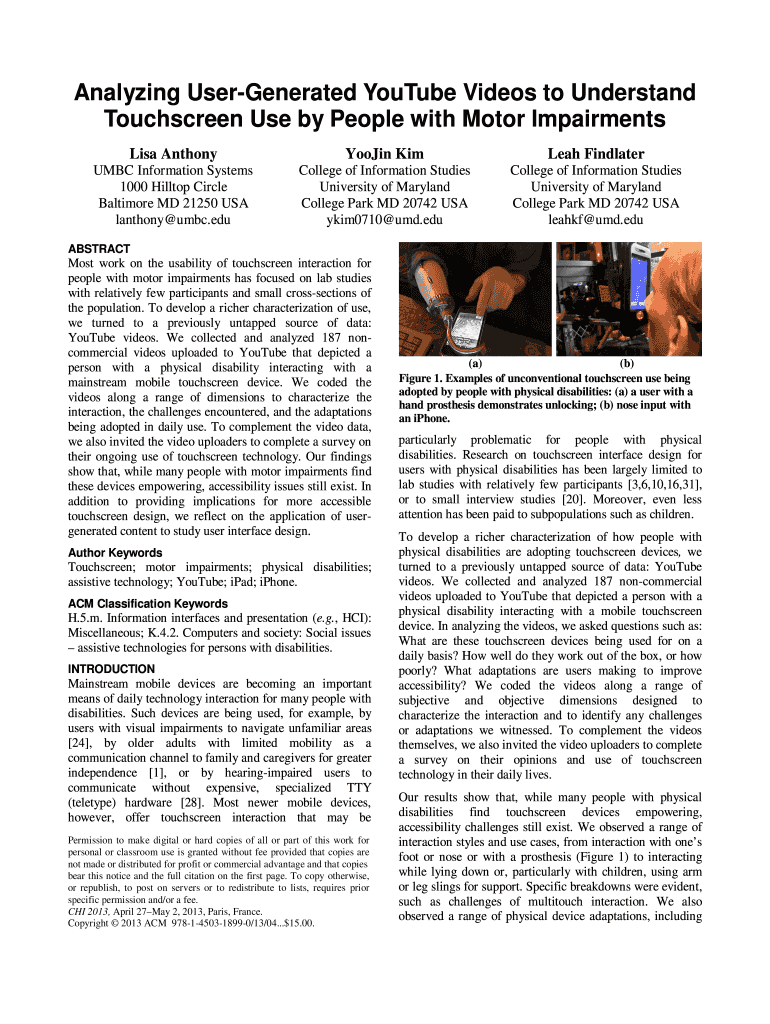
"Analyzing User-Generated YouTube Videos to Understand - terpconnect umd" refers to the process of examining videos created by users to gain insights into various aspects related to user interactions, challenges, and adaptations. The primary focus is on individuals using touchscreen devices, particularly those with motor impairments. This analysis aims to understand interaction patterns, accessibility issues, and adaptations used by these individuals.
Key Elements of Analysis
- User Interaction Styles: Understanding how individuals interact with touchscreen devices through different techniques.
- Accessibility Challenges: Identifying barriers faced by people with motor impairments when using these devices.
- Adaptation Methods: Documenting alternative methods such as using feet or mouth sticks, showing how users overcome obstacles.
How to Use This Analysis
Utilizing this analysis can significantly enhance the understanding of user interaction with technology, particularly for researchers, developers, and designers working on accessibility solutions.
Practical Application
- Developers can use insights to create more accessible user interfaces.
- Designers can innovate adaptive tools and features following analyzed data.
- Researchers can extend studies on human-computer interaction based on findings.
Who Typically Uses This Analysis
The primary users of this type of analysis are typically those involved in technology development and educational research sectors.
Target Users
- Educational Institutions: Like the University of Maryland, which conducts such studies for academic purposes.
- Tech Companies: Looking to integrate accessibility features in devices.
- Non-profit Organizations: Aiming to advocate for better accessibility in technology.
Steps to Complete the Analysis
Performing a successful analysis involves a structured approach to ensure comprehensive data collection and evaluation.
Step-by-Step Process
- Video Selection: Choose a diverse range of user-generated content focusing on touchscreen interaction.
- Data Collection: Record user behaviors, device usage patterns, and specific adaptive techniques.
- Analysis: Categorize and interpret data to identify common challenges and successful adaptations.
- Report Preparation: Document findings with detailed examples and scenarios.
- Review & Revise: Continuously update the analysis with new data to maintain relevance.
Important Terms Related to the Analysis
Understanding specific terminology is crucial for accurate interpretation and communication of analysis findings.
Glossary
- User-Generated Content (UGC): Videos created and uploaded by individual users rather than companies.
- Motor Impairments: Physical disabilities that affect movement, impacting how individuals interact with devices.
- Adaptation Techniques: Methods used by individuals to adjust to accessibility challenges.
Legal Use of the Analysis
The use of this analysis is subject to certain legal considerations, especially regarding privacy and data protection.
Compliance and Regulations
- Ensure participant consent is obtained for video usage.
- Adhere to data protection laws to safeguard personal information.
- Maintain transparency about analysis purposes and methods.
Examples of Using This Analysis
Real-world examples enhance understanding by illustrating the practical impact of the insights gained through analysis.
Case Studies
- Example 1: A tech company redesigned its accessibility settings after analyzing user-generated videos showing difficulties faced by users with motor impairments.
- Example 2: A research paper detailing unconventional interaction methods led to improved ergonomic designs for touchscreen devices.
Software Compatibility for Analysis
Analyzing user-generated YouTube videos involves compatibility with various software tools that facilitate data collection and interpretation.
Recommended Software Tools
- Video Editing Software: For detailed examination of user interactions.
- Data Analysis Programs: Tools like SPSS or NVivo for categorizing and analyzing qualitative data.
- Content Management Systems: For organizing and storing collected data securely.