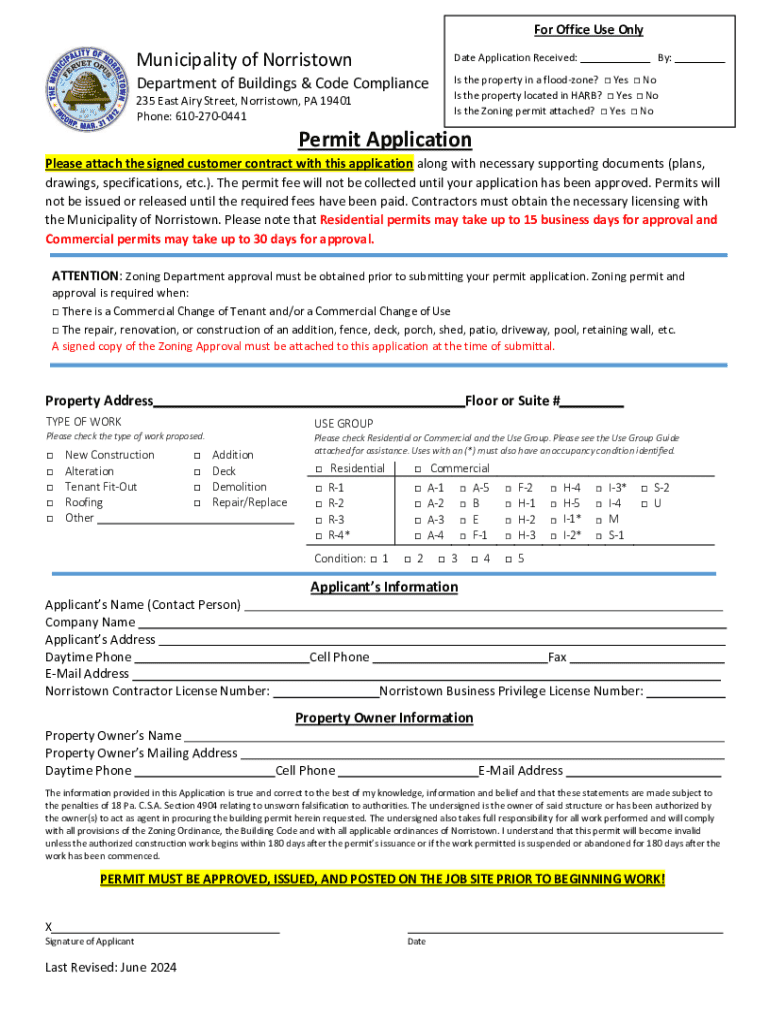







Definition & Meaning
A permit application is a formal request submitted to a governing body or regulatory authority to seek approval for a specific activity or project. This document is necessary for legally proceeding with construction-related projects such as building, electrical, plumbing, HVAC, and fire protection. Each type of permit ensures that the work complies with established codes and standards, which are vital for safety, functionality, and legal conformity. The permit application typically involves detailed information about the proposed work and is essential for obtaining the necessary authorization to commence any construction-related activities.
Steps to Complete the Permit Application
-
Gather Required Information: Prepare all necessary details such as the scope of work, property address, applicant information, and owner details. Ensuring all information aligns with local regulations can prevent delays in the application process.
-
Review Specific Permit Types: Identify which permits are required based on the work proposed. For instance, different permits may be needed for structural, electrical, plumbing, or HVAC work.
-
Complete Application Sections: Fill out sections regarding the type of work, intended use, and any specific use groups under local codes like the Pennsylvania Uniform Construction Code (PA UCC).
-
Prepare Supporting Documentation: Collect required documents, which might include project plans, zoning approvals, and compliance certificates. This documentation supports the application and demonstrates adherence to regulations.
-
Submit the Application: Choose the appropriate submission method, whether online, by mail, or in person. Each method might have specific procedural nuances, so understanding them is crucial.
-
Follow Up for Approval: After submission, monitoring the application status is essential. Some applications require follow-up communication or additional information before approval is granted.
How to Use the Permit Application
The use of a permit application involves a systematic approach to project approval. Applicants begin by understanding the scope and type of construction activity they wish to undertake. Once identified, detailed project descriptions and supporting documents need to be articulated clearly in the application. Essential information includes the purpose of the project, specific details about the work, and compliance with local codes. It's crucial to ensure every piece of information is accurate and complete to avoid setbacks. Upon submission, applicants must be prepared to interact with regulatory authorities for clarifications or additional documentation requests.
Key Elements of the Permit Application
-
Applicant Information: Name, contact details, and the role of the applicant (e.g., owner, contractor, agent).
-
Property Details: Address of the site where work is proposed, including legal description and zoning classification.
-
Project Description: Detailed outline of proposed work, categorizing each component, such as building, plumbing, or electrical.
-
Compliance and Approvals: Verification of conformity with zoning laws and any necessary pre-approvals from other municipal departments.
-
Permit Types: Identification of all required permits for the project type and scale.
-
Signatures and Declarations: Required applicant signatures and acknowledgments confirming the accuracy and completeness of the information provided.
Important Terms Related to Permit Application
Understanding specific terms can enhance the application process:
-
Zoning Approval: Prior consent from zoning authorities, ensuring the proposed project aligns with the area's designated use.
-
Code Compliance: Adhering to the construction, safety, and occupancy standards as defined by local, state, or national codes.
-
Use Groups: Categorization as per codes like the PA UCC, determining the type of operations permissible within a structure.
-
Scope of Work: Detailed description of the external and internal changes proposed, crucial for identifying necessary permits.
State-Specific Rules for the Permit Application
Different states may have distinct rules for permit applications, influenced by local building codes, environmental conditions, and municipal regulations. In Pennsylvania, for example, the Pennsylvania Uniform Construction Code sets forth specific requirements for safety and structural soundness. These state-specific regulations dictate not only what is required within the application but also the process and timeline for review and approval. Applicants must familiarize themselves with these local codes to ensure a smooth and successful application process.
Examples of Using the Permit Application
-
Residential Construction: Applying for a permit when adding an extension to a house. This might require multiple applications for building, electrical, and plumbing work.
-
Commercial Renovations: A business owner seeking to modify a commercial building could need fire safety permits alongside structural and utility permits.
-
HVAC Installations: Submitting a permit application for a new HVAC system installation, which requires outlining energy efficiency standards and compliance with environmental guidelines.
Who Typically Uses the Permit Application
Permit applications are commonly used by various individuals and entities, including:
-
Property Owners: Seeking to alter or add to their property, whether residential or commercial.
-
Contractors and Builders: Engaged in new construction or significant remodeling, requiring permits for compliance.
-
Developers: Planning large-scale projects like subdivisions or multi-unit buildings, necessitating comprehensive applications covering various aspects of construction and development.
Understanding who uses these forms helps tailor their completion to specific needs and ensures alignment with all necessary regulatory expectations.
This comprehensive coverage ensures applicants are well-informed about all aspects of the permit application process, contributing to efficient and compliant project initiation.