






Definition and Purpose of the PG-101 Emergency Petition
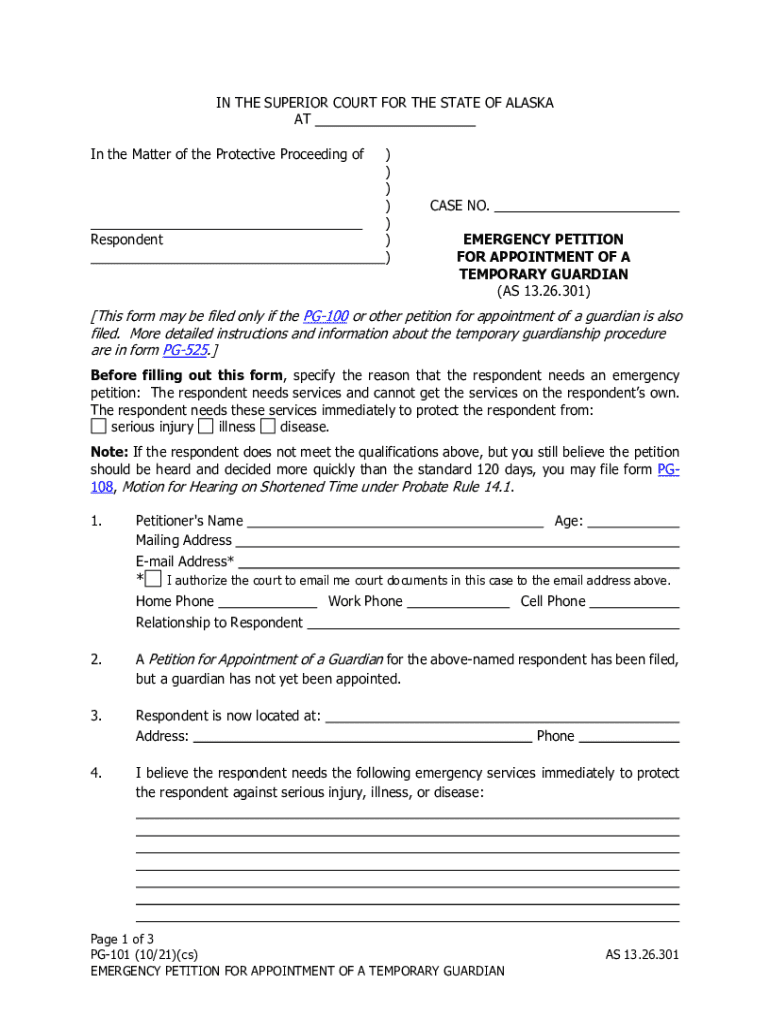
The PG-101 Emergency Petition for Appointment of a Temporary Guardian is a legal document used primarily in the Superior Court of Alaska. This form is intended for urgent situations where an individual, referred to as the respondent, is unable to procure necessary services for themselves. These situations may arise to prevent serious injury, illness, or disease, necessitating the swift appointment of a temporary guardian. The appointed guardian is granted the authority to make decisions on behalf of the respondent until a permanent guardian is appointed or the petition is dismissed.
How to Use the PG-101 Petition
Using the PG-101 involves understanding the specific circumstances that warrant the use of an emergency petition. The form is most applicable in scenarios like sudden incapacitation or situations where immediate decisions regarding health and safety need to be made but the individual lacks the capacity to make those themselves. Petitioners must ensure that their case clearly demonstrates the urgency required by this form for the Superior Court to consider it valid.
How to Obtain the PG-101 Petition
To obtain the PG-101 Emergency Petition form, interested parties can visit the Alaska Court System’s official website or contact the court directly. The form is typically available in downloadable PDF format, ensuring easy access to stakeholders seeking to initiate the process of appointing a temporary guardian. It is crucial to use the most recent version of the form, as legal requirements or form fields may be updated periodically.
Steps to Complete the PG-101 Petition
-
Gather Necessary Information: Before filling out the form, collect all relevant information about the respondent and the circumstances that justify the emergency petition.
-
Complete Personal Details: Fill in your personal details as the petitioner, including contact information and your relationship to the respondent.
-
Explain the Emergency: Clearly articulate the reasons why an emergency temporary guardianship is necessary. Include specific examples and situations that illustrate the urgency.
-
Select a Suitable Guardian: Provide details about the proposed guardian, ensuring they meet legal requirements and are capable of fulfilling the role effectively.
-
Submission: Submit the filled form to the appropriate court, following any specific guidelines for submission, whether via mail, online, or in person.
Who Typically Uses the PG-101 Petition
The PG-101 form is typically used by family members, healthcare providers, or social workers who are directly involved in the welfare of the respondent. These individuals often possess a clear understanding of the respondent’s immediate needs and can provide compelling evidence of the necessity for a swift temporary guardianship.


Legal Use and Compliance
The legal framework surrounding the PG-101 emphasizes timely and appropriate use. Compliance with judicial standards is imperative, notably the requirement to demonstrate why standard procedures are insufficient in addressing the respondent’s immediate needs. The petitioner must produce affidavits or credible evidence supporting their claims of urgency and incapacity.
Key Elements of the PG-101 Petition
- Respondent’s Information: Includes personal details and current situation that warrants an emergency intervention.
- Petitioner’s Statement: Detailed explanation of the emergency and proposed resolution.
- Proposed Guardian’s Information: Information about the individual nominated as the temporary guardian, including their qualifications and relationship to the respondent.
- Emergency Justification: Specific reasoning and evidence supporting the need for rapid guardianship action.
State-Specific Rules
While this overview focuses on Alaska, it's important to understand that variations may exist in other jurisdictions. Legal definitions, requirements, and procedural nuances can differ significantly from one state to another. Practitioners should consult local laws and statutes to ensure compliance with regional regulations affecting guardianship petitions.
Examples of Using the PG-101 Petition
Consider scenarios such as an elderly parent suddenly hospitalized without a power of attorney in place, or a mentally incapacitated individual needing immediate medical decisions. In these examples, a PG-101 petition might be filed by a family member or healthcare provider to quickly establish decision-making authority.
Filing Methods for the PG-101 Petition
- Online Submission: Where available, the digital submission of the PG-101 simplifies the process, allowing for immediate confirmation and receipt.
- Mail: Sending the completed form via mail should involve secure and tracked delivery methods to ensure its receipt by the court.
- In-Person: Direct submission to the court clerk provides the opportunity for immediate feedback and clarification of any issues on the form.
Eligibility Criteria for Filing
Eligibility to file the PG-101 relies on the petitioner being able to substantiate the immediate need for guardianship. They must be a legal adult and usually have a direct stake in the well-being of the respondent, whether as a caregiver, relative, or interested professional obligated to act under statutory requirements.