






Definition and Meaning
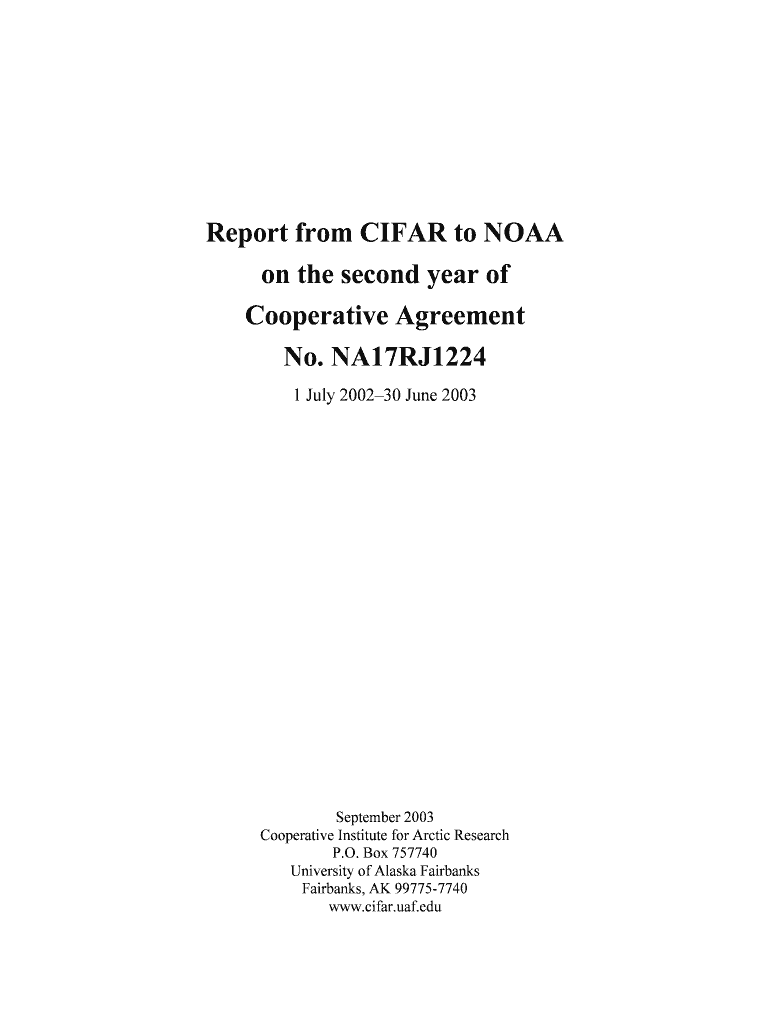
The "2nd Year (covers period 1 Jul 02 - 30 Jun 03) - CIFAR - University of" is a comprehensive annual report submitted by the Cooperative Institute for Arctic Research (CIFAR) to the National Oceanic and Atmospheric Administration (NOAA). It spans the period from July 1, 2002, to June 30, 2003, and provides detailed insights into the research initiatives and academic projects conducted during this specific timeframe. This document is pivotal in showcasing the progress and contributions of CIFAR in Arctic research, covering various topics such as atmospheric studies, marine ecosystems, and climate impacts. It serves as an official record of CIFAR's collaborative efforts under the Cooperative Agreement No. NA17RJ1224.
Key Elements of the Report
The report from CIFAR is structured to cover multiple critical elements of their research initiatives:
- Research Themes: Detailed examination of core Arctic research areas, including atmospheric and climate studies, ecosystem analysis, and oceanography.
- Project Highlights: Progress reports on major projects like the Arctic Research Initiative and studies related to Steller's Sea Lions and the impacts of climate change on marine life.
- Financial Summaries: Comprehensive breakdown of funding received and the fiscal management of resources allocated to each research project.
- Publications and Outputs: A record of academic papers and publications generated as a result of the research conducted within the period.
How to Use the Report
To effectively utilize this report, stakeholders can:
- Review Research Findings: Gain insights from the detailed studies on climate and ecological impacts presented in the report.
- Assess Progress: Evaluate the progress made in various projects during the 2 period, providing a basis for future research modifications or expansions.
- Inform Policy Making: Use the data and findings to inform policy decisions related to environmental conservation and Arctic research.
- Identify Collaborative Opportunities: Explore potential collaborations with CIFAR for ongoing and future research activities.
Steps to Complete the Form
Although not a form that requires completion, understanding how the report is structured can lead to better dissemination of its findings:
- Examine Each Section: Read through sections on research themes and project highlights to understand CIFAR’s focus areas during the second year.
- Analyze Financial Data: Dive into the financial summaries to assess budget allocations and expenditures.
- Interpret Results: Evaluate the outcomes highlighted in publications and data archiving efforts.
Why the Report Matters
This report is crucial for several reasons:
- Transparency: It provides a transparent account of CIFAR's research activities and financial management over the designated period.
- Knowledge Sharing: Facilitates the sharing of knowledge and scientific findings with the larger scientific community and stakeholders.
- Informed Decision-Making: Supports informed decision-making processes for policymakers and environmental agencies interested in Arctic research.
Who Typically Uses the Report
The report is primarily used by:
- Researchers and Academics: Engaged in Arctic or climate-related studies looking for data and collaborative insights.
- Environmental Policymakers: Interested in understanding the latest research developments to craft informed policies.
- Funding Agencies: Reviewing the use of allocated funds for accountability and future funding decisions.
- University Collaborators: Engaging in similar research fields or seeking to align their research goals with those of CIFAR.


Legal Use of the Report
The document also serves legal purposes by:
- Providing an official record of collaboration under the Cooperative Agreement No. NA17RJ1224.
- Demonstrating compliance with reporting requirements set by NOAA for federally funded research projects.
- Serving as evidence of research activities and outcomes for audits or reviews.
Versions or Alternatives Available
While this report covers the second year of the Cooperative Agreement, earlier or later versions may also be available, detailing previous or subsequent periods of CIFAR's research activities. Stakeholders should consult CIFAR’s archives or contact the institute directly to access other relevant documents and reports for a comprehensive understanding of their ongoing work in arctic research.