






Definition & Meaning
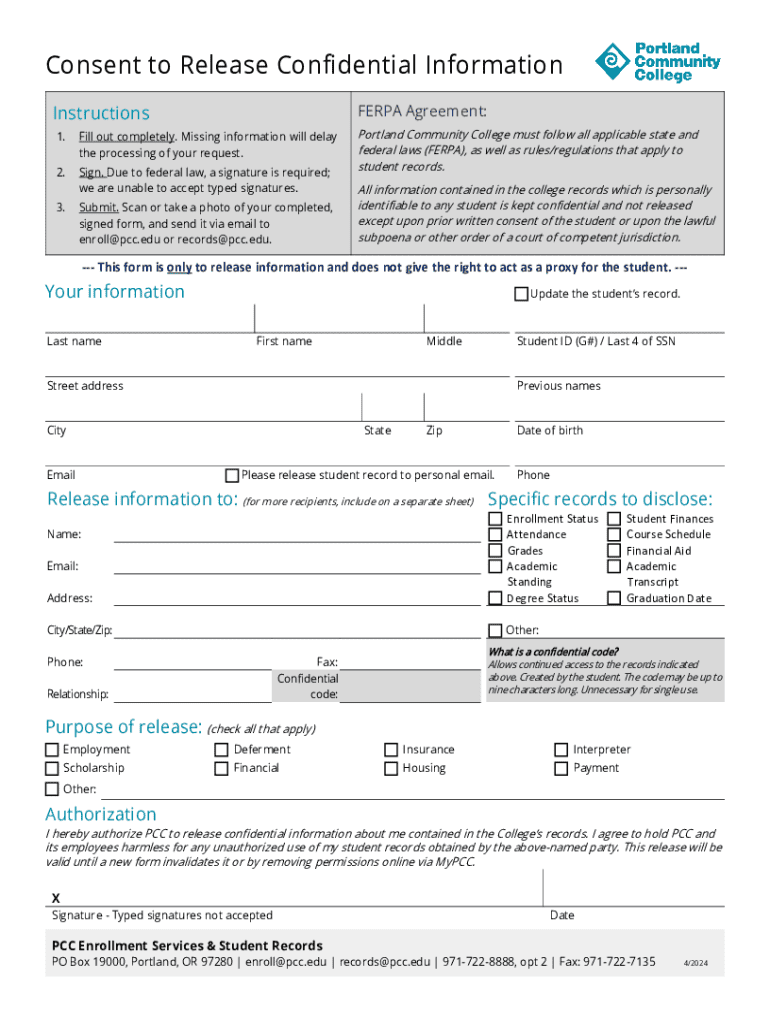
The "Consent to Release Confidential Information PCC" form is an official document used by Portland Community College to authorize the disclosure of a student's educational records in compliance with the Family Educational Rights and Privacy Act (FERPA) regulations. This form grants specific consent for the release of certain confidential information to designated parties, ensuring that the student's privacy rights are respected while enabling necessary information sharing for academic or administrative purposes.
Key Aspects of the Form
- Purpose: It allows students to control who can access their educational records at Portland Community College.
- Compliance: It adheres to FERPA regulations, ensuring that is compliant with U.S. privacy laws regarding educational records.
- Scope: Includes personal information and specific educational records that may be disclosed.
How to Use the Consent to Release Confidential Information PCC
Understanding the application of the "Consent to Release Confidential Information PCC" form is crucial for both students and institutional staff. This ensures data protection while facilitating necessary information exchange.
Steps to Utilize the Form
- Identify Information to Release: Determine what specific records or data need to be disclosed and ensure they align with the purposes allowed by the form.
- Designate Recipients: Clearly outline which individuals or organizations are authorized to receive this information.
- Complete the Form: Fill out all necessary sections with accurate and complete details. This might include personal information and the nature of records to be released.
- Sign the Form: Affix a handwritten signature, as typed signatures are not acceptable.
- Submit the Form: Follow the submission guidelines, such as emailing the completed document to the specified college department.
Steps to Complete the Consent to Release Confidential Information PCC
Proper completion of the form is essential for ensuring the accurate dissemination of confidential information.
Detailed Instructions
- Fill Out Personal Information: This includes the student's full name, student ID number, and contact information. Make sure all fields are legible and correct.
- Specify Records: Clearly mark which records the consent pertains to, such as academic transcripts or financial aid details.
- Authorization Section: Specify the parties authorized to receive the information, like family members or other educational institutions.
- Duration of Consent: Indicate how long the consent remains valid. Specify whether it is temporary or until further notice.
- Signature and Date: Handwrite a signature along with the date to authenticate the consent.
- Review and Submit: Ensure all entries are accurate, then submit according to PCC's preferred method.
Who Typically Uses the Consent to Release Confidential Information PCC
The "Consent to Release Confidential Information PCC" form serves various stakeholders within the educational context.


Primary Users
- Students: Main users of the form, exercising control over their educational record disclosures.
- Parents or Guardians: Though not directly completing the form, they may be designated recipients of the information.
- Educational Institutions: Other colleges or universities may require this form for transferring students.
- Administrative Staff: Facilitate the process and ensure compliance with regulations.
Legal Use of the Consent to Release Confidential Information PCC
The legal implications of the PCC consent form are grounded in federal privacy laws, specifically FERPA, and require thorough understanding and compliance.
Compliance and Protection
- FERPA Adherence: The form must align with FERPA requirements, safeguarding against unauthorized disclosure.
- Legal Responsibility: Students' consent legally binds educational institutions to release or withhold records based on provided authorizations.
- Limitations: Consent does not grant any extra legal rights to recipients beyond accessing specified documents.
- Violations: Improper use without consent could result in legal penalties against the institution.
Key Elements of the Consent to Release Confidential Information PCC
Certain elements are integral to the structure and function of the consent form, ensuring both clarity and legal compliance.
Essential Components
- Student Information Section: Includes identifying details for the student whose records are affected.
- Authorized Parties: Clearly listed individuals or entities who can receive the disclosed information.
- Records Identification: Specific records or types of information the consent applies to.
- Signature Field: Critical for validity, must be handwritten.
Important Terms Related to Consent to Release Confidential Information PCC
Understanding specific terms related to the consent form is crucial for a comprehensive grasp of its application and restrictions.
Glossary of Terms
- FERPA: Federal law that governs the privacy of student education records.
- Disclosure: The act of releasing educational records to authorized parties.
- Consent: Voluntary agreement by the student to allow information release.
- Confidential Records: Student-specific records that contain personal and sensitive information.
Examples of Using the Consent to Release Confidential Information PCC
Practical examples provide insight into how and why the form may be used in real-world scenarios.
Common Scenarios
- Transferring Schools: A student transferring to another institution might authorize record release for admissions purposes.
- Parental Access: Granting access to parents to assist in financial planning or academic advising.
- Employment Verification: Allowing prospective employers to verify educational credentials.
- Third-party Services: Enabling external scholarship organizations to confirm eligibility requirements.
These sections are structured to provide detailed understanding and utility for individuals handling the "Consent to Release Confidential Information PCC" form, within Portland Community College or in other compliant educational settings.