






Definition and Purpose of the Fellow Manual
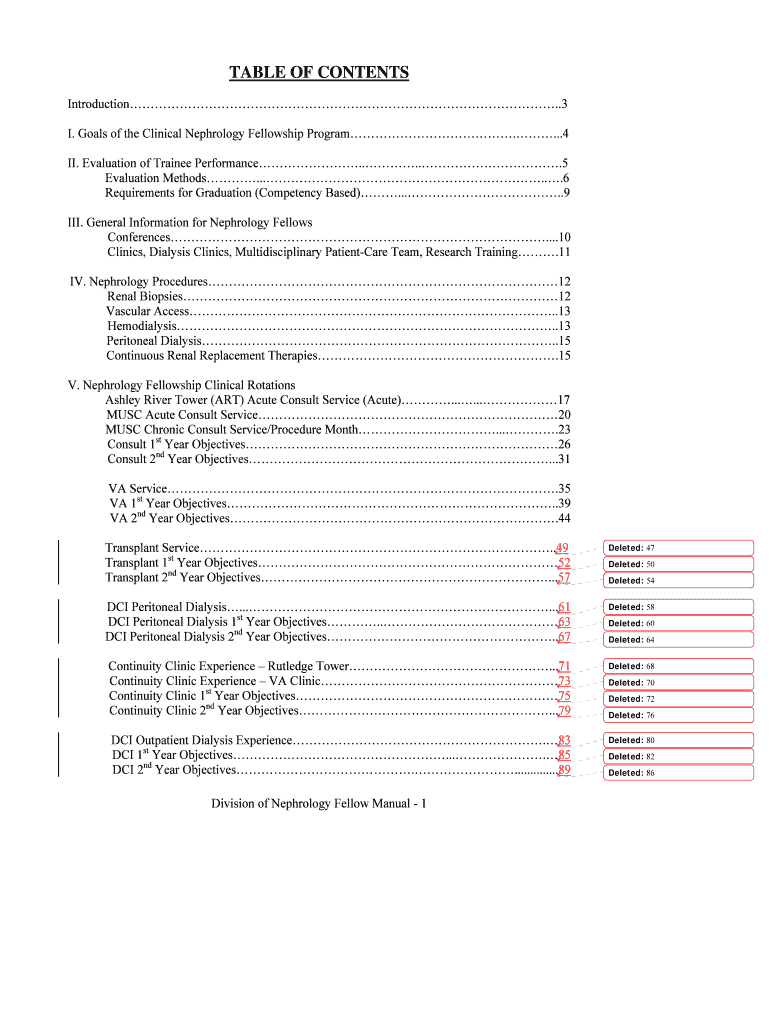
The "Fellow manual rev 6 97 - Clinical Departments - Medical University - clinicaldepartments musc" is a comprehensive guide for the Clinical Nephrology Fellowship Program at the Medical University of South Carolina (MUSC). This manual serves as a pivotal resource for fellows, detailing the program's structure, objectives, and policies. Equipped with information on clinical rotations, training in renal physiology, and dialysis techniques, the manual emphasizes professionalism and ethical standards in nephrology. It also outlines expectations for research involvement and performance evaluations.
Key Elements of the Fellow Manual
- Clinical Rotations: Outlines the mandatory and elective rotations that provide hands-on experience in various nephrology subspecialties.
- Training Modules: Includes modules on renal physiology, transplantation techniques, and patient care strategies.
- Evaluations and Assessments: Details the criteria and methods for periodically evaluating fellow performance and progress.
- Professionalism Expectations: Highlights the importance of maintaining ethical practices and ongoing professional development.
How to Obtain the Fellow Manual
The manual is typically distributed to fellows upon their acceptance into the program. Existing fellows might access digital versions through the university’s internal portal. Alternatively, inquiries can be directed to the Clinical Nephrology Fellowship Program's administrative office at MUSC for updates or replacements.
Steps to Use the Fellow Manual
- Read Through the Entire Manual: Facilitates a thorough understanding of all program components and requirements.
- Identify Relevant Sections: Focus on areas pertinent to current rotations or responsibilities.
- Use as a Reference: Revisit sections for guidance during different stages of the fellowship.
- Participate in Discussions: Leverage the manual as a basis for discussions with mentors or peers.
Why the Fellow Manual is Essential
Having a centralized document that articulates the fellowship's expectations and processes fosters clarity and consistency across the board. The manual ensures that fellows are aligned with the program's goals, seamlessly integrating academic learning with practical application. It also acts as a safeguard, ensuring all fellows are aware of their responsibilities and the resources available to them.
Who Typically Uses the Fellow Manual
This manual is primarily utilized by fellows enrolled in the Clinical Nephrology Fellowship Program. Program mentors, faculty advisors, and administrative staff at MUSC also reference the manual to maintain program integrity and support the fellows' educational journey.


Important Terms Related to the Fellow Manual
- Renal Physiology: Understanding kidney function and associated pathophysiology.
- Transplantation: Training related to kidney transplant procedures and patient management.
- Dialysis: Techniques used for patients with renal failure, including hemodialysis and peritoneal dialysis.
Legal and Ethical Use of the Fellow Manual
Fellows are encouraged to adhere strictly to the policies outlined within the manual. This includes compliance with medical ethical standards and legal obligations pertinent to nephrology practice. Adhering to these guidelines ensures proper conduct and alignment with MUSC’s standards.
Versions or Alternatives to the Fellow Manual
While "rev 6 97" is the designated version, updates may occur periodically to incorporate new medical practices or educational methodologies. Fellows should check regularly for updates or consult MUSC's administration for the most recent editions. Supplements or additional resources may also be provided through MUSC’s continuing education programs, enhancing the foundational knowledge from the manual.