






Definition and Significance
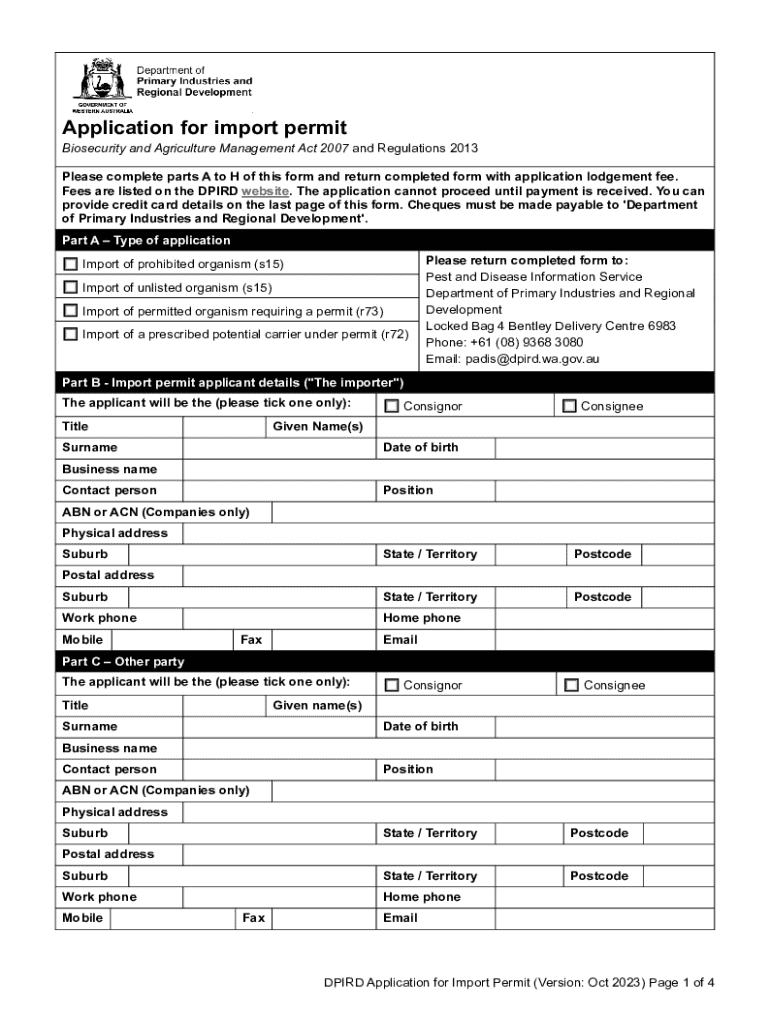
The "Instructions for Permit Application to Import Restricted" form is a critical document for individuals and organizations seeking authorization to import organisms or materials that are considered restricted under the Biosecurity and Agriculture Management Act 2007 and Regulations 2013. This form serves as a guide to ensure applicants understand the legal requirements and provide all necessary information to process their application effectively. By offering a structured outline, it helps mitigate biosecurity risks associated with imports, safeguarding the U.S. ecosystem and public health.
How to Use the Instructions for Permit Application
To properly utilize the "Instructions for Permit Application to Import Restricted," applicants should thoroughly review each section of the form to ensure compliance with all outlined requirements:
- Personal Information: Provide complete and accurate personal or business details to establish the identity of the applicant.
- Organism Information: Clearly specify the type of organism or material intended for import to ensure correct classification.
- Risk Mitigation Measures: Detail any measures or strategies in place to prevent potential biosecurity threats.
- Payment Information: Fill out the necessary sections to facilitate any applicable processing fees required for the permit.
- Declaration of Compliance: Sign and date the declaration section to affirm adherence to the relevant regulations.
Applicants should gather supporting documents and ensure clarity in their submissions to expedite processing.
Steps to Complete the Application
The application process involves several critical steps, each demanding attention to detail to ensure successful submission:
- Gather Required Documents: Before starting, collect all necessary supporting documents, such as prior permits, risk assessments, and mitigation plans.
- Complete Personal and Business Sections: Enter your personal and, if applicable, business information accurately.
- Detail Import Item: Describe the organism or material, its purpose, and intended use within the U.S.
- Outline Biosecurity Measures: Provide a comprehensive plan detailing how biosecurity risks will be managed or mitigated.
- Provide Payment Details: Ensure correct and updated payment information for processing the application fee.
- Read and Sign Declaration: Review all sections for accuracy before signing the declaration to confirm compliance with regulations.
Eligibility Criteria
Eligibility for the "Instructions for Permit Application to Import Restricted" largely depends on the applicant's ability to meet specific requirements:
- Regulatory Awareness: Must demonstrate a thorough understanding of applicable U.S. regulations and biosecurity laws.
- Risk Management Plans: Provide evidence of sufficient risk management practices for handling the restricted items safely.
- Detailed Purpose of Import: Clearly convey the purpose of import and how it aligns with lawful and regulated uses.
- Appropriate Documentation: Supply all required documents and information accurately and completely to avoid processing delays.
Understanding these eligibility criteria is essential to determining one's suitability for obtaining a permit.


Key Elements of the Form
The form encompasses several key elements that applicants must address:
- Identification Section: Ensures the authority can validate the applicant's identity.
- Import Details Section: Details the restricted item, providing essential context for the approval process.
- Compliance and Mitigation Section: Highlights the applicant's plans for managing any associated risks.
- Fee and Payment Section: Describes the necessary payment information related to permit issuance.
- Declaration of Truth and Compliance: A final affirmation of the application’s integrity and adherence to regulations.
Each of these elements plays a pivotal role in the permit's successful processing.
Required Documents
A successful application depends on submitting all required documents, which typically include:
- Previous Import Permits: Any prior permits related to similar imports.
- Risk Assessment Reports: Detailed reports assessing potential risks and proposed mitigation strategies.
- Identification Verification: Government-issued identification verification, such as a passport or driver's license.
- Payment Confirmation: Receipts or confirmation of any fees submitted as part of the application process.
These documents provide the necessary foundation upon which the application is reviewed and approved.
Form Submission Methods
There are multiple ways to submit the "Instructions for Permit Application to Import Restricted" form:
- Online Submission: Provides a swift and convenient method via official portals, ensuring quicker processing.
- Mail Submission: Suitable for those who prefer traditional methods; must ensure all documents are included.
- In-person Submission: Available for applicants needing to discuss their submissions directly with officials, ensuring all queries can be addressed immediately.
Applicants should choose a submission method that best suits their preferences and timelines.
Penalties for Non-Compliance
Failure to comply with the guidelines and requirements of the permit application can result in:
- Fines and Penalties: Monetary fines for failing to follow import regulations.
- Permit Revocation: Possible withdrawal of permit authorization if compliance is not maintained.
- Legal Consequences: Legal actions against individuals or businesses intentionally violating biosecurity laws.
- Import Restrictions: Future restrictions or heightened scrutiny on subsequent import applications.
Understanding these penalties underscores the importance of adhering strictly to all instructions throughout the application process.