01. Edit your form online
Type text, add images, blackout confidential details, add comments, highlights and more.

Type text, add images, blackout confidential details, add comments, highlights and more.

Draw your signature, type it, upload its image, or use your mobile device as a signature pad.

Send it via email, link, or fax. You can also download it, export it or print it out.
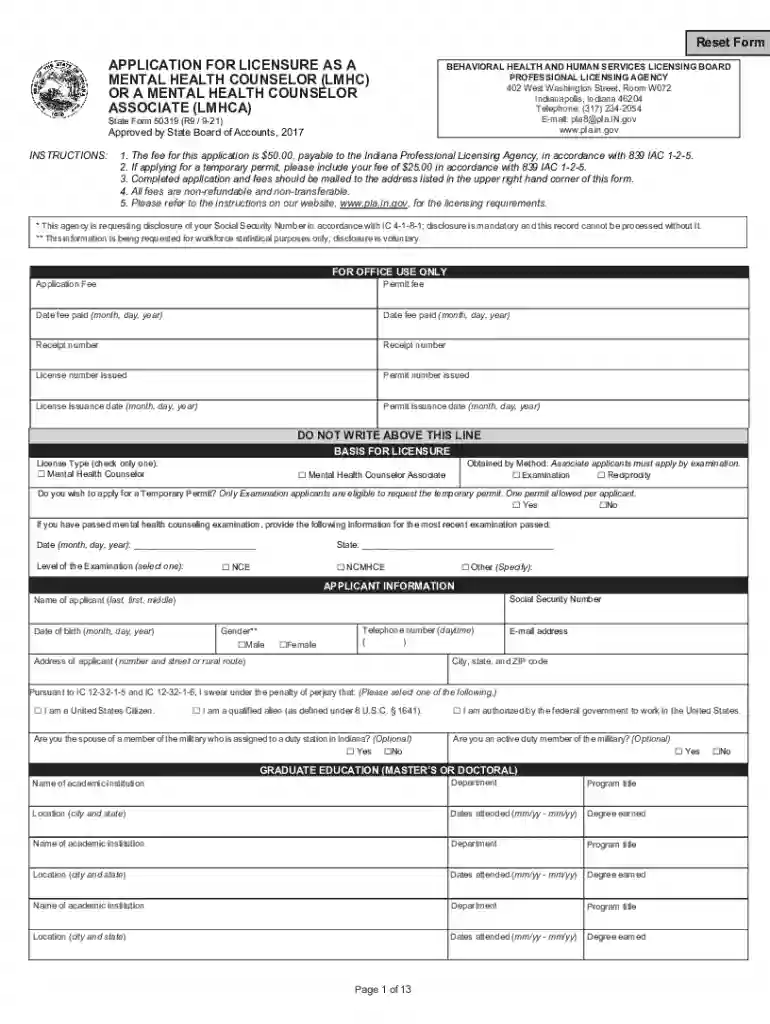
The "Application for Licensure as a Mental Health Counselor (LMHC) or a Mental Health Counselor Associate (LMHCA)" is a formal document used in the state of Indiana to apply for professional licensure. Licensing is essential for individuals aiming to legally practice as mental health counselors or associates. This process helps ensure that all practitioners meet established standards of education, experience, and professional conduct, ensuring the protection and well-being of clients.


In Indiana, specific state regulations govern the licensure process. Applicants must meet state-mandated hours for clinical practice and may need state-specific exams or background checks. Understanding these localized requirements is critical for ensuring a successful application.
The approval process can take several weeks:
Completing and submitting this form is a legal declaration of truthfulness and accuracy in the given information. Any misrepresentation can result in penalties, including denial of licensure or legal action.
Failure to comply with licensure requirements can result in fines, suspension of practice privileges, or legal consequences. Practicing without appropriate licensure is considered illegal and unethical.
Both versions are available to accommodate applicants' preferences:
These blocks provide a detailed overview for potential licensees in the mental health counseling field, ensuring they are well-informed on the application process.
We've got more versions of the Application for Licensure as a Mental Health Counselor (lmhc) or a Mental Health Counselor Associate form. Select the right Application for Licensure as a Mental Health Counselor (lmhc) or a Mental Health Counselor Associate version from the list and start editing it straight away!
At DocHub, your data security is our priority. We follow HIPAA, SOC2, GDPR, and other standards, so you can work on your documents with confidence.