




01. Edit your form online
Type text, add images, blackout confidential details, add comments, highlights and more.

Type text, add images, blackout confidential details, add comments, highlights and more.

Draw your signature, type it, upload its image, or use your mobile device as a signature pad.

Send it via email, link, or fax. You can also download it, export it or print it out.
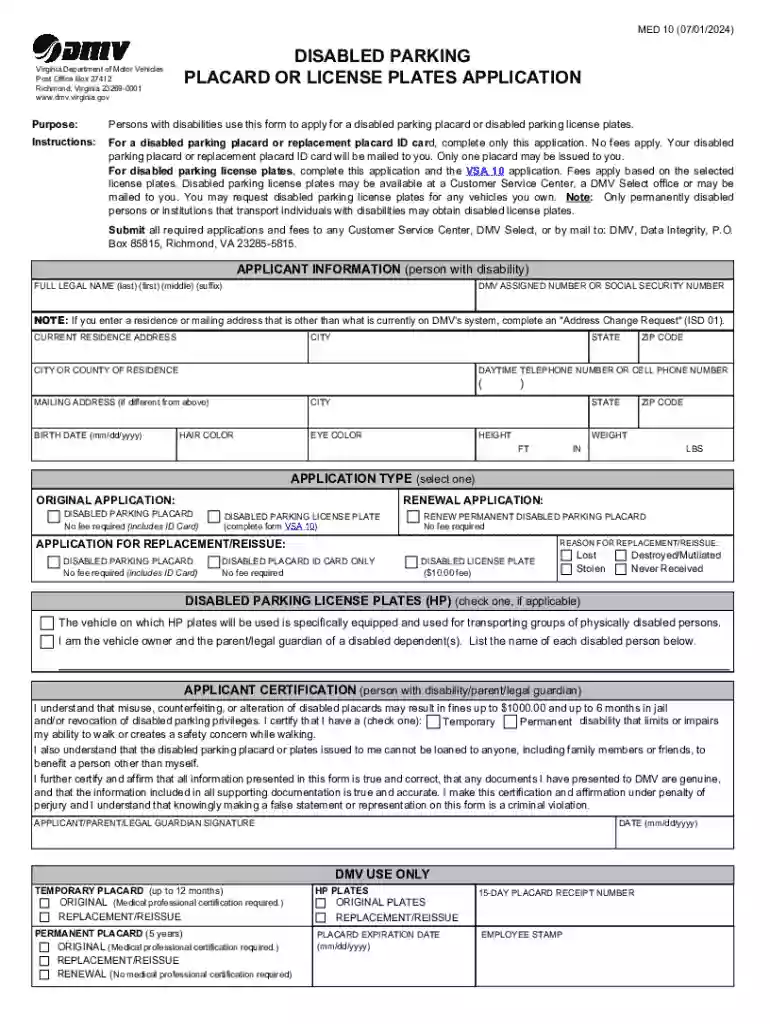
The "Med 10" form is issued by the Virginia Department of Motor Vehicles for individuals with disabilities who need to apply for a disabled parking placard or license plates. This form serves a crucial role in ensuring accessible parking privileges for those with medical conditions that reduce mobility. By completing this form, applicants can legally obtain special parking permits, which offer closer access to buildings and services, thereby enhancing their daily convenience and independence.
The Med 10 form involves sections for personal information, the type of application, and medical certification by a licensed healthcare professional. The form emphasizes the importance of accurate information and underscores the legal consequences of any misuse. It is designed to streamline the certification process, ensuring that only eligible individuals receive these parking benefits. Through this form, the Virginia DMV aims to support individuals with disabilities by fostering an inclusive environment that acknowledges their needs.
When filling out the Med 10 form, it is crucial to follow a structured approach to ensure accuracy and completeness. Here are detailed steps to aid applicants in successfully completing this form:
Personal Information:
Application Type:
Medical Certification:
Legal Acknowledgment:
Submission:
Following these steps carefully will help ensure that your application is processed efficiently and correctly. Always double-check each section for errors or omissions that could delay processing.
The Med 10 form is primarily used by individuals with disabilities residing in Virginia who wish to apply for disabled parking privileges. However, several other groups are also concerned with this form:
Family Members or Caregivers: They often assist individuals with disabilities in completing and submitting the form. It's crucial for them to understand the form's requirements to provide accurate assistance.
Medical Professionals: Physicians and other healthcare providers play a vital role in certifying the medical necessity of parking privileges. Their proper understanding of the form's requirements ensures validity and compliance.
DMV Officials: These professionals assess and process the Med 10 applications, making it essential for them to be familiar with its components and legalities to perform their duties efficiently.
By catering to these users, the Med 10 form facilitates clear communication regarding disabled parking needs, supporting public awareness and compliance with state regulations.


Virginia's regulations regarding disabled parking privileges are pivotal for understanding the context in which the Med 10 form operates. Key state-specific rules include:
Eligibility Requirements: Only individuals who have permanent or temporary disabilities that impair mobility according to Virginia's standards are eligible. Conditions include, but are not limited to, severe heart disease, arthritis, respiratory deficiencies, and certain forms of paraplegia.
Healthcare Provider Certification: A licensed physician, nurse practitioner, or physician assistant must validate the applicant's medical condition. The state maintains strict criteria for which medical professionals are authorized to certify the form.
Renewal Procedures: Placards require renewal depending on whether the disability is temporary or permanent. Renewals might require additional medical review or documentation to ensure ongoing eligibility.
Understanding these state-specific nuances is vital for applicants to comply with local laws and to maintain the integrity of the system that supports individuals with disabilities.
Upon issuance of a parking placard or license plate through the Med 10 form, significant legal responsibilities accompany its use. Essential compliance elements include:
Proper Display: Parking placards must be conspicuously hung on the rearview mirror of the vehicle when parked in a designated disabled parking space. Failure to correctly display can result in fines or other penalties.
Designated Spaces Use Only: Individuals must use their parking privileges solely for parking in spaces set aside for those with disabilities. Unpermitted use, such as parking in non-designated zones, can lead to revocation of privileges.
Penalties for Misuse: Misappropriation of disabled parking permits—including lending them to unauthorized persons or forging documents—is considered a serious offense, punishable by law. This enforcement ensures the availability of designated spaces to those who genuinely need them.
Adhering to these legal requirements is crucial for lawful use and sustaining public trust in the system designed to aid individuals with disabilities.
Acquiring the Med 10 form involves a methodical approach focused on accuracy and compliance with specified procedures. The following outlines the general process:
Obtain the Form:
Complete Personal Sections:
Medical Certification:
Final Review and Submission:
Await Confirmation:
By carefully following these steps, applicants increase the likelihood of a smooth and successful application process.
The Med 10 form comprises several critical elements that applicants must fill out accurately. Key components include:
Personal Information Section:
Application Type:
Medical Certification:
Legal Agreement:
The completeness and accuracy of these elements are fundamental to ensuring the proper processing and approval of disabled parking privileges. Taking the time to understand each section enhances compliance and facilitates the application review process.
Understanding the consequences of misuse or non-compliance with the Med 10 is crucial for applicants and current holders of disabled parking privileges. Non-compliance can result in serious penalties, including:
Fines: Individuals found using a disabled parking permit improperly may be subject to monetary fines. These can range from minor inflictions for first-time offenses to heavier penalties for repeated violations.
Revocation of Privileges: Authorities may revoke the parking privileges associated with a Med 10 form due to misuse or fraudulent activities, precluding the individual from reapplying for a set period.
Legal Action: In severe cases, fraudulent use of disabled parking permits can lead to legal repercussions, which may include court appearances and criminal charges.
Ensuring accurate and honest use of the Med 10 privileges not only upholds the law but also maintains the integrity and purpose of the disabled parking system, thus ensuring that these essential resources remain available for those who need them most.
We've got more versions of the Med 10 form. Select the right Med 10 version from the list and start editing it straight away!
At DocHub, your data security is our priority. We follow HIPAA, SOC2, GDPR, and other standards, so you can work on your documents with confidence.
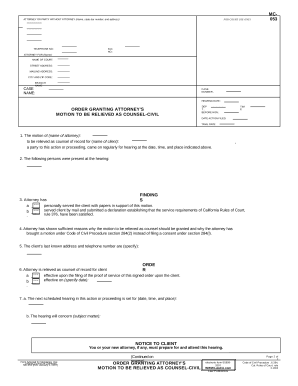
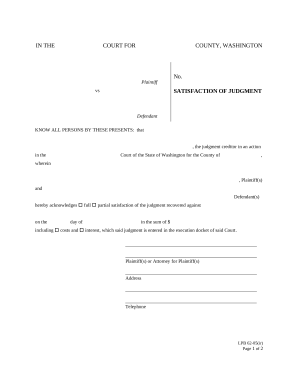
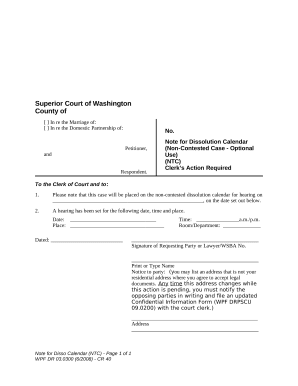
Persons with disabilities use this form to apply for a disabled parking placard or disabled parking license plates. No fees apply. MED 10 (07/01/2026)
We are honored to be recognized as one of the Top 10 Undergraduate Teams at the iGEM 2024 Grand Jamboree. This distinction places us among the most impactfulRead more


