




01. Edit your form online
Type text, add images, blackout confidential details, add comments, highlights and more.

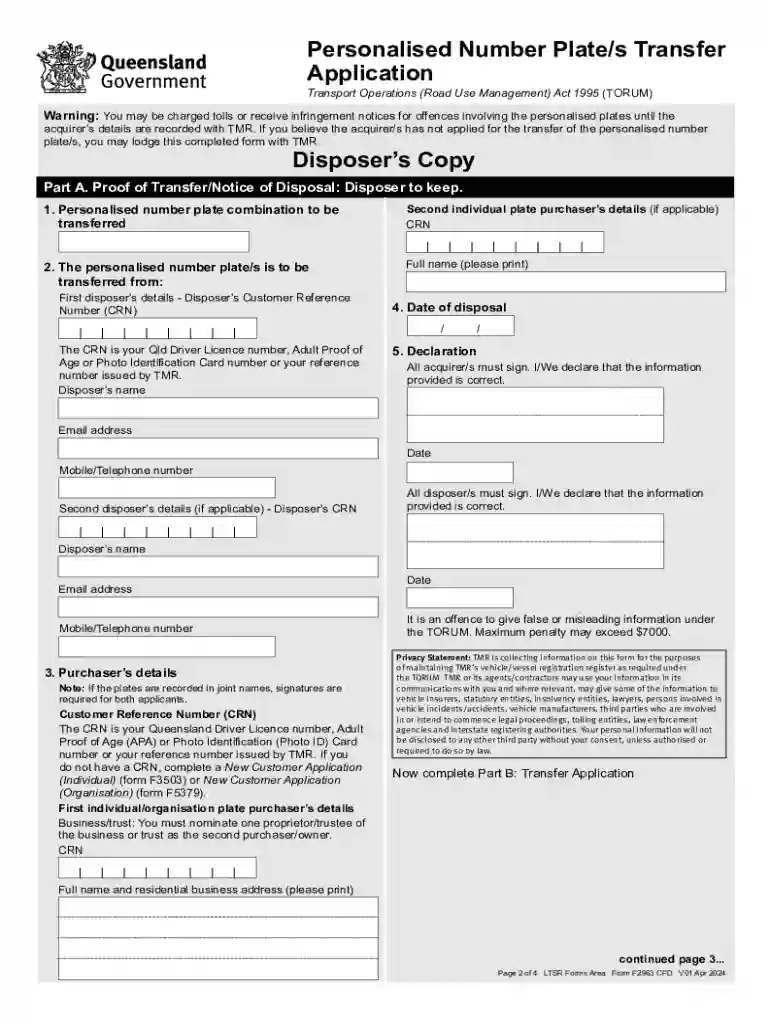
Type text, add images, blackout confidential details, add comments, highlights and more.

Draw your signature, type it, upload its image, or use your mobile device as a signature pad.

Send it via email, link, or fax. You can also download it, export it or print it out.
Transferring ownership of a vehicle, trailer, caravan, or boat involves the official process required to update the ownership details with the relevant government departments. This ensures that the new owner is recognized as the legal owner and responsible party for the asset. Typically, this process is essential when selling or gifting any of these assets, and may involve specific forms, submission methods, and fees.
Gather Necessary Documents: Before initiating the transfer, ensure you have all required documents. These may include the title certificate, bill of sale, and any applicable identification proofs for both parties involved.
Complete the Transfer Forms: Fill out the appropriate transfer form. This form varies by state but generally requires information about the vehicle or boat, the buyer, and the seller.
Submit the Form: Submit the form to the local Department of Motor Vehicles (DMV) or relevant state authority. You may need to do this in person, via mail, or online, based on state-specific guidelines.
Pay Required Fees: Pay any necessary transfer fees. This can often be completed at the DMV during submission or through an online payment portal if applicable.
Receive Confirmation: After processing, the new owner will receive confirmation documentation, updating the ownership details officially.
Title Certificate: A crucial document that proves ownership of the vehicle, trailer, caravan, or boat. The seller must sign over the title to the buyer.
Bill of Sale: Documents the transaction details, including date, price, and identifying information of both parties.
Identification Forms: Both buyer and seller must present valid identification, often in the form of a driver’s license or state ID.
Lien Release Document (if applicable): If there was a lien on the asset, provide proof that it has been released.
The legal use of transfer forms is mandated by state laws to ensure proper tracking and accountability of vehicles, trailers, caravans, and boats. Not completing the transfer promptly can result in complications like liability for the previous owner if the new owner incurs penalties or violations before the transfer is recorded. In some states, failing to process this transfer properly might also result in fines.
Each U.S. state has its own procedures for transferring the ownership of vehicles, trailers, caravans, and boats. For example:
California: Requires smog certification and the completion of specific DMV forms.
Florida: Needs forms to be notarized and deadlines are set for transfer completion to avoid penalties.
New York: Allows for both online and in-person form submissions and has defined timelines for submitting paperwork.
Always check the specific requirements and deadlines for your state to ensure compliance and avoid unnecessary delays or penalties.
To facilitate the process, individuals may use software compatible with digital form submissions. DocHub, for example, supports various file formats and can simplify form editing and submission, leveraging its compatibility with platforms like Google Drive or Dropbox. This can streamline the documentation workflow, making it easier to manage the necessary paperwork online.
To transfer a vehicle, trailer, caravan, or boat, both parties involved (buyer and seller) must meet certain eligibility criteria:
Ownership Proof: The seller must be the legal owner or authorized representative.
Clear Title: The asset must have a clear title, free from undisclosed liens.
Legal Age: Both parties should typically be of legal age and have the capacity to enter into binding agreements.


The transfer form can be submitted in various ways, including:
Online: Certain states offer online submission, which requires scanning or uploading documents and digital signature options.
Mail: Forms and accompanying documents can be mailed to the designated state department address.
In-Person: Direct submission at a local DMV or authorized office for immediate processing, which can be helpful for complex cases or when additional questions need addressing.
Title Transfer: The official transfer of the legal title or ownership from one party to another.
Odometer Disclosure: Legal requirement to disclose the odometer reading at the time of sale for vehicles.
Lienholder: A third party that has an interest in the vehicle until the loan is paid off, whose consent might be necessary for transfer.
Family Transfer: Gifting a vehicle to a relative may entail different fees or tax exemptions.
Trade-In Transactions: Involves dealers where the new and old vehicle titles exchange hands.
Out-of-State Transfers: Requires additional documentation to comply with both states’ regulations, such as emissions certifications or additional inspections.
Transferring ownership of vehicles, trailers, caravans, and boats requires careful attention to detail to ensure all legal and logistical requirements are met efficiently and accurately. Each step is crucial to maintain compliance and to ensure a smooth transition of asset ownership.
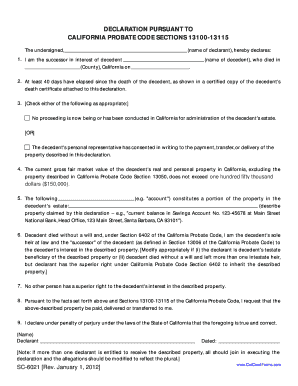
We've got more versions of the How to transfer a vehicle, trailer, caravan or boat form. Select the right How to transfer a vehicle, trailer, caravan or boat version from the list and start editing it straight away!
At DocHub, your data security is our priority. We follow HIPAA, SOC2, GDPR, and other standards, so you can work on your documents with confidence.





1. Establish the Design Vehicles to be Developed 2. Determine the Dimensions / Characteristics to be Defined 3. Collect Appropriate Data 4. Use Data to
How to title and license a travel trailer. Follow the steps to transfer ownership of a vehicle to apply for a title and registration.Read more


