




01. Edit your form online
Type text, add images, blackout confidential details, add comments, highlights and more.

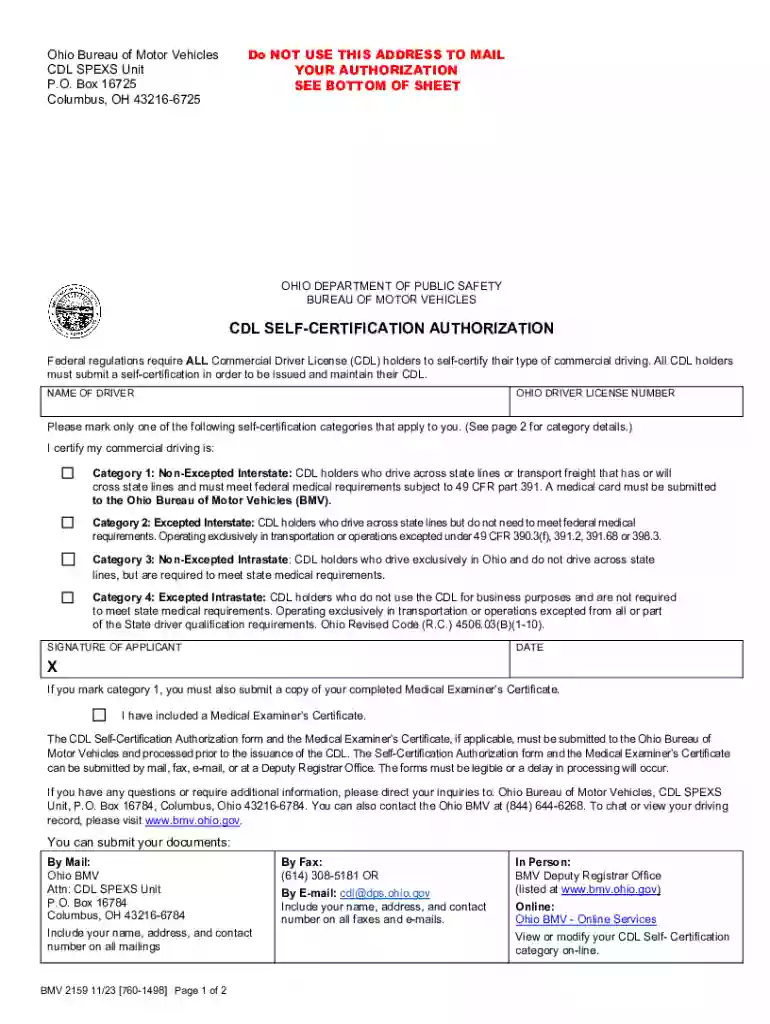
Type text, add images, blackout confidential details, add comments, highlights and more.

Draw your signature, type it, upload its image, or use your mobile device as a signature pad.

Send it via email, link, or fax. You can also download it, export it or print it out.
The CDL Self-certification Authorization is a mandated process for commercial drivers in the United States to declare their driving category in compliance with federal regulations. This certification is essential for maintaining a valid Commercial Driver License (CDL). By categorizing one's driving operations, the form helps ensure that drivers meet the medical requirements pertinent to their chosen driving category. The key categories include Non-Excepted Interstate, Excepted Interstate, Non-Excepted Intrastate, and Excepted Intrastate. This categorization determines if a CDL holder needs to submit a Medical Examiner's Certificate to verify their fitness to drive.
Using the CDL Self-certification Authorization involves a few straightforward steps. Begin by identifying your driving category from the four federally recognized categories. Next, complete the required fields on the form, providing accurate personal and driving details. Ensure that you have any necessary medical documentation, such as a Medical Examiner's Certificate, ready for submission. Once the form is filled correctly, submit it to your state's Bureau of Motor Vehicles or Department of Motor Vehicles, depending on your location. These steps will ensure compliance with federal CDL regulations.
To obtain the CDL Self-certification Authorization, CDL holders should contact their respective state motor vehicle departments. Many states offer downloadable versions of the form online, which can be printed and completed manually. Alternatively, some states provide an online submission option, streamlining the process. It is important to check your local DMV or BMV website for the specific procedures applicable to your state. Remember that completing this authorization is crucial for obtaining or renewing your CDL.
Understand Your Driving Category:
Complete the Form:
Submit the Form:
Confirmation and Follow-up:
The CDL Self-certification Authorization is crucial for several reasons. It ensures public safety by verifying that drivers meet necessary medical standards. This process aligns drivers with appropriate federal and state regulations, thus preventing legal issues. Moreover, proper self-certification helps avoid penalties that could arise from non-compliance. By accurately self-certifying, CDL holders maintain their eligibility to legally operate commercial vehicles across different state lines and in various job functions.
Commercial drivers who operate vehicles across state lines or within larger-state boundaries typically use the CDL Self-certification Authorization. This includes truck drivers, bus drivers, and operators of any vehicles requiring a CDL. Companies employing commercial drivers also rely on this certification to ensure compliance with regulatory requirements. In particular, transport and logistics businesses frequently engage with this process given their involvement in interstate commerce.


The CDL Self-certification Authorization form contains several critical elements:
While the federal requirements for the CDL Self-certification Authorization are standard, each state may have specific variations in how forms are submitted or processed. Some states may offer additional resources for online submission, while others might require in-person documentation. It is vital for CDL holders to check with their local DMV or BMV office to understand any state-specific requirements that affect the self-certification process. This ensures timely and accurate compliance.
When completing the CDL Self-certification Authorization, having the correct documentation is important:
We've got more versions of the Cdl Self-certification Authorization form. Select the right Cdl Self-certification Authorization version from the list and start editing it straight away!
At DocHub, your data security is our priority. We follow HIPAA, SOC2, GDPR, and other standards, so you can work on your documents with confidence.
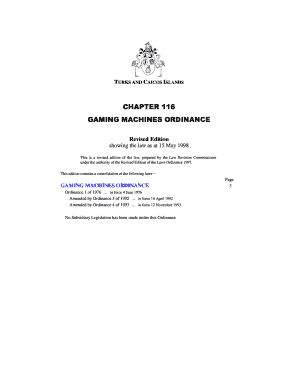
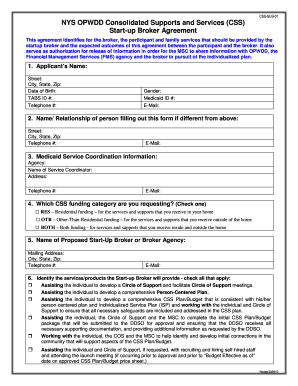
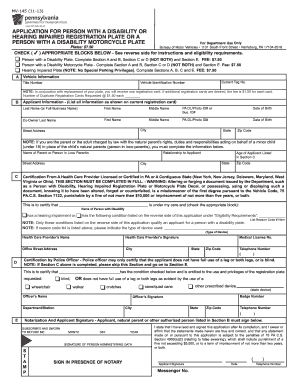
Per 49 CFR 383.71, driver self-certification is required upon initial issuance, renewal, upgrade, and transfer. Drivers that self-DocHub as non-Read more
A letter is sent to the driver advising them that they are not certified and that their CDL license will be downgraded in 55 days. If acceptable proof ofRead more
Apr 1, 2019 This description is only intended for the use of trained specialists in control and automation engineering who are familiar with the applicable


