




01. Edit your icu flow sheet online
Type text, add images, blackout confidential details, add comments, highlights and more.

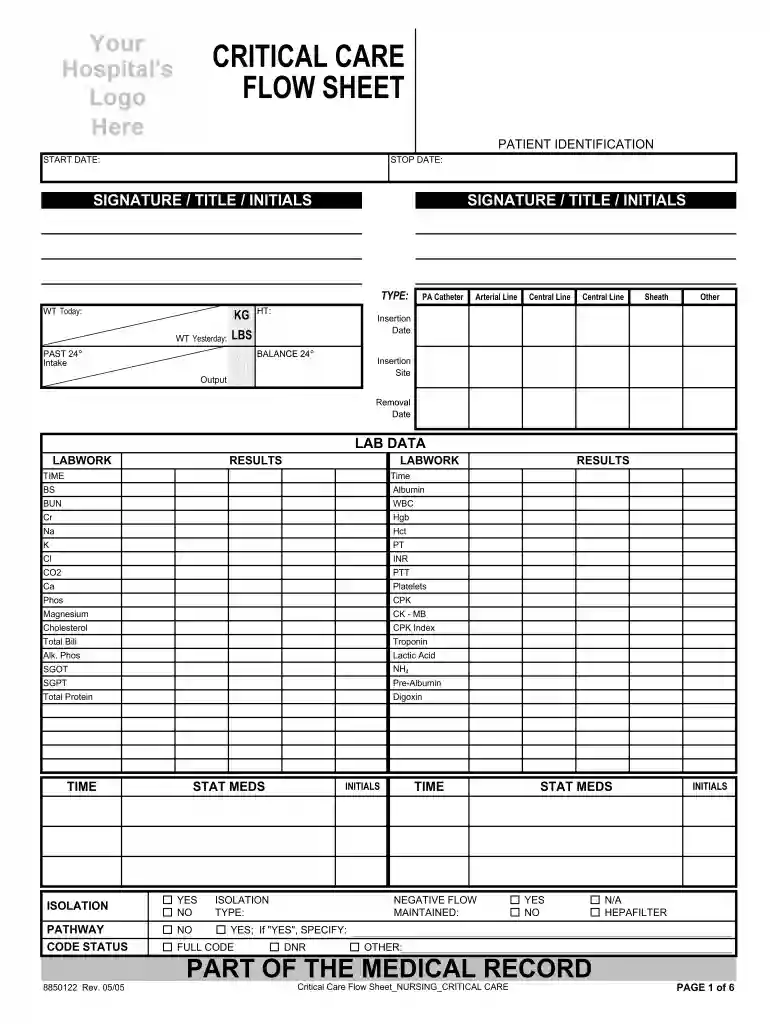
Type text, add images, blackout confidential details, add comments, highlights and more.

Draw your signature, type it, upload its image, or use your mobile device as a signature pad.

Send icu flow chart via email, link, or fax. You can also download it, export it or print it out.
The ICU flow sheet is a comprehensive tool utilized in critical care settings to monitor and document patient care. It serves multiple purposes including recording vital signs, medication administration, lab results, neurological assessments, and other essential patient data in a systematic format. This documentation is crucial for delivering high-quality care and ensuring continuity among healthcare providers.
Patient Identification: Each flow sheet begins with critical patient identification data such as name, age, hospital identification number, and admitting physician. This ensures that all information is accurately linked to the correct individual.
Vital Signs Tracking: Continuous monitoring of vital signs is a core feature, enabling healthcare professionals to spot trends and changes over time. The sheet often includes sections for recording parameters such as temperature, heart rate, blood pressure, respiratory rate, and oxygen saturation.
Medication Management: An integral part of patient care in intensive care units (ICUs) is the administration of medications. The flow sheet documents the type, dose, and time of medication given, helping to prevent errors and ensure appropriate therapeutic regimens.
Using the ICU flow sheet effectively requires an understanding of how to navigate its various sections. This includes methodically filling out each part to ensure accurate and complete records.
Initial Setup: When using the flow sheet for the first time for a patient, start by entering patient identification information and initial vital signs.
Routine Monitoring: Regular intervals should be established for checking and recording vital signs. It is also essential to note any significant changes in patient condition at each interval.
Medication Documentation: Always record medications immediately after administration to maintain accurate documentation. Include the time, dosage, and any reactions observed.
Additional Notes: Use designated spaces to add observations concerning wound care, neurological assessments, and pain management, which can provide valuable insights into the patient's ongoing treatment needs.
When it comes to critical care documentation, several key elements must be included to ensure comprehensive patient care.
Intake and Output Tracking: Documenting intake (fluids and nutrition) and output (urine, drainage) is vital for understanding a patient’s fluid balance, which can significantly affect their recovery.
Neurological Assessment: This includes regular checks for consciousness levels, pupil responses, and motor function. It is crucial in monitoring potential neurological deterioration.
Pain Management Records: Noting pain levels before and after interventions helps gauge the effectiveness of pain management strategies.
Wound Care Documentation: This includes monitoring the condition of any surgical sites or injuries, documenting signs of infection or healing status, and any wounds requiring treatment.
Completing the ICU flow sheet involves several straightforward steps that must be adhered to in practice.
Initial Patient Assessment: Upon admission, assess the patient and enter baseline data into the flow sheet.
Regular Updates: Consistently update the flow sheet at predetermined intervals. This may include every hour or every shift depending on the severity of the patient’s condition.
Document Relevant Changes: If there are sudden changes in the patient's condition, ensure these are recorded promptly to inform the care team.
Closing the Sheet: Once transferred to a different unit or upon discharge, review all entries for completeness and accuracy. Ensure that all sections are filled according to hospital policies before handing over to the next care staff or recording for the patient's medical history.
The ICU flow sheet plays an important role in legal documentation and compliance in hospital settings. It serves as an official medical record that can be reviewed for:
Quality Assurance: Compliance with healthcare regulations is vital, and accurate documentation can provide evidence of adherence to standards of care.
Legal Protection: Should there be any disputes regarding patient care, the flow sheet can serve as vital evidence that supports the actions taken by healthcare professionals.
Patient Privacy: Following HIPAA guidelines, ensuring that identifying patient information is properly secured on the flow sheet is essential to protect patient confidentiality.
Utilizing the ICU flow sheet effectively can be illustrated through various real-life scenarios.
Post-Operative Monitoring: After a major surgical procedure, nurses may use the flow sheet to track vital signs every hour, check the patient's neurological status, and record any medications administered to manage pain.
Monitoring Critically Ill Patients: For patients with respiratory failure, the ICU flow sheet can help track changes in respiratory rate and oxygen saturation levels, allowing for prompt intervention should the patient's condition worsen.
Collaborative Care: In cases where multiple disciplines (e.g., nursing, respiratory therapy, and pharmacy) are involved, the flow sheet functions as a communication tool, ensuring that all team members are aware of the patient's current status and the care provided.
The consistent, meticulous use of the ICU flow sheet enhances patient care, safeguards documentation accuracy, and supports the overall quality of healthcare provided in critical settings.
We've got more versions of the icu flow sheet form. Select the right icu flow sheet version from the list and start editing it straight away!
| Versions | Form popularity | Fillable & printable |
|---|---|---|
| 2005 | 4.8 Satisfied (86 Votes) |
At DocHub, your data security is our priority. We follow HIPAA, SOC2, GDPR, and other standards, so you can work on your documents with confidence.
The information in this book can help administrators maintain an IBM Content. Manager OnDemand for Multiplatforms Version 9 Release 0 (Content Manager.Read more
by SG Kramer 1970 Cited by 4 Intensive care unit flow sheet. Surgery. 1970 Apr;67(4):590-2. Authors. S G Kramer, C S Lipson. PMID: 5435906. No abstractRead more
Flowsheets is a spreadsheet activity in which clinicians document patient care. They include groups of rows specific to a topic or workflow. Flowsheet Basics.Read more


