Definition & Meaning
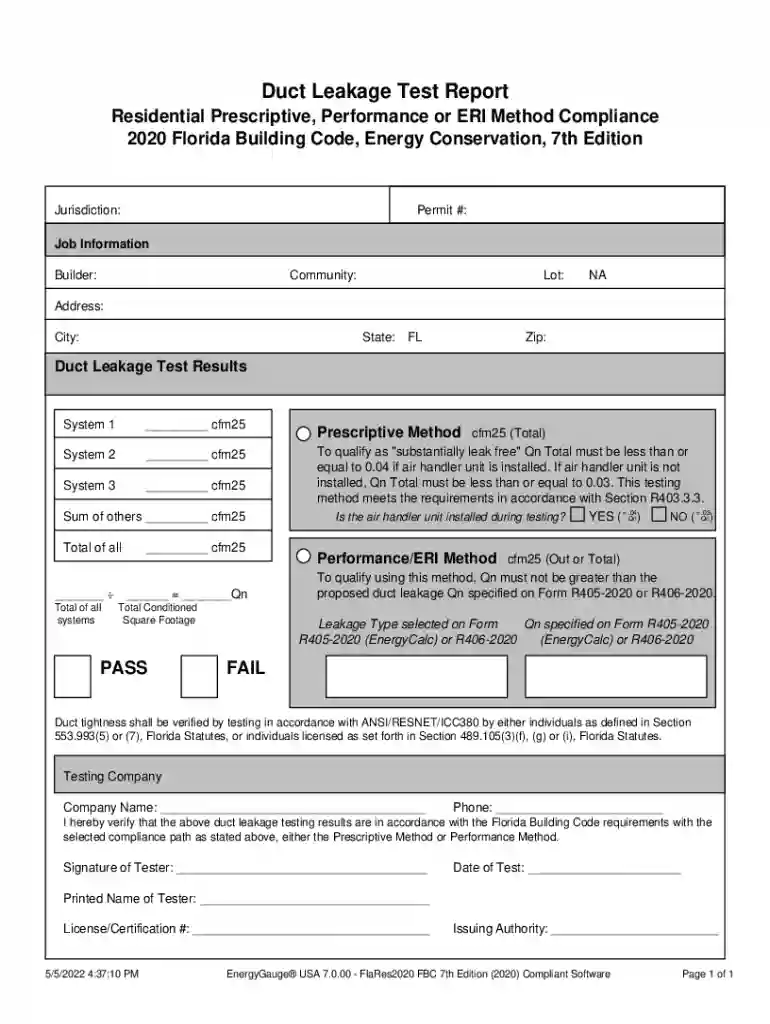
The "Duct Leakage Test Report" is a document that details the assessment of duct systems in buildings to ensure compliance with the 2020 Florida Building Code for energy conservation. It captures results from duct leakage tests across multiple systems within a building, indicating whether each system complies with specified leakage criteria. The primary goal is to improve energy efficiency by minimizing air loss in ductwork, thereby enhancing system performance and reducing energy costs.
Key Elements of the Report
- Duct Leakage Results: Indicates whether the system passes or fails based on the criteria.
- Testing Methods: Explains both prescriptive and performance methods utilized during the test.
- Air Handler Units: Specific conditions must be met regarding their installation and operation.
- Verification: Confirmation by a licensed tester that results are accurate and compliant.
How to Use the Duct Leakage Test Report - Fill Online, Printable, Fillable, Blank
Completing the Duct Leakage Test Report is essential for verifying building compliance with energy codes. Here’s a step-by-step guide:
- Access the Form: Obtain a digital copy that can be filled online, printed, or manually completed.
- Enter Building Information: Provide details such as the building address, owner’s contact information, and purpose of the test.
- System Details: Document each duct system tested, including location and specific features.
- Test Data Entry: Record the results from each duct leakage test for every system tested.
- Verification by Tester: A licensed professional should review the entries and sign to validate the results.
Steps to Complete the Report
To accurately complete the Duct Leakage Test Report, adhere to the following instructions:
- Gather Necessary Information: Ensure all building and system specifics are available before starting the report.
- Detail the Testing Procedures: Clearly define methods used and the standards adhered to during the process.
- Fill Required Fields: Input data in all applicable sections, ensuring clarity and accuracy.
- Verify Compliance Results: Distinguish which systems meet or fail compliance requirements.
- Finalize with Signatures: Acquire needed signatures from testers for authentication.
Why You Should Use the Report
Utilizing the Duct Leakage Test Report is essential for property owners and developers seeking to improve energy efficiency and building performance.
- Compliance Assurance: It ensures the building meets state-specified energy conservation standards.
- Energy Efficiency: Provides insights to modify systems for enhanced efficiency and cost savings.
- Documentation: Offers official records that can be used for future audits or property transactions.
Important Terms Related to the Report
Understanding specific terminology can enhance comprehension of the Duct Leakage Test Report.
- Duct Blower Test: A procedure used to measure air leakage by pressurizing the duct system.
- Cubic Feet per Minute (CFM): The volume of air passing through the ducts, used in calculations for leakage.
- Rough-In Test: Conducted at the end of the stage before sheetrock and insulations are installed.
Legal Use of the Report
The Duct Leakage Test Report must adhere to legal standards and is often required for building certifications.
- Building Code Compliance: Must be completed according to the 2020 Florida Building Code requirements.
- Legal Documentation: Acts as an official record confirming energy code compliance for future legal or real estate proceedings.
- Licensing Requirements: Tests must be executed and verified by licensed professionals.
Key Elements of the Duct Leakage Test Report
The report encompasses several essential components that assure its comprehensiveness.
- Test Results and Observations: Detailed accounts of each process and its findings.
- Verifier Details: Information about the tester, including licenses and certifications.
- Test Methodology: A breakdown of the methods utilized to ensure they align with code specifications.
State-Specific Rules for the Report
The Duct Leakage Test Report must comply with regulations specific to the state where the building resides, primarily reflecting Florida's codes due to its stringent requirements.
- Florida Building Code: Adherence to these standards is mandatory for most residential and commercial buildings.
- State Variances in Methods: Each state can dictate certain methodologies to be employed in testing.
- Local Authority Regulations: Buildings might also need to comply with additional local jurisdiction requirements.
Examples of Using the Duct Leakage Test Report
Practical scenarios illustrate the impact of these reports:
- New Construction: Ensuring new buildings meet the state's energy conservation codes before occupancy.
- Retrofit Projects: Evaluating existing systems to enhance performance and efficiency as part of upgrades.
- Licensing and Certification: Supporting documentation for regulatory approvals or certifications during real estate transactions.
Penalties for Non-Compliance
Failure to provide accurate and compliant Duct Leakage Test Reports can result in several repercussions.
- Building Code Violations: Potential fines or orders to correct any deficiencies noted by local or state authorities.
- Project Delays: Non-compliance could lead to delays in project timelines due to required retesting or modifications.
- Increased Costs: Potentially higher long-term operational costs due to inefficient systems not being identified or rectified.